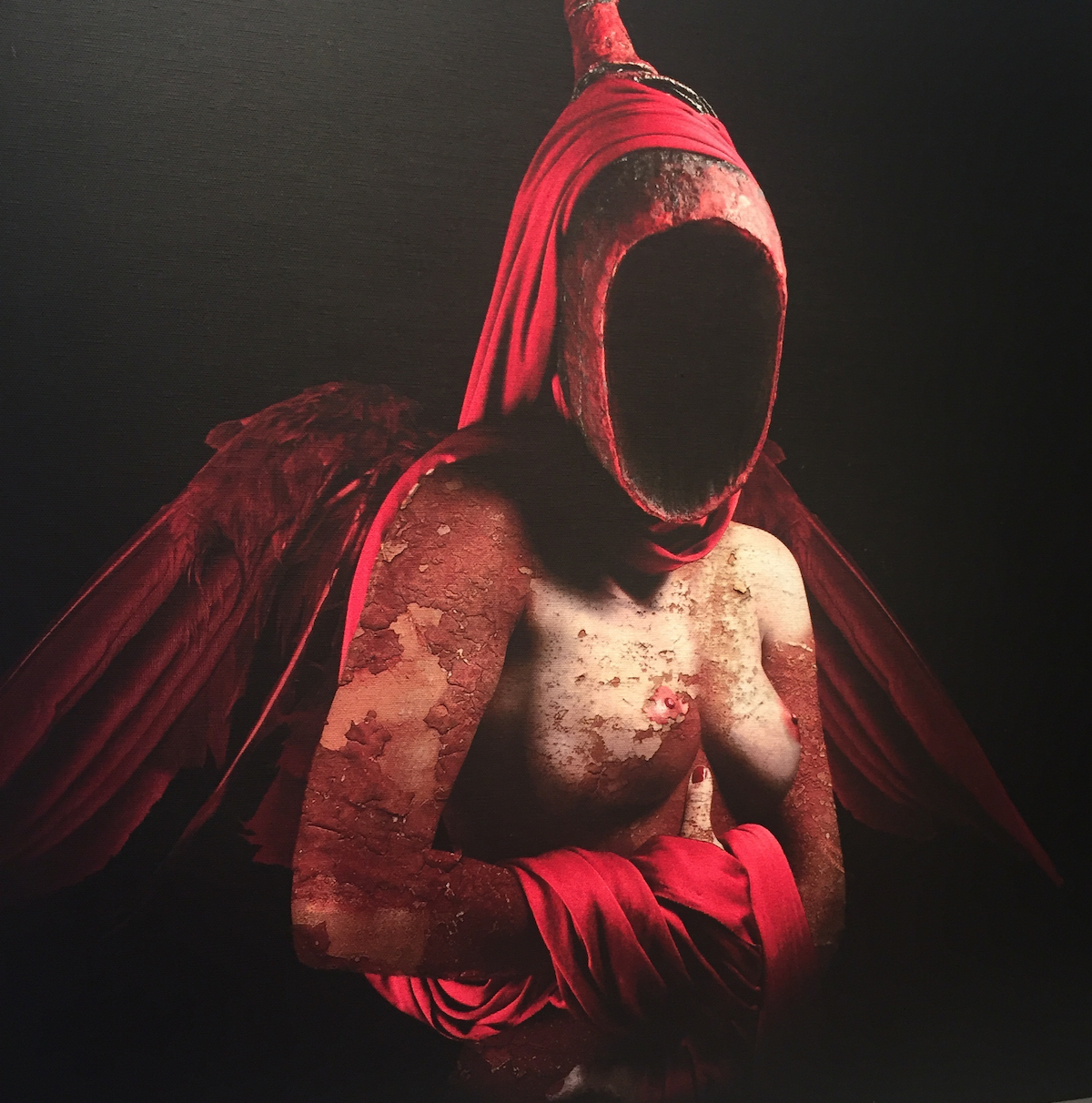
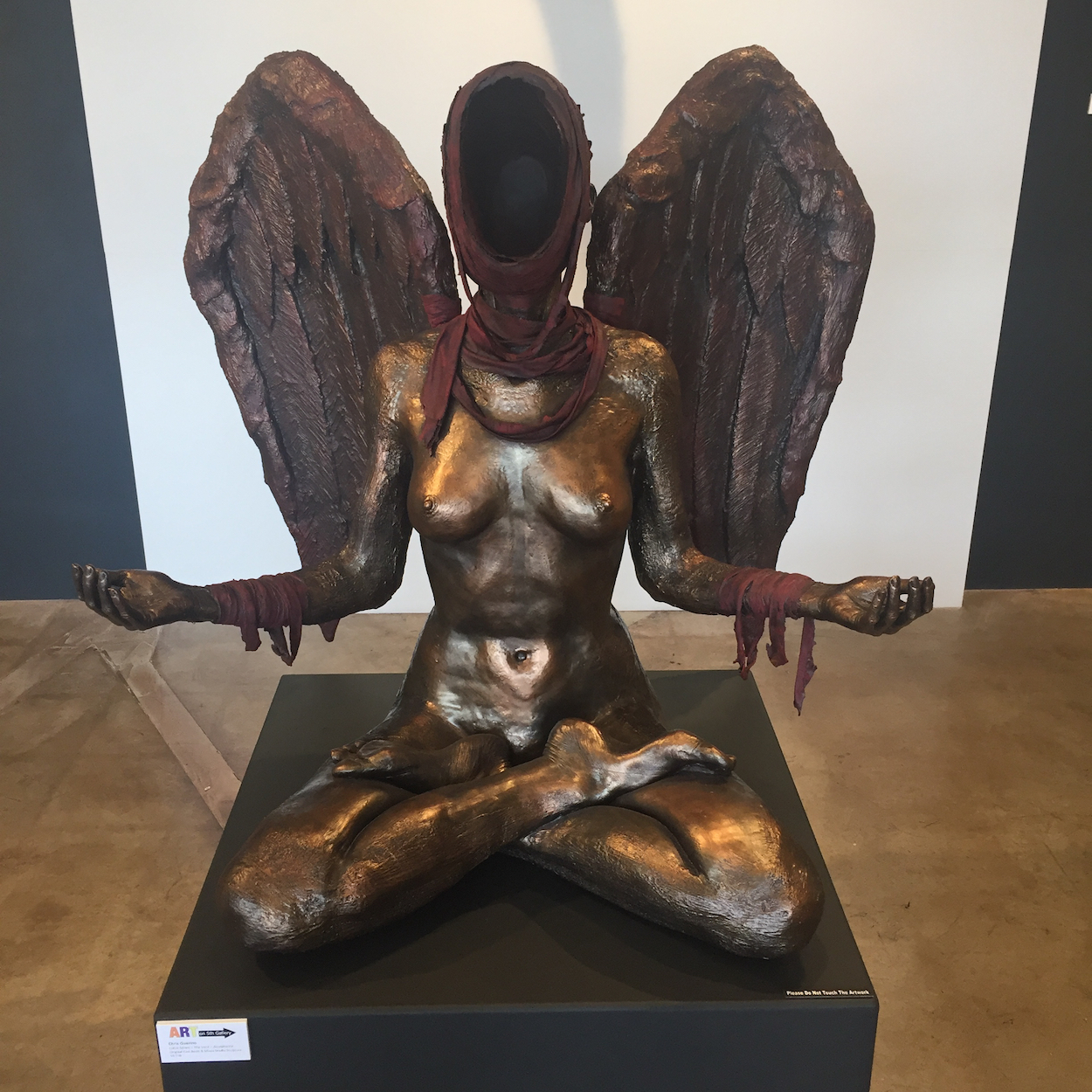
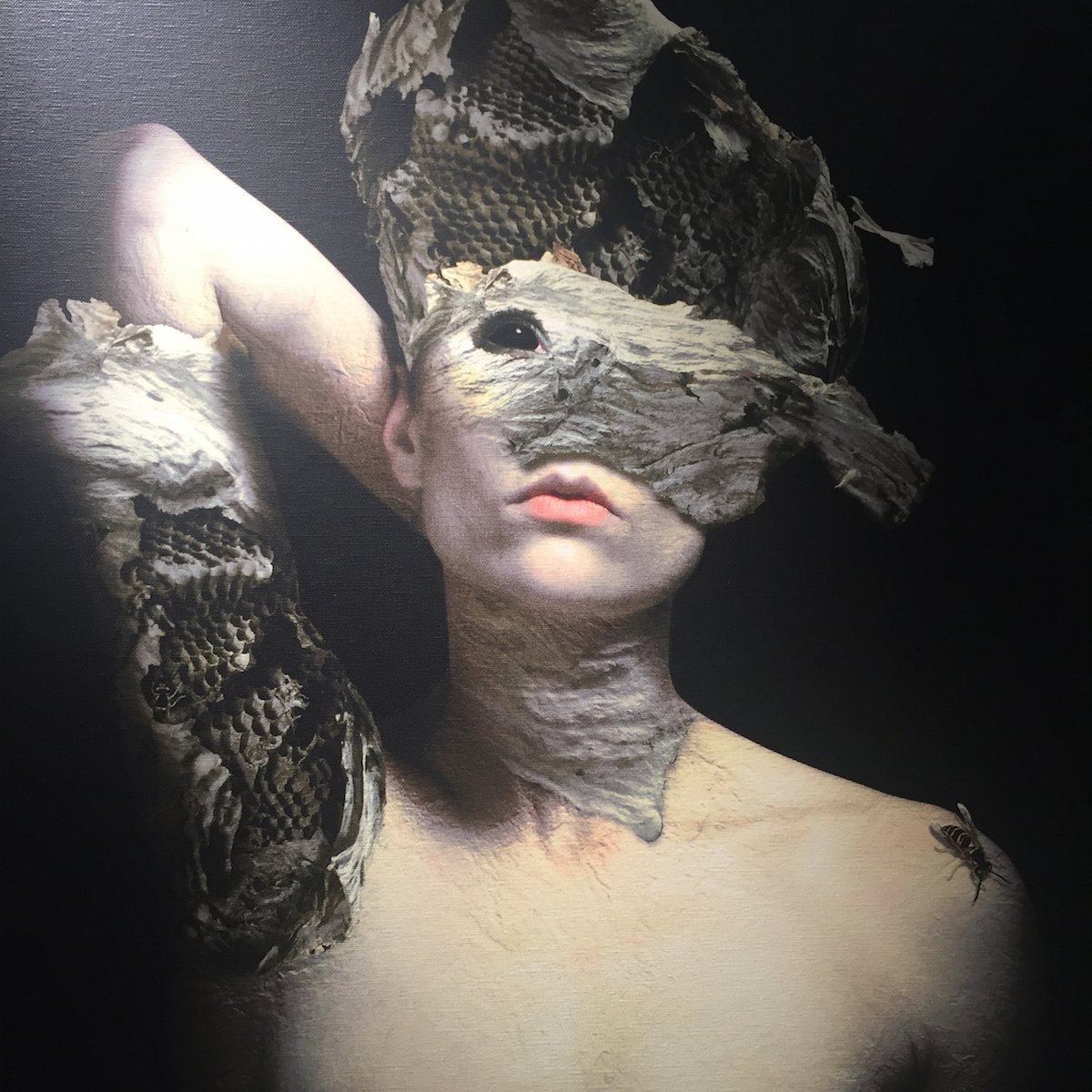
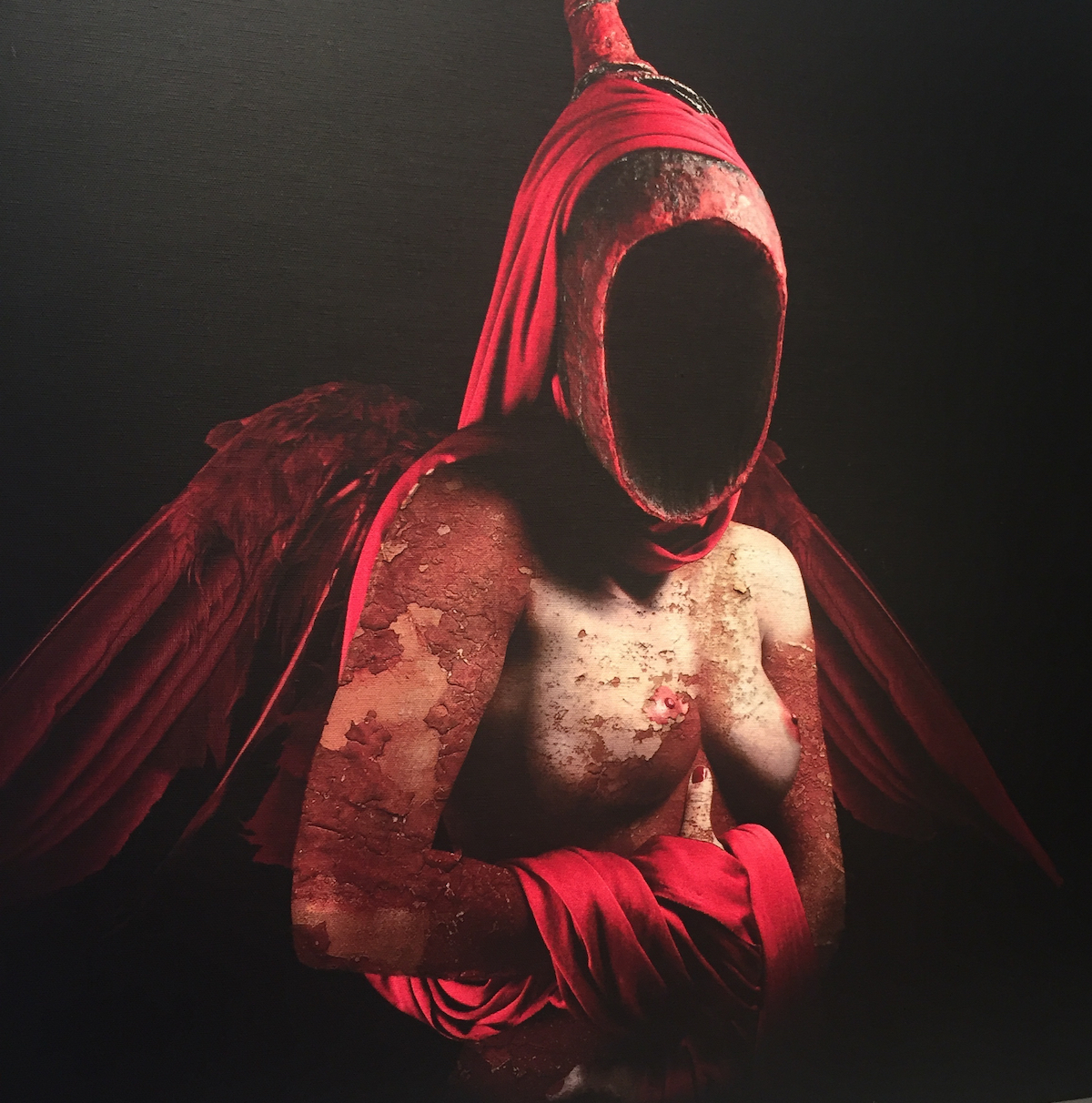
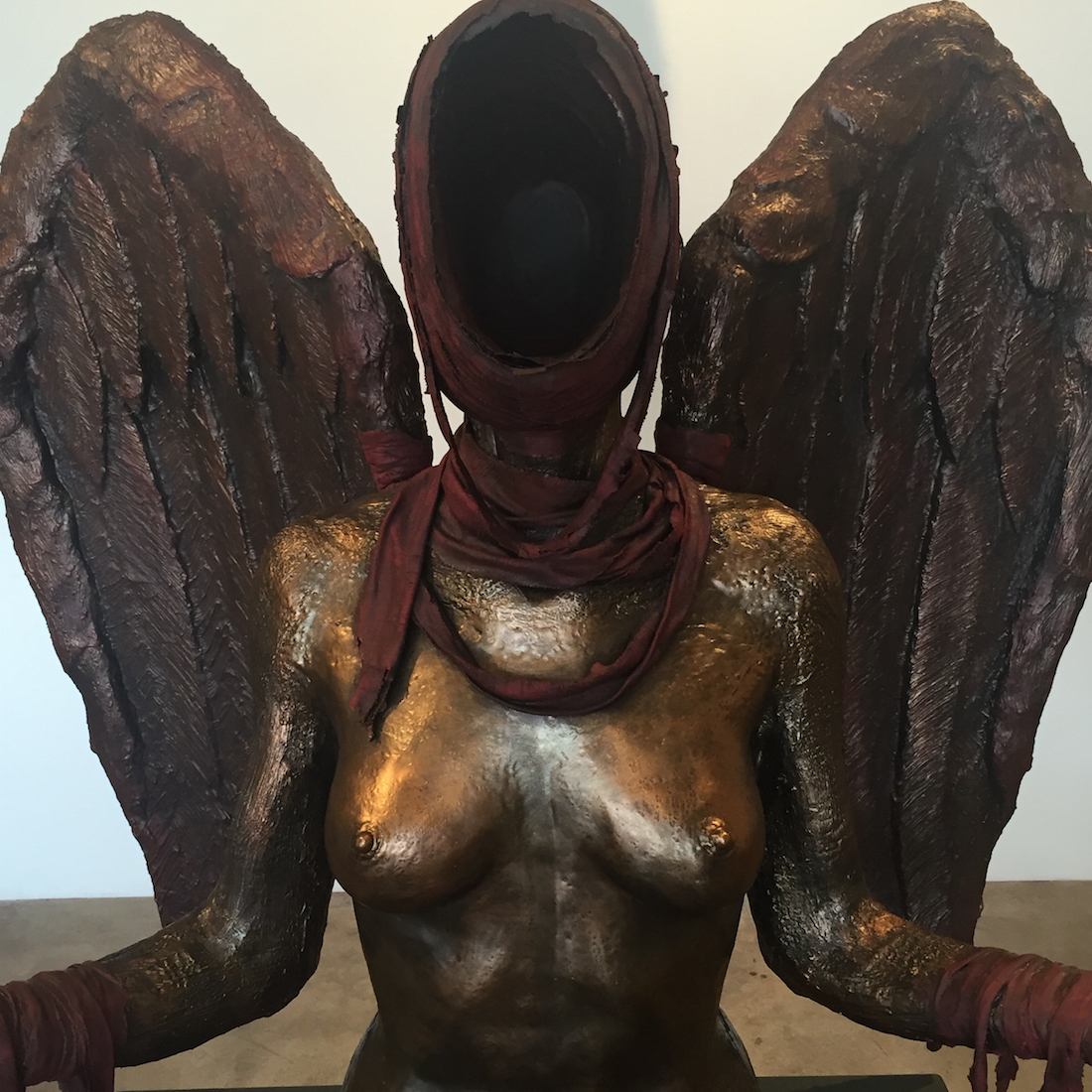
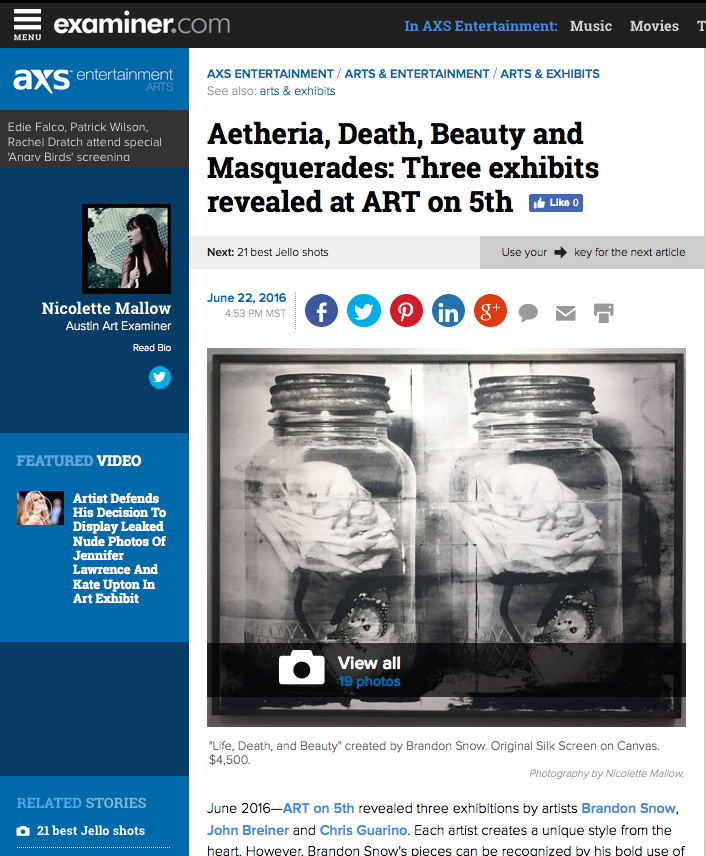
“Masquerade Series – The Void” created by Chris Guarino. {Photo by Nicolette Mallow}.
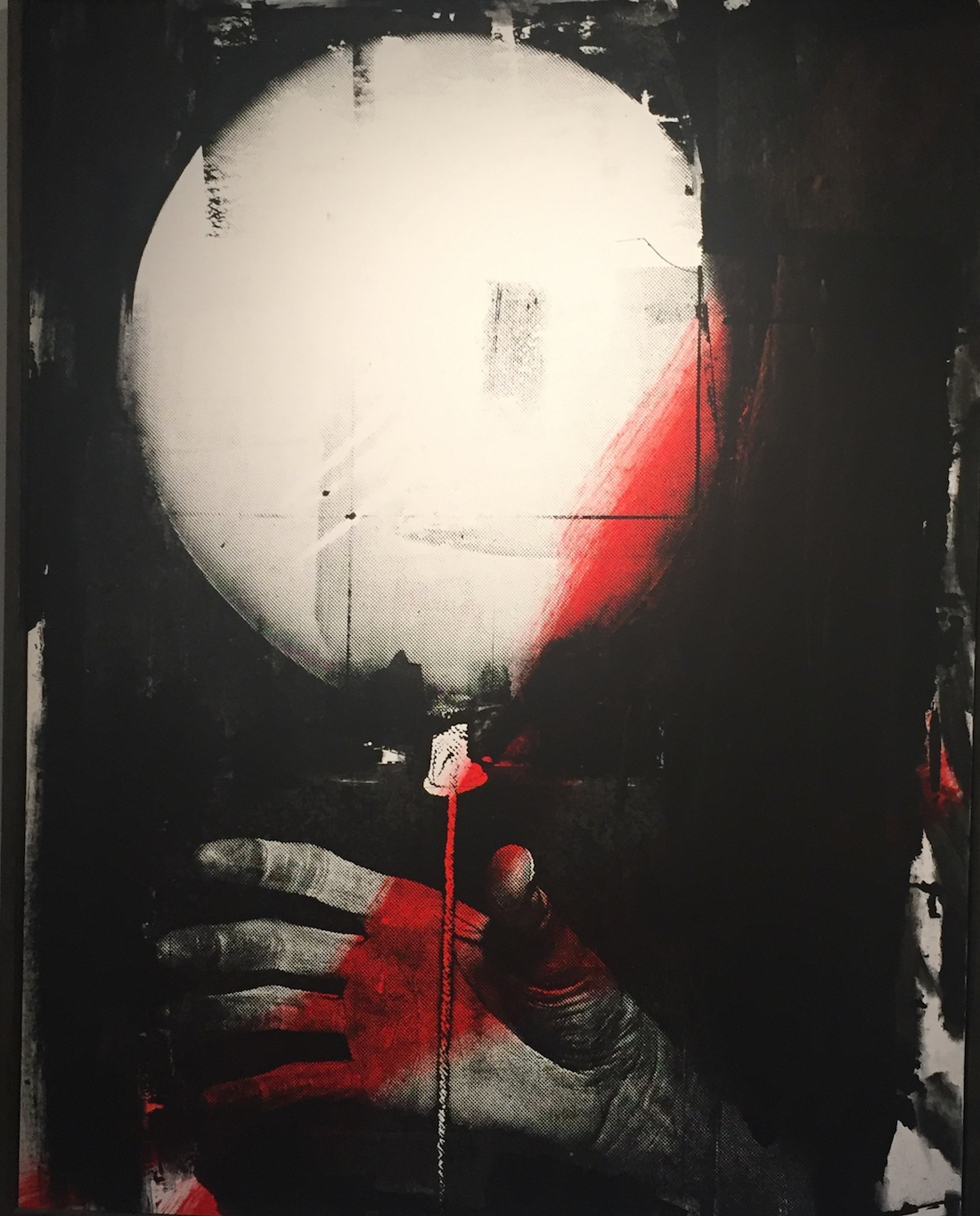
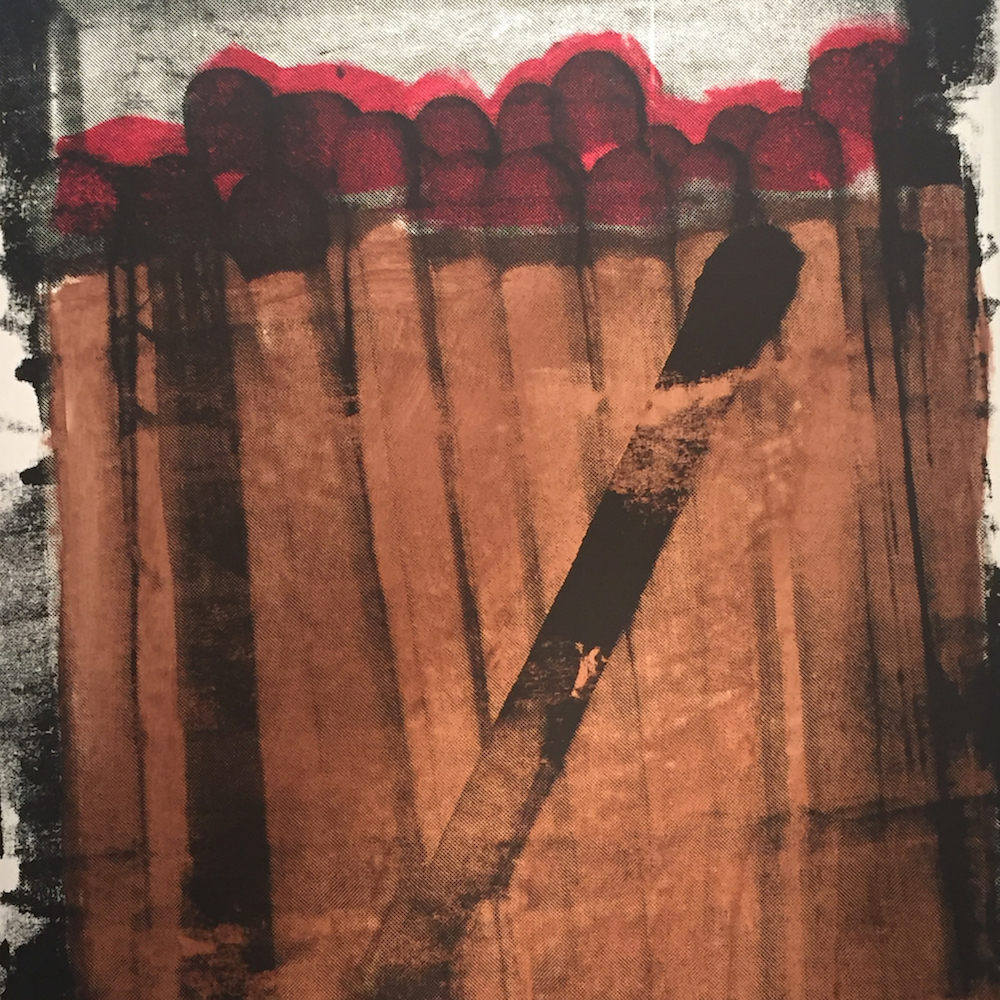
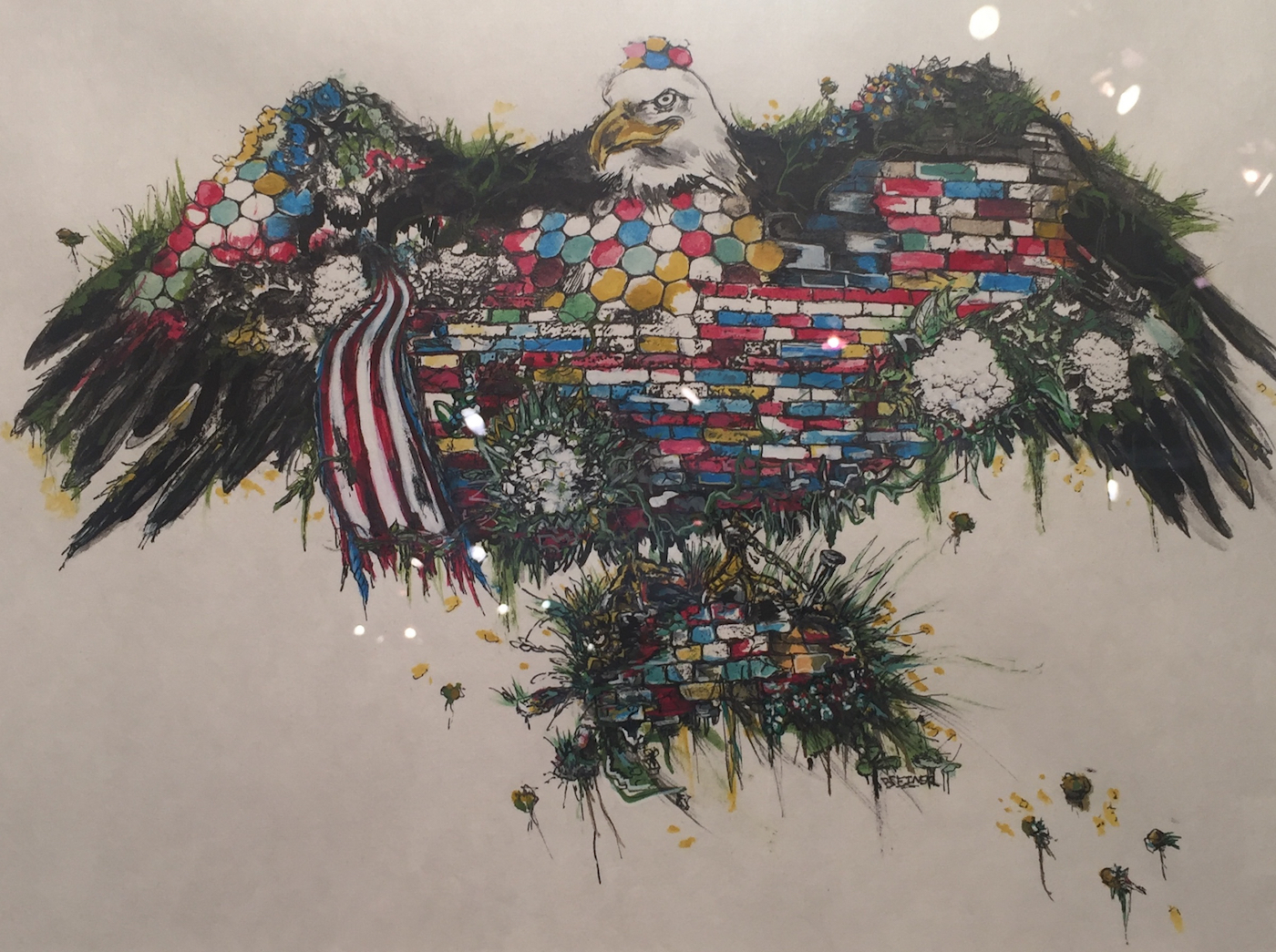
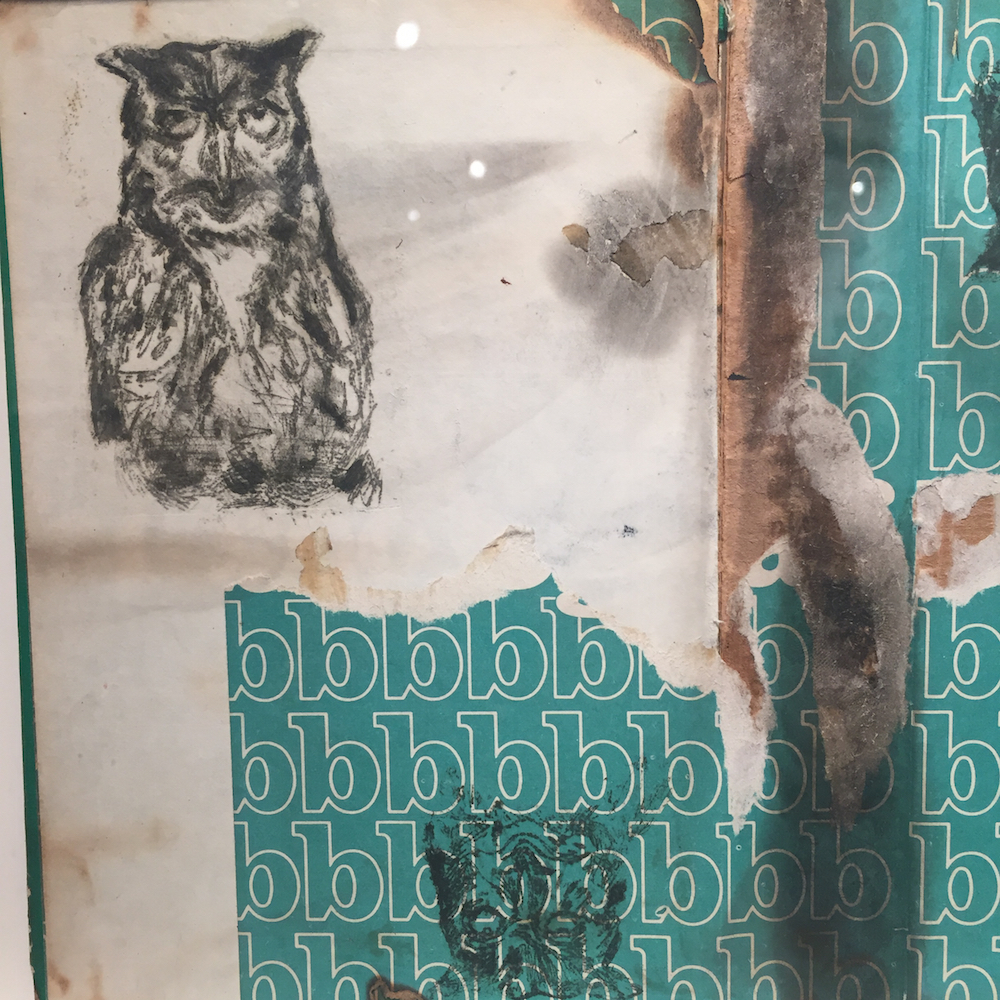
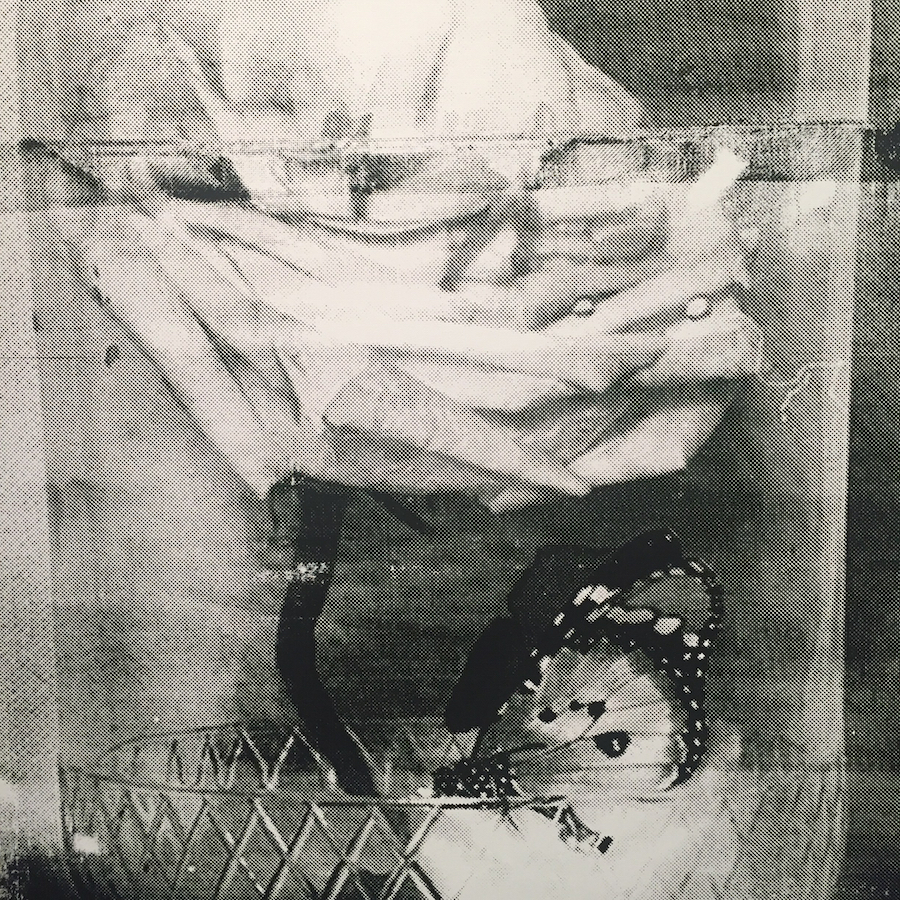
June 2016—ART on 5th revealed three exhibitions by artists Brandon Snow, John Breiner and Chris Guarino. Each artist creates a unique style from the heart. However, Brandon Snow’s pieces can be recognized by his bold use of the colors black and red, butterflies, roses, matches and a balloon. The works of John Breiner are a bit more playful and extensive with bright colors, including images like an eagle, a Native American and an owl. The collection by Chris Guarino reflects a fantasy world of magic, darkness, nature and masks. All three exhibitions and all three artists displayed by the gallery are listed below in fuller details.
“Life, Death, and Beauty”: The strength of Brandon Snow’s work stems from the simplicity of his imagery. Each piece is conceptualized by photographing an everyday object. These are then translated from film to canvas via a large-format silkscreen printing method which he has developed through years of experimentation. This will be the artist’s first solo exhibition in Austin. “Brandon Snow is an Austin-based self-taught artist. Out of a desire to infuse his work with a new type of energy and excitement, Brandon began merging lo-fi film photography and silkscreen printing. When Snow discovered that he could print his photographs using large format silk screens, he immediately began the tedious process of teaching himself through trial and error. This silk screen method also allows room for unique and unplanned characteristics to develop in each piece during its creation”. Snow’s works are on display until July 7, 2016. www.brandonsnowart.com
“Aetheria”: John Breiner’s work revolves around the reuse of found paper, including book covers and old maps. By utilizing a unique print transfer method, Breiner combines photographs and original drawings. He finishes the image with a myriad of techniques, including acrylic, spray paint, and collage. The result is an ephemeral surface which transcends traditional print media. John Breiner is from New York, and this will be his second exhibition at ART on 5th. “John Breiner’s love of the ephemeral surface has kept him painting and illustrating for close to two decades. While the focus of his personal work revolves around the reuse of found items (specifically old paper, books and book jackets), John has also painted large-scale murals, numerous illustrations, and album covers over the years”. Briener’s works are on display until July 7, 2016. www.johnbreiner.com
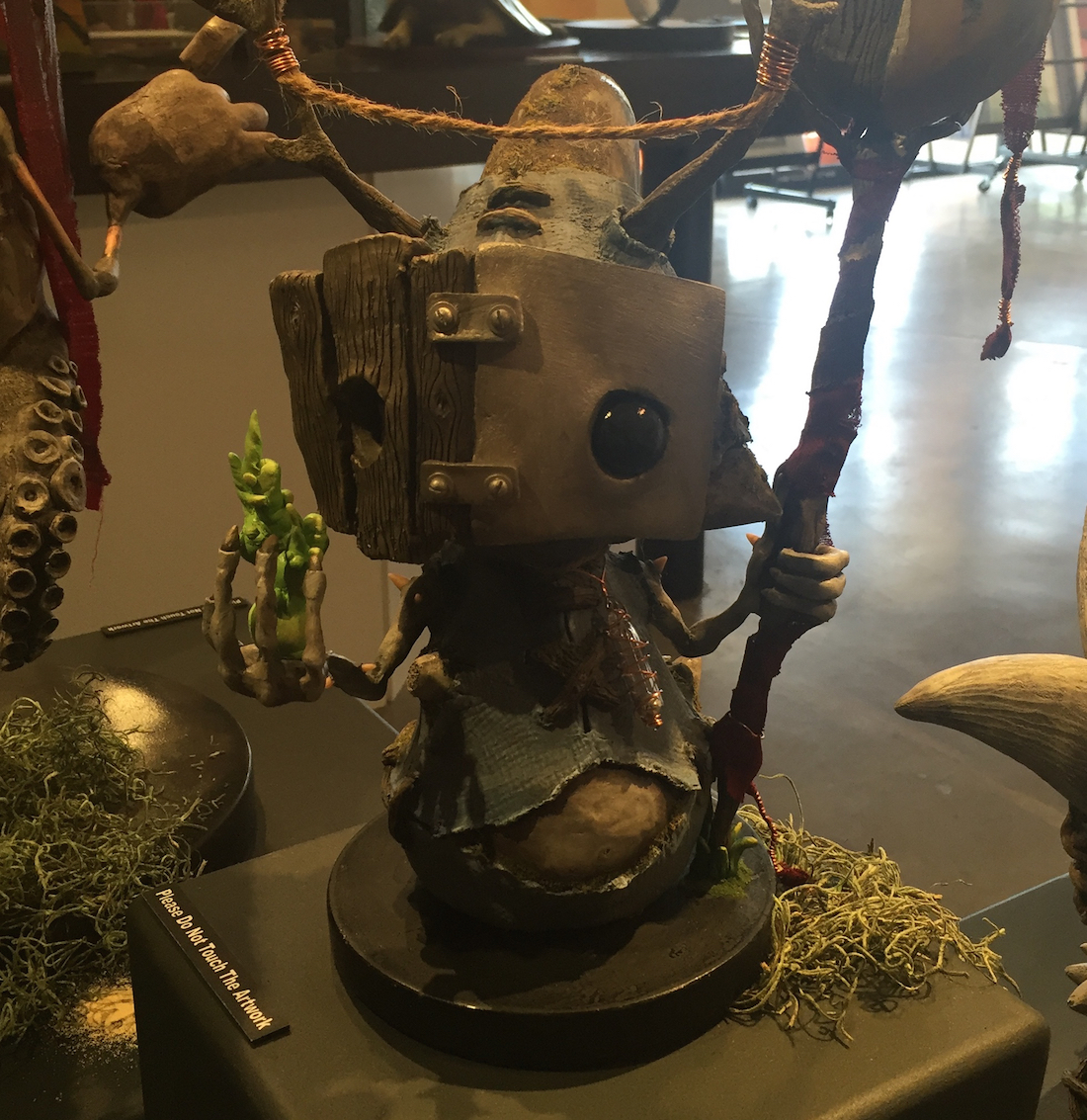
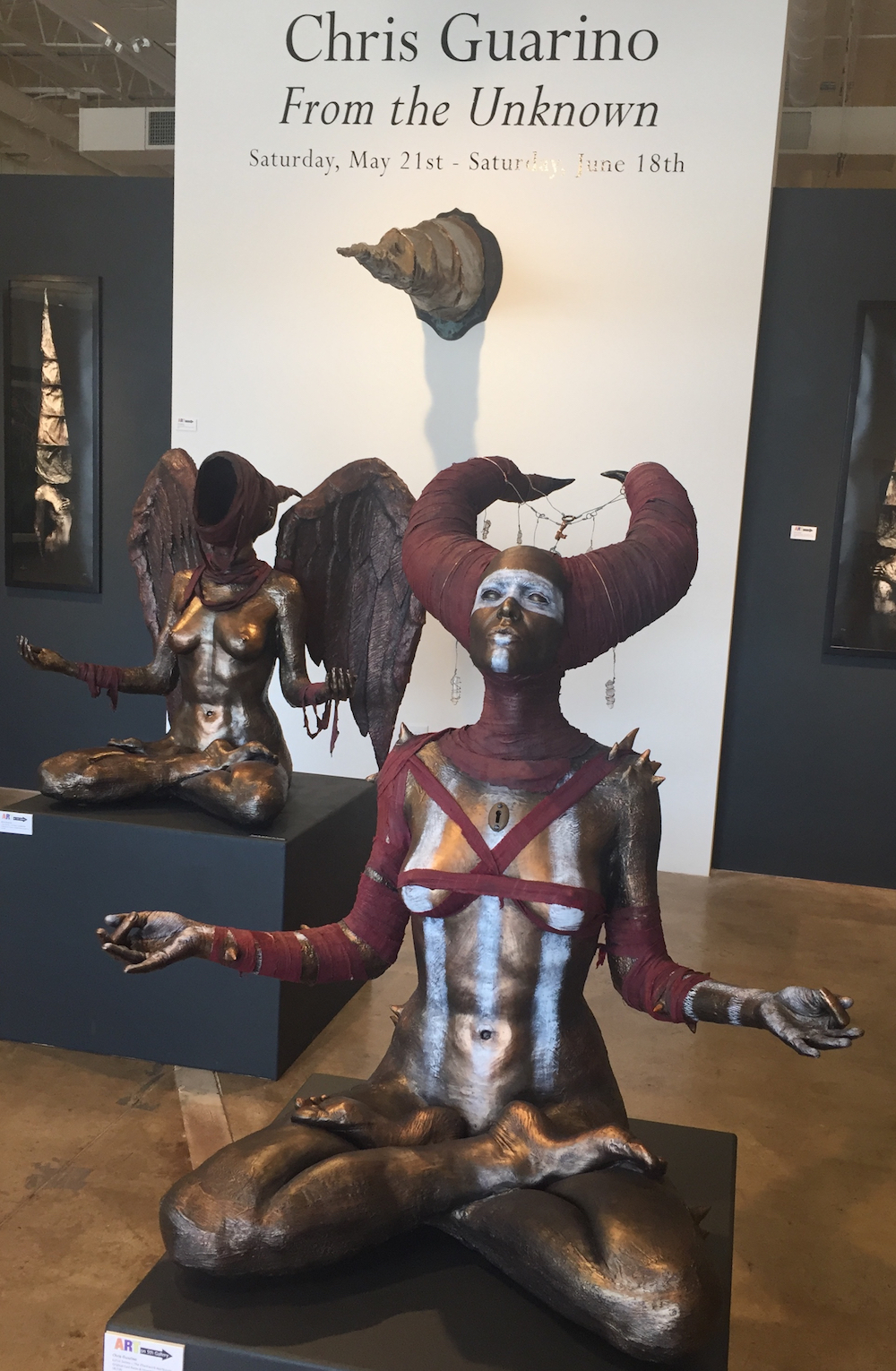
“From The Unknown & The Masquerade Series”: Chris Guarino, the winner of our 2015 Bombay Sapphire Artisan Series Contest, is currently the featured artist at ART on 5th. Guarino’s sculptures and digital photography are no longer on display. For information about prints, please contact ART on 5th. “From the Unknown is a solo exhibition of work by internationally recognized sculptor and digital media artist, Chris Guarino. Chris was also the winner of our 2015 Bombay Sapphire Artisan Series Contest. His work has been exhibited in Chicago, Miami, and Berlin. This show will feature original cast resin sculptures as well as prints of his digital photography work.” “From the Unknown” ended on June 18, 2016. Viewers can still see artwork by Chris Guarino at the gallery, however the full exhibit is no longer up in its original form. www.chrisguarino.com
Additionally, please bear in mind that ART on 5th is encouraging a Call for Entries from artists that have yet to be featured at the gallery. “ART on 5th will once again be hosting the Bombay Sapphire Artisan Series. The Artisan Series is a national search to find the next big name in visual arts, and offers under represented artists a national platform to showcase their work. Artists residing within 150 miles of the city center will be considered for the Austin semi-finalist exhibition to be held at ART on 5th this October”. For more information regarding hours, location or upcoming exhibits at the gallery of ART on 5th: please visit their website at www.arton5th.com or call (512) 481-1111.
Note: This article was originally published on Examiner.com in June 2016.
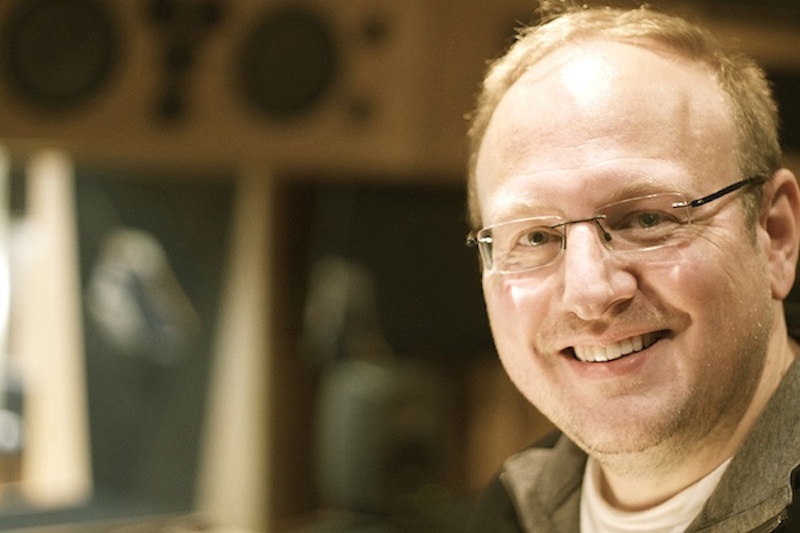
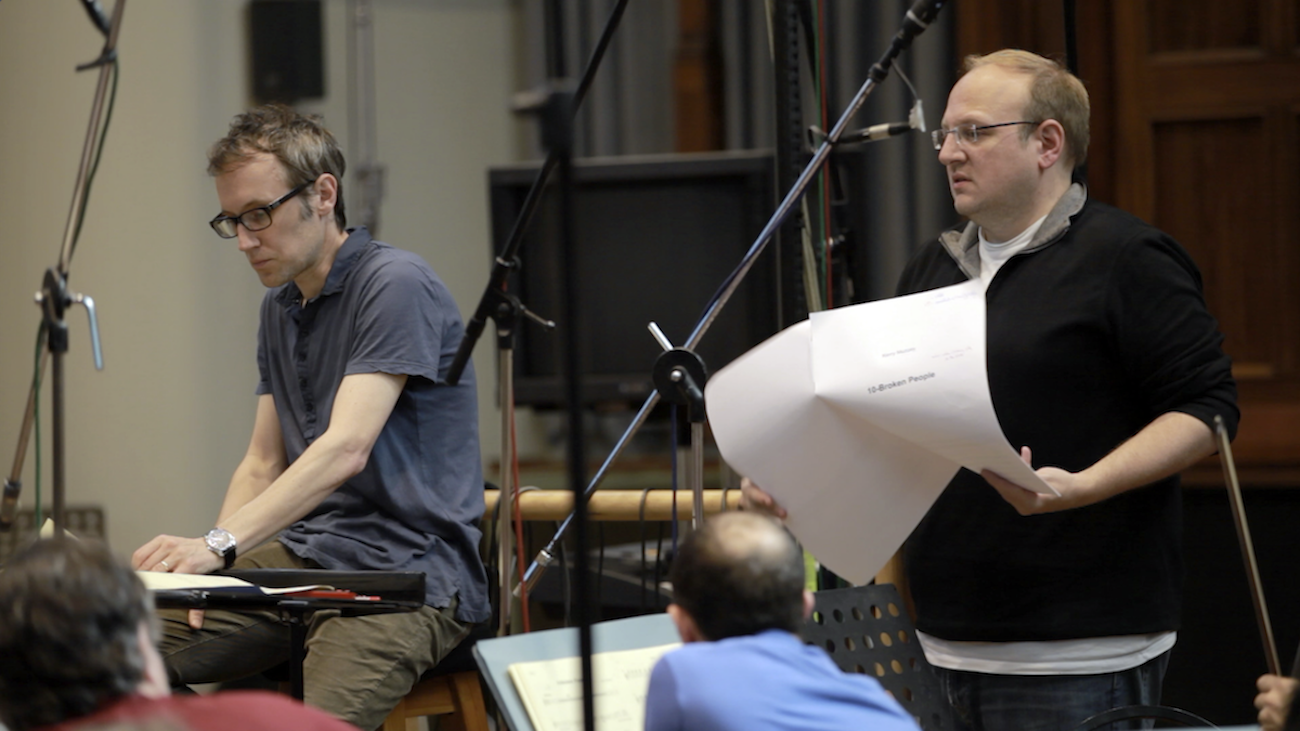
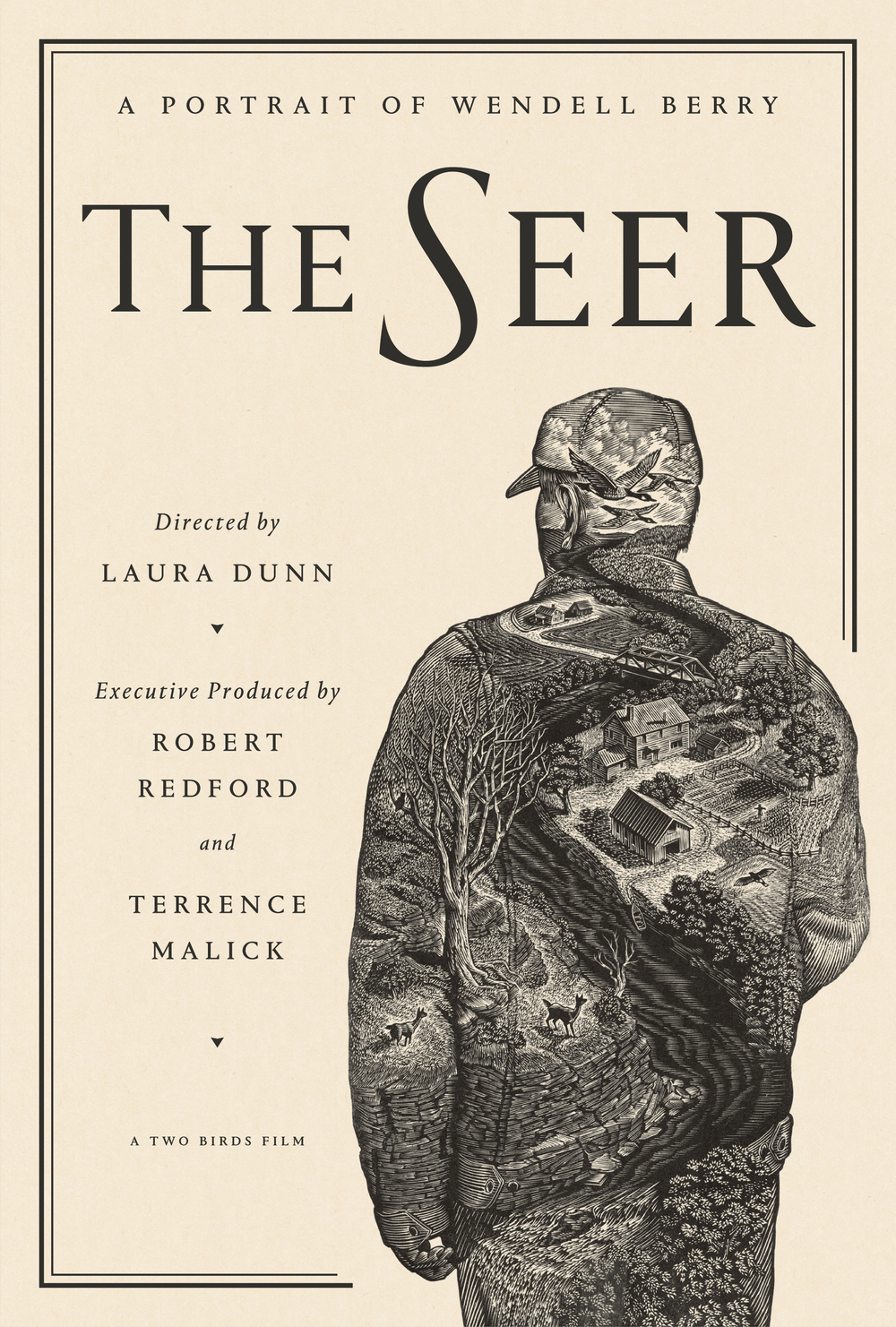
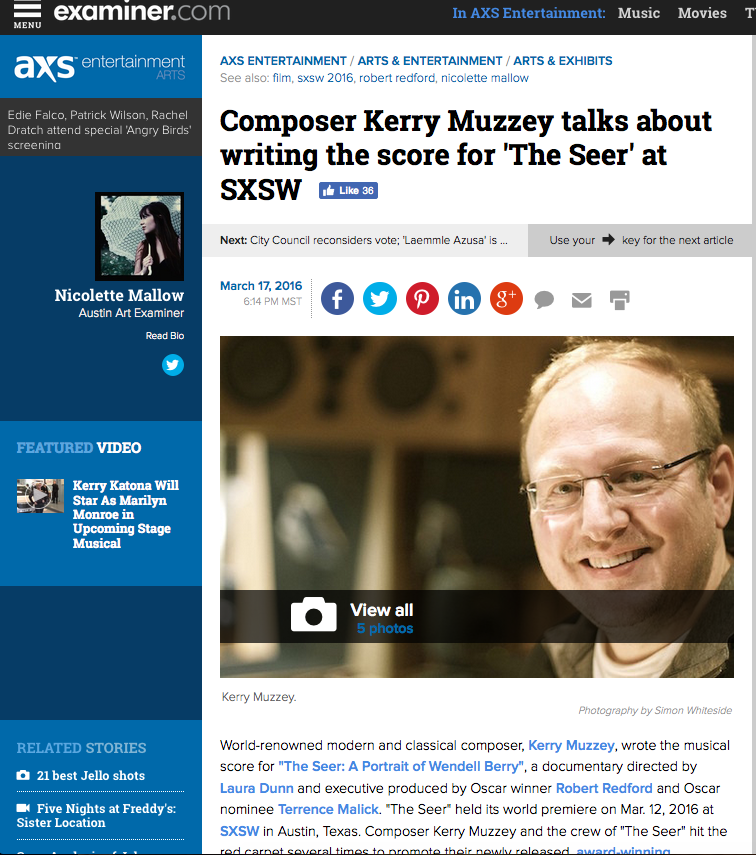
World-renowned modern and classical composer, Kerry Muzzey, wrote the musical score for “The Seer: A Portrait of Wendell Berry”, a documentary directed by Laura Dunn and executive produced by Oscar winner Robert Redford and Oscar nominee Terrence Malick. “The Seer” held its world premiere on Mar. 12, 2016 at SXSW in Austin, Texas. Composer Kerry Muzzey and the crew of “The Seer” hit the red carpet several times to promote their newly released, award-winning documentary. The SXSW Music, Film and Interactive Conferences and Festivals is celebrating its 30th year. And this year “The Seer” was awarded the ‘Special Jury Recognition for Cinematography’ for SXSW 2016.
Music is a key element within the world of cinema and Kerry Muzzey knows how to set the scene, musically, with his innate gifts of sound and music. The score for “The Seer” is absolutely lovely and befitting to the story without dominating or overpowering the documentary. On Mar. 15, 2016, Kerry Muzzey consented to a phone interview with Austin Examiner, Nicolette Mallow, to talk more about creating the score of “The Seer” and his musical background that lead him to Hollywood and SXSW.
A little more about the synopsis of the film in preface to the interview: “The story of ‘The Seer’ revolves around the divergent stories of several residents of Henry County, Kentucky who each face difficult choices that will dramatically reshape their relationship with the land and their community… Henry County, Kentucky, like many rural landscapes across America, has become a place of quiet ideological struggle. In the span of a generation, virtues of simplicity, land stewardship, local economies and rootedness to place have been supplanted by a capital-intensive model of industrial agriculture characterized by machine labor, chemical fertilizers, soil erosion and debt—all of which have frayed the fabric of communities. Writing from a long wooden desk beneath a forty-paned window, Wendell Berry has watched this struggle unfold, becoming one the most passionate and eloquent voices in defense of agrarian life… Filmed across four seasons in the farming cycle, ‘The Seer’ blends observational scenes of farming life, interviews with farmers and community members with evocative, carefully framed shots of the surrounding landscape. Thus, in the spirit of Berry’s agrarian philosophy, Henry County itself will emerge as a character in the film – a place and a landscape that is deeply interdependent with the people that inhabit it.”
Nicolette Mallow: When did you begin playing music? Would you mind telling me a little bit about your artistic background?
Kerry Muzzey: When I was 10 years old I started learning on classical organ. By the age of 11, I began writing music. But really it goes back even further than that because when I was 6 or 7 years old, I recall going to see “Star Wars”. Sitting there in the theater as a kid, when the film started rolling and the music came out of the speakers: it gave me goose bumps. I’ll never forget the feeling, even now. The music blew me away and all I could think about the rest of the day was “Star Wars” and its musical score. I have extreme reverence for John Williams. And I believe many composers can say that John Williams’ music was and is a true inspiration. Right after that movie I went out and bought the soundtrack on vinyl and listened to it on those giant headphones from the 1970’s. The music sounded like classical but it was more specific and inspiring. It was very intense and evocative for a child because it was focused and in conjunction with the picture… As a child I wanted to be a composer, a spy and an airline pilot. I dreamt of becoming many professions just like any little kid would. Yet I always kept coming back to music. My mother raised me entirely on classical and she told me that when I was in her womb: she played classical music for me and held the headphones next to her belly for 30 minutes a day for nine months.
NM: It seems as if you were destined to be a composer.
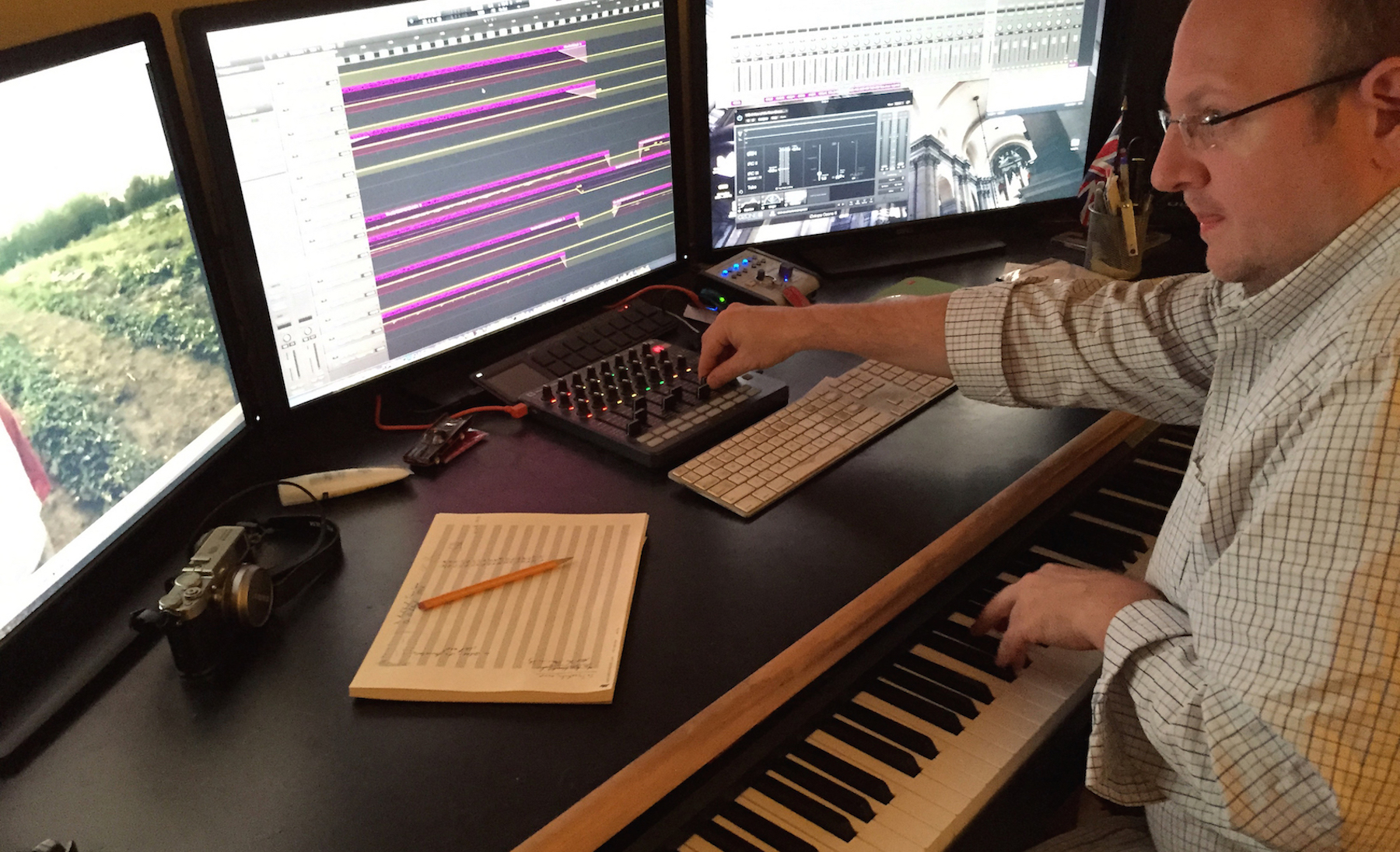
KM: Yes, and even though I started writing at the age of 11. It wasn’t until I turned 16 that my mother’s friend moved away and gave us their piano. I remember getting that piano and my family could not pull me away from it… Just the sound of a piano allured me. Complex piano compositions resonated with me so deeply even then. Because when you are playing a physical instrument: you can feel the hammers and strings inside its giant wooden case. It resonates in your heart and your hands. You can literally feel the sound as you’re playing music. It’s very powerful. That is around the time I began writing solo piano stuff. Playing the orchestra I heard inside my head. At the time, technology for music was not yet available to create an orchestra inside of a computer. So, it was a little different back then.
NM: I listened to the score you composed for “The Seer” in its entirety, twice. You wrote such beautiful music that compelled my mind to travel through time and feel nostalgic. The song “Daughter” struck a chord with me, in a good way… Was the music meant to be evocative? What is the biggest difference between writing music for a narrative feature versus writing a score for a documentary film?
KM: That is an awesome question. Writing music for a documentary was a challenge that took me quite a few tries to overcome. A narrative film is a completely different process than composing music for a documentary. Writing music for a documentary has to be subtle. The music cannot overpower the picture and it has to stay out of the way of the picture. The score cannot be traditional. For instance, a narrative feature film has a soundtrack of very specifically engineered music. It is written to make the audience feel something at that moment, so when the hero saves the world or the couple finally gets their big kiss: you expect the soaring strings. When making music for a documentary, if you’re too on the nose, or if you’re trying to punch it up too much, it can become a distraction. The audience that attends documentaries and is loyal to documentaries is also a highly intelligent crew. And you cannot use music to try and manipulate the audience into feeling a certain way. The music is simply there to beautify and assist the story as it unfolds in its own natural state.
NM: If you had to pick one song from the soundtrack of “The Seer”, which track encapsulates the spirit of the film? I’m curious to know which song is the beating heart of your composition.
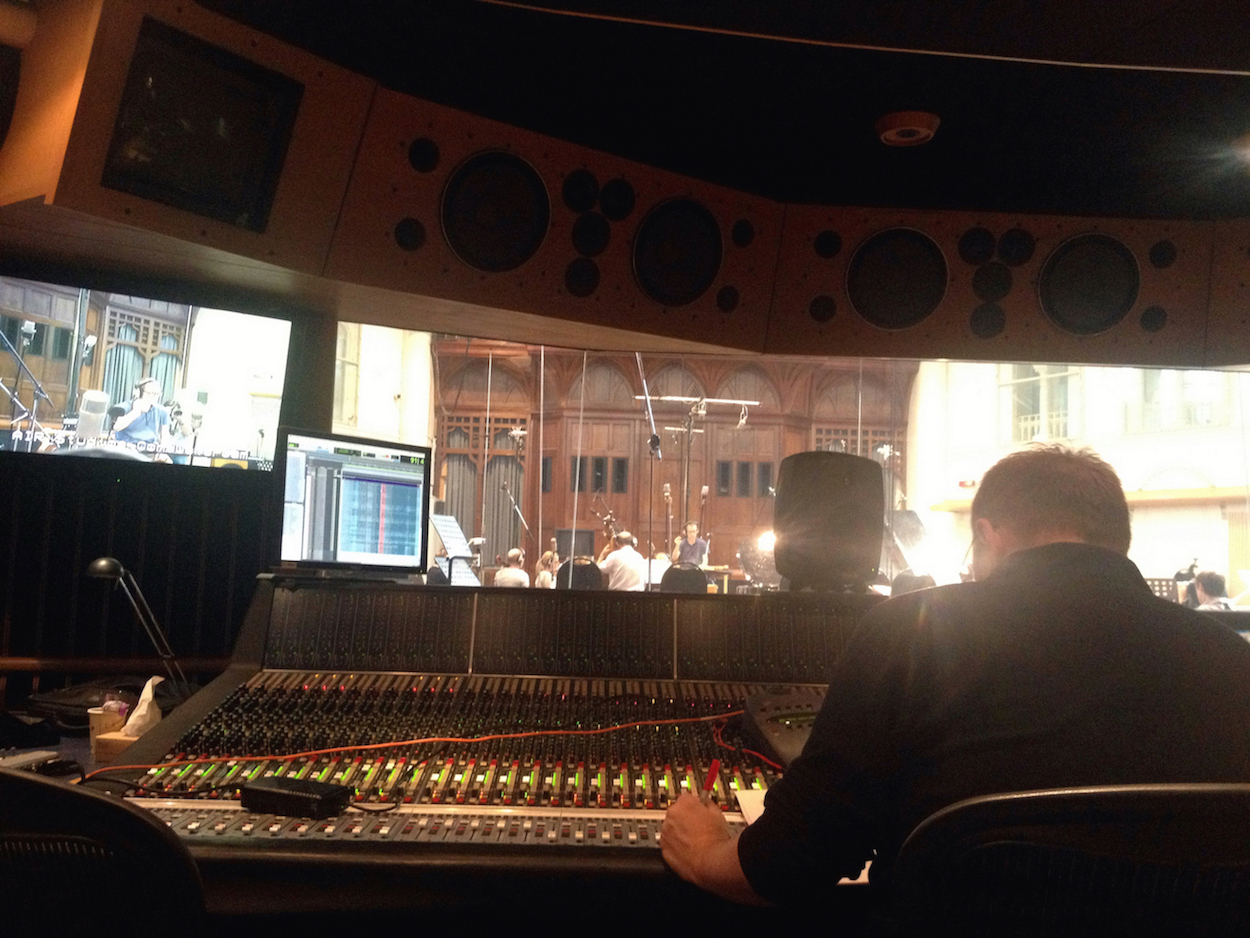
KM: Yes, I can pick one. I believe it’s the sixth track and it’s a song called “Forty Panes”. It’s also the Director’s favorite (Laura Dunn). It’s a song about Wendell Barry and it has piano and cellos in the melody. It was magical to write and it kind of came out of nowhere. I was so in love with it that I actually got my cellist to record it before I even played it for Laura. Which is kind of dangerous because I am paying the cellist for his time. But I loved this cue so much. The way it resonates with the picture and how it struck a perfect balance… It’s the crux of everything and it’s beautiful… I sent the piece out to the Director and I was stalking my email waiting for Laura’s response. Two hours passed by and I feared the worst. And then her email arrived with a response, “I keep watching it over and over—and I kept crying every time I felt the music—and I don’t know why.” Right then, I knew that I got it right… The Director of “The Seer” is not only a good person, but she’s extremely smart and talented. She’s amazing and cool and I wanted her to love the soundtrack. Talking to her the other day, we spoke of that piece in particular as it being the high point in the films soundtrack: simple and quiet, but against the picture it can’t be anything else but exactly that… This wasn’t my first project with Laura Dunn, either. About eight years ago, Laura made a film, “The Unforeseen” about over development in-and-around Austin. The core of it predicted the housing crash a year prior to the fact. At the time she had licensed a few pieces of mine to use. Years later we reconnected and in this case she wanted me to score the entire film. Obviously I said yes and it’s been an amazing project. Laura and her team are so great at what they do.
NM: Do you have any upcoming projects that we can look forward to?
KM: Yes, I do have future projects. Presently I cannot say much because it hasn’t been formally announced yet. What I can say is that I am writing a full-length ballet for a full orchestra. And it premieres in London next May of 2017. This job sort of came out of left field. It’s a very heavy lift for me, it’s a huge challenge, but I am so excited to work with this choreographer and their innovative team. I couldn’t say ‘yes’ fast enough.
For more information regarding Kerry Muzzey or the movie, “The Seer: A Portrait of Wendell Berry”: please visit www.kerrymuzzey.com or www.theseerfilm.com.
Note: This article was originally published on Examiner.com in March 2016.
“Crusader Bible: A Gothic Masterpiece” – The Blanton Museum of Art at The University of Texas at Austin.
Showcased by The Blanton Museum of Art at The University of Texas at Austin, The Crusader Bible: A Gothic Masterpiece is a traveling art gallery highlighting an illuminated Medieval manuscript from the 13th century. Traveling to seven different countries in the world over a timeline of seven centuries, this French Gothic manuscript from the Middle Ages is created by seven anonymous artists. Depicting selected stories from the Old Testament, retold in the era and culture of Medieval period, originally this one-of-a-kind manuscript was designed to be a picture-book without any script. These colorful illustrations were intended to portray biblical stories without any annotations, explaining why each drawing is so very graphic, specific and characteristic. However, as the Crusader Bible journeyed seven times from France to Italy, Poland, Persia, Egypt, England and the United States: alterations were made and inscriptions were added in various languages, including Latin, Persian and Juedo-Persian.
Upon entrance into The Crusader Bible: A Gothic Masterpiece, the rooms of the gallery are glittering with 40 illuminated pages of gold leafs (pure gold that has been hammered down into thin sheets). The gold is still so remarkably shiny that it’s almost hard to believe this manuscript is nearly 1000 years old. Even under dimmed lighting within a museum, the gold leafs on the pages are so prominent and bold that the display cases within the gallery shine similarly to a jewelry display case. Fortunately the Crusader Bible has withstood the tests of time and it comes to no surprise that these handmade manuscripts are very challenging to make, often taking many years to complete. There is a very specific and thorough process to creating illuminated manuscripts, beginning with the preparation of the parchment paper. Parchment paper derives from animal skin and once it’s finished after weeks of preparation. Then scribes would begin inscriptions. Once the scribe had finished their task, the illuminator left its mark on the parchment paper before sending the manuscript over to bindery. An illumniator is the artist whom illuminated the manuscript with silver or gold leafing. They were responsible for lighting up the pages with precious metals.
This slideshow requires JavaScript.
Silver, gold and colorful illuminations aren’t the only part of the Crusader Bible that catch the eye. The carbon black inscriptions also carry a dominant presence. Admiring all the various scripts in different languages is quite compelling because it notes the seven foreign locations and cultures the Crusader Bible ventured to. The number seven is believed to be a divine number of truth and mysticism within numerology studies and spiritual texts. Therefore it’s an interesting coincidence that the number seven plays such a predominant and powerful role in the history of the Crusader Bible. Furthermore, the black calligraphy is immaculate in every language and it took scribes endless hours to complete the script; using a quill pen to write the script and a knife to cut away ink errors when necessary. The carbon black ink used by the scribes is referred to as lampblack. And even though most of us cannot read Latin, Persian or Juedo-Persian. With the use of modern technology and an application called Layar, guests can scan the Medieval manuscript and the application translates it for you right that instant.
Additionally, this special exhibit also features European arms and armor, an illustrated book from Persia, and a large display case featuring many of the tools, rocks, metals and pigments used to inscribe, illustrate and illuminate the parchment paper. There is also a video to regard the process from preparing the parchment paper to the final result in bindery. The Crusader Bible: A Gothic Masterpiece will be on display until April 3, 2016. For more information regarding The Blanton Museum of Art and its hours of operation, admission, upcoming exhibitions or membership, please call 512-471-7324 or visit www.blantonmuseum.org.
“The Blanton Museum of Art at The University of Texas at Austin presents The Crusader Bible: A Gothic Masterpiece, an exhibition of over forty unbound pages from the one of the most celebrated French illuminated manuscripts of the Middle Ages. The illuminations include some of the most compelling visualizations of the Old Testament, bringing Bible stories to life through vivid images that reflect medieval culture and the world of the Crusades. Designed to resonate with thirteenth-century French viewers, biblical characters are depicted as battling knights, equipped with contemporary arms and armor, and situated within medieval French towns. Loans from the Metropolitan Museum, including a shirt of mail, sword, prick spur, and war hat, will augment visitors’ understanding of the weaponry featured in the Crusader Bible. On loan from the Morgan Library & Museum in New York, the Crusader Bible features Old Testament scenes in medieval settings, with brilliantly colored illustrations attributed to seven anonymous artists. To provide historical context for the Bible, the presentation features medieval arms and armor from New York’s Metropolitan Museum of Art. Also included are sixteenth-century Persian illustrations from the Metropolitan and the Ardashīr-nāma, a seventeenth-century Judeo-Persian manuscript of Old Testament stories from The Jewish Theological Seminary of America in New York. The history of the Crusader Bible is fascinating, covering seven centuries and multiple continents. Likely created in Paris during the 1240s for King Louis IX of France— famous for building the Sainte-Chapelle and for leading two crusades— the Bible then passed to the king’s younger brother, Charles of Anjou, who took it to Italy. More than four centuries later, the Archbishop of Cracow acquired and offered it as a diplomatic gift to the great Shah of Persia, ‘Abbas I. By the eighteenth century, the manuscript belonged to an anonymous Persian Jew. After its journey from France to Italy, Poland, and Persia, the Bible traveled to Egypt, England, and finally to the Morgan Library & Museum in the United States. The Crusader Bible, which originally had no text, bears inscriptions in Latin, Persian, and Judeo-Persian. They function as evidence of its changing ownership throughout the centuries and reflect how each owner used his language to lay claim to the book, appropriating its imagery for assimilation into their respective cultures.”
Note: This article was originally published on Examiner.com in December 2015.