Highlighter Series Interview: Voyage Austin

Note: This interview was published by Voyage Austin in the Highlighter Series of December 2025.

Good morning Nicolette, we’re so happy to have you here with us and we’d love to explore your story and how you think about life and legacy and so much more. So let’s start with a question we often ask: What makes you lose track of time—and find yourself again?

Daydreaming and writing can often compel me to lose track of time, yet simultaneously rediscover myself. Since I was little, daydreaming has been a joy of mine. The same applies to writing: if I begin my mornings with writing and I do not set a timer, I can lose track of time. Someone once advised me to allot time for daydreaming, the same way I plan time for any other habit like exercise, sleep, or meditation. Now, on the one hand, I think this is great advice to help keep me grounded and focused. But I also believe in giving your imagination permission to wander freely, to daydream naturally, without limits or timers. Regardless of how one daydreams, writing is so cathartic and evocative; it’s one of the only times I feel that I can truly be myself without hesitation. Writing it out—whether I share it with a friend, publish it, or keep it in a diary—helps me release everything that I’m bottling inside. The power of writing helped me find my voice, and that allowed me to speak my truth.

Can you briefly introduce yourself and share what makes you or your brand unique?

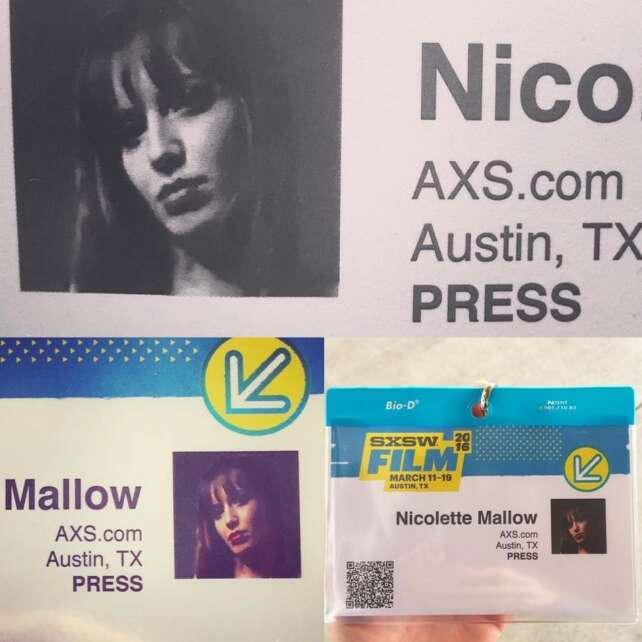
Yes, my artist bio is a great introduction to my career: Nicolette Mallow is an artist. Her journey began in performing arts and athletics, but her love for writing led to a career! Since college, Nicolette has covered numerous press events as a (dyslexic) writer. Her portfolio reflects a vast array of creative content, and she’s obtained 110+ publications in the US and Europe so far.

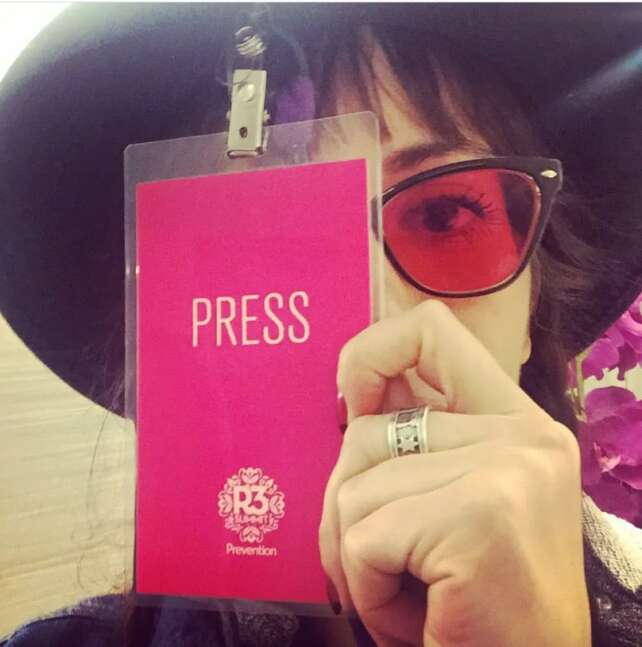
Mallow has interviewed an extensive list of diverse talent that inspired her along the way, including Greta Gerwig, Jimmy Chin, Bob Roth, Dr. Travis Stork, Joan Lunden, Jay Roach, and Roc Chen. She’s collaborated with companies and PR teams from Texas Monthly, National Geographic, Prevention Magazine, HBO Films, The Hollywood Reporter, SXSW, The David Lynch Foundation, The University of Texas at Austin, and more. Presently, her portfolio entails 12 national awards or scholarships, including both individual and group projects. Working with press and publicity teams from companies like Sunshine Sachs, Fons PR, Frank PR, and CW3PR — Mallow can liaise with publicists, entrepreneurs, and their brands.

Her career transcends many industries like AI content engineering, jewelry, publishing, sales, customer service, fashion, A&E, fine dining, and tech. But her focus always returns to the arts. Obtaining two degrees from the Savannah College of Art & Design (SCAD), Nicolette has a Master of Arts degree in Arts Administration and a B.F.A. in Writing.

Okay, so here’s a deep one: What breaks the bonds between people—and what restores them?

Lack of trust, lack of boundaries, and lack of communication break the bonds between most people, because it’s hard to respect someone that you don’t trust. And once that trust begins to deteriorate, it’s hard to move forward. We can restore trust by being honest with ourselves and transparent with others. We can restore trust by taking accountability and admitting when we are wrong. Likewise, we can heal broken bonds by opening our hearts to healing. Pride and ego destroy a lot of bonds as well; a lot of people would rather burn bridges than admit they were wrong or accept they’re a flawed human being (like the rest of us). But people often lie to themselves, and that leads me to another quote I love: “Above all, don’t lie to yourself. The man who lies to himself and listens to his own lie comes to a point that he cannot distinguish the truth within him, or around him, and so loses all respect for himself and for others. And having no respect he ceases to love.” —Fyodor Mikhailovich Dostoevsky

What’s something you changed your mind about after failing hard?

In the past, I somehow thought you could plan milestones and goals (success) like a to-do list. Alas, success does not operate on a timeline, and failure taught me patience. Life is not a grocery shopping list that you can check off and complete all at once. Think of it like booking a vacation: you can plan months or a year in advance, but the weather or illness might still cancel the flight and cause delays to your destination. Unlike travel insurance, where you can get your money back, there’s no such thing as insurance when it comes to your time. If life blows up in your pretty little face, there isn’t a number you can call to file a claim and get your time back. So I had to learn patience and adaptability. Failure forced me to learn how to show grace and compassion for myself when things don’t go to plan. Failure taught me that if things don’t work out, it wasn’t the right path for me, and instead of resisting failure, accept it and alter course.

Alright, so if you are open to it, let’s explore some philosophical questions that touch on your values and worldview. What’s a belief you used to hold tightly but now think was naive or wrong?

We have all heard the phrase “love is blind,” but it took a lot of unnecessary heartache for me to believe that true love does not conquer all. I wouldn’t relay any of this to little kids or teenagers, but past the age of college, we should start to embrace the stark reality that chemistry and compatibility are not the same. We can love someone who is all wrong for us, and therefore it’s not a healthy love. In the past, I based a lot of my choices in relationships upon the chemistry I was feeling instead of looking at compatibility and character. We should not only want someone we share chemistry with, because passion and excitement are important. But I didn’t use to consider the bigger, long-term realities: Is this person safe? Is this person kind? Are they trustworthy? Do we share the same values? Can they regulate their emotions when angry? Are they emotionally mature? Do they have a strong work ethic? Are they honest? Do their actions match their words? Do they take care of themselves and have healthy boundaries? Etc… This fanciful, romanticized idea that “true love conquers all,” solely based on the chemical dopamine hits we get from falling in love, is incredibly naive, self-destructive, and foolish. I now seek chemistry and security (instead of simply chasing my passions, because the word “passion” has both negative and positive connotations). The truth is, there’s no such thing as a perfect relationship, and love won’t keep the lights on. Having said this, I’ve never had a relationship that was solely based on security because without passion it’s lifeless and boring like a dial tone. Finding that balance of passion and security is lucrative to your peace! There’s a quote from the movie How to Make an American Quilt that I adore: “Young lovers seek perfection. Old lovers learn the art of sewing shreds together and of seeing beauty in a multiplicity of patches”.

Okay, so before we go, let’s tackle one more area. How do you know when you’re out of your depth?

My body will tell me when I am out of my element, and I’ve pushed my boundaries too far. We all have intuition, but some people are more naturally in tune with their instincts (a skill that we can all learn or enhance). Years ago, I was guilty of ignoring my gut instincts, and I used to rationalize my anxiety or trepidations around a person, place, or thing. Like I just needed to take a deep breath and let it go, or I kept making excuses for other’s bad energy. Even with all the rationalization, the angst in my gut never really went away in certain environments; I simply became masterful at disassociating from it. After learning the hard way one too many times or making myself physically sick from stress—I now know that if my nervous system is lighting up like a pinball machine, it’s not cutesy “butterflies in the stomach,” and it’s not something to be ignored. Because that is my instinct warning me that something is awry, toxic, or dangerous. If something feels wrong in your gut, listen closely and honor your body

https://voyageaustin.com/interview/story-lesson-highlights-with-nicolette-mallow

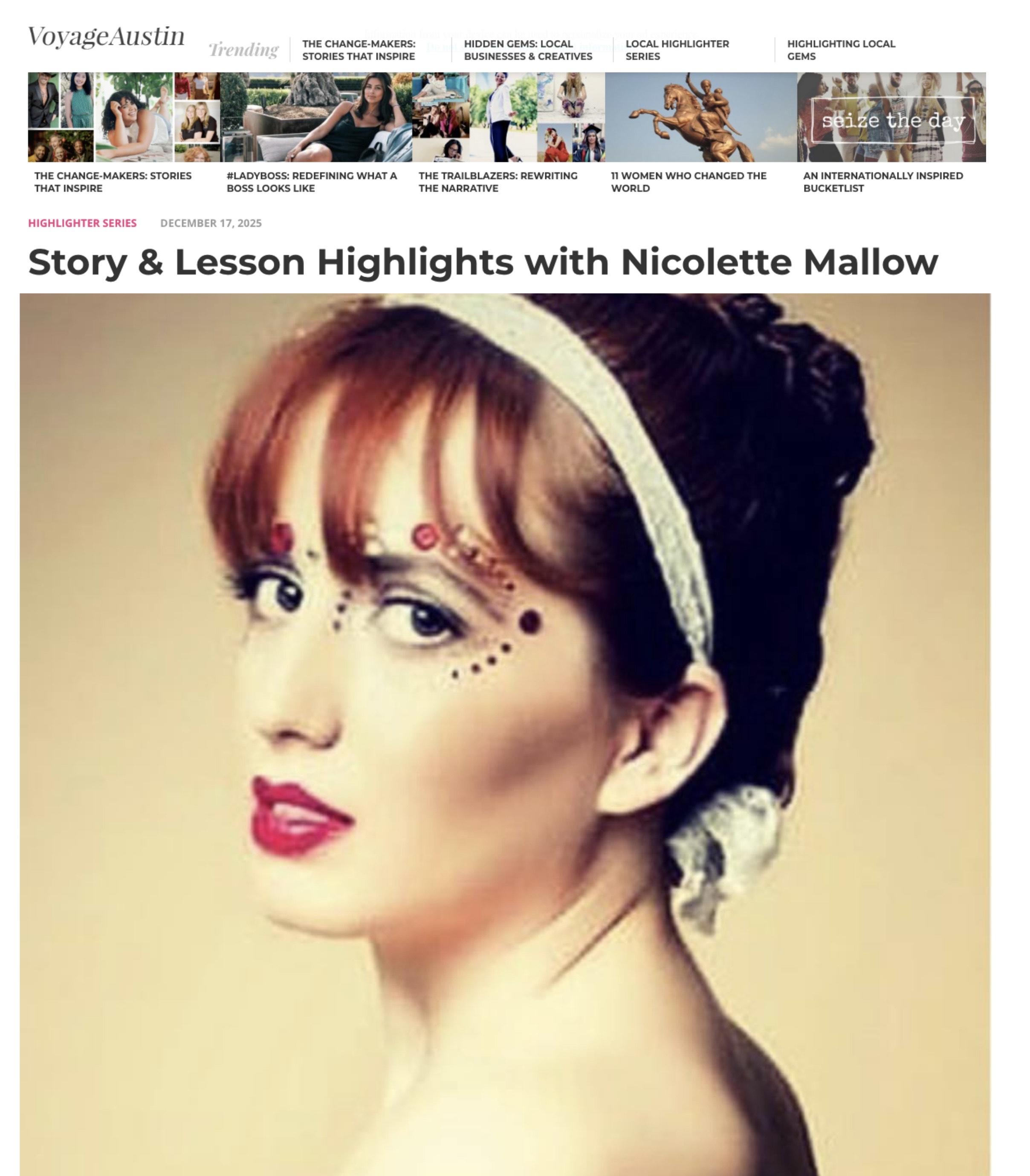
Photography : Steve DeMent
Make-up/Hair: Summer Edwards
Jewelry Head Piece: Adrian Nichole Amiro
Inspiring Local Stories – Voyage Austin

Note: This interview was published by Voyage Austin in July 2025.

Hi Nicolette, can you start by introducing yourself? We’d love to learn more about how you got to where you are today?

My artistic journey began in performing arts and athletics, but my passion for writing led to a career. Ultimately, I feel that SCAD and Texas Monthly were the foundations of my professional path as a writer. Since those roles as student versus employee, I’ve covered numerous press events as a (dyslexic) writer. Over time, I’ve collaborated with companies and PR teams from National Geographic, Prevention Magazine, HBO Films, The Hollywood Reporter, SXSW, The David Lynch Foundation, The University of Texas at Austin, and more. I’ve also interviewed an extensive list of diverse talent beyond my years, including Greta Gerwig, Jimmy Chin, Bob Roth, Dr. Travis Stork, Joan Lunden, Jay Roach, and Roc Chen. My portfolio reflects a vast array of creative content. I’ve been published in the US and Europe. And my career transcends many industries like jewelry, publishing, sales, travel, customer service, fashion, A&E, fine dining, and tech.

Presently, I work as an AI Content Engineer. But I’ve known I was an artist ever since I was little, so that has always been part of my identity, with or without my career. Art and athletics are two of my greatest loves!

As a kid, I always adored sports and performing arts, and my family could see that joy within me, too. I knew from a young age, even around pre-k, that the arts were my true calling in life. Throughout childhood, I focused on music/vocals, theater arts, dance, swimming, and volleyball. Other hobbies and athletic activities came and went, like soccer, gymnastics, modeling, ballet, piano, church choir, Girl Scouts, tennis, or tumbling. But it was abundantly clear when I lost interest in something that didn’t align with me or felt forced. Looking back, I was fortunate to have a family that encouraged me to explore my interests and sponsored such diverse sports and hobbies! I wish I had stuck with piano, but I wasn’t officially diagnosed with dyslexia until college. Learning to read music the traditional way was giving me headaches and anxiety. The instructors didn’t believe my dyslexia struggles, so I memorized keys and melodies instead, but I couldn’t read music.

Early in my junior year at Lake Travis High School, I applied for the Media and Performing Arts (MPA) program at SCAD (Savannah College of Art & Design) and was accepted that summer. I graduated early from high school in December as an Honor Thespian and went straight to SCAD after winter break. I attended their campus in Savannah, Georgia. Halfway into my sophomore year at SCAD, I switched my degree from MPA to Writing. Secretly, I could not bear another moment of being on stage pretending to be another character. I was so internally conflicted because my life dream was to be an actress, a movie star, but my spirit felt otherwise. So I paused my undergraduate studies and went home for six months. During that break from SCAD, I trained with a Masters Swim Team at St. Stephen’s in Austin, Texas, and worked at a marina, but that’s an entirely different story… Once I returned to Savannah and switched majors, I wrote for the District, an award-winning student newspaper. It was cool watching my grades shift after I changed my focus from theater arts to writing. I went from mediocre grades, mostly B’s, to qualifying for the Dean’s List five quarters in a row. My art was shining in a whole new way! Sometime later, the Georgia College Press Association awarded my co-writer and me second place for Best News Article: Objective Reporting. After that, I became the first SCAD student ever selected to serve as an editorial intern at Savannah Magazine and soon completed my B.F.A. at SCAD.

Following graduation, I left Georgia to begin an internship with the Editorial department at Texas Monthly magazine. While serving as an intern, I was additionally hired as a contract employee to work in their Custom Publishing department for the Texas Tour & Meeting Guide Magazine. I also wrote three stories for the Texas Monthly website, which was special and exciting! That’s how it all launched and how I began my professional journey as a writer.

We all face challenges, but looking back would you describe it as a relatively smooth road?

Overall, no, it’s not been a smooth road. For instance, being a dyslexic writer with colorful grammar is a lifelong struggle. Depending on the time or phase in my life I’ve been interviewed, I share more (or very little) about my personal and professional struggles. However, the journey has been rewarding, humbling, scathing, beautiful, and exhilarating. I am so grateful for all the highlights and the blessings! And I’m proud of myself for chasing my dreams despite all obstacles. But I would like to return to media and performing arts, dance, and music. I’d like to create a podcast. And I’m interested in broadening my skills and getting into radio, TV, sports, and film. Plus, I need to finish my memoirs and a magical realism book. Ergo, I have a lot more work to do!

As you know, we’re big fans of you and your work. For our readers who might not be as familiar what can you tell them about what you do?

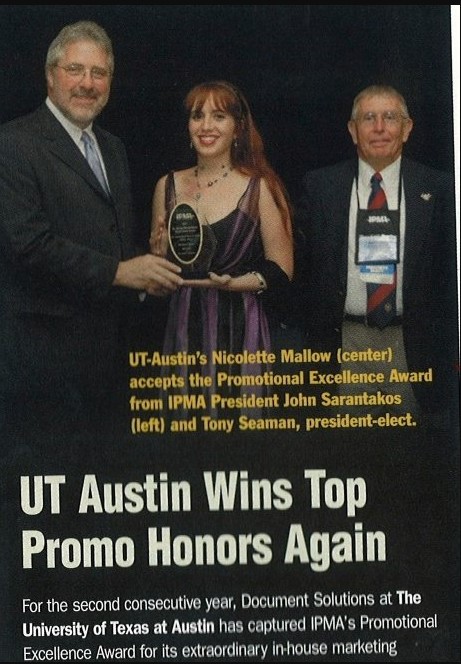
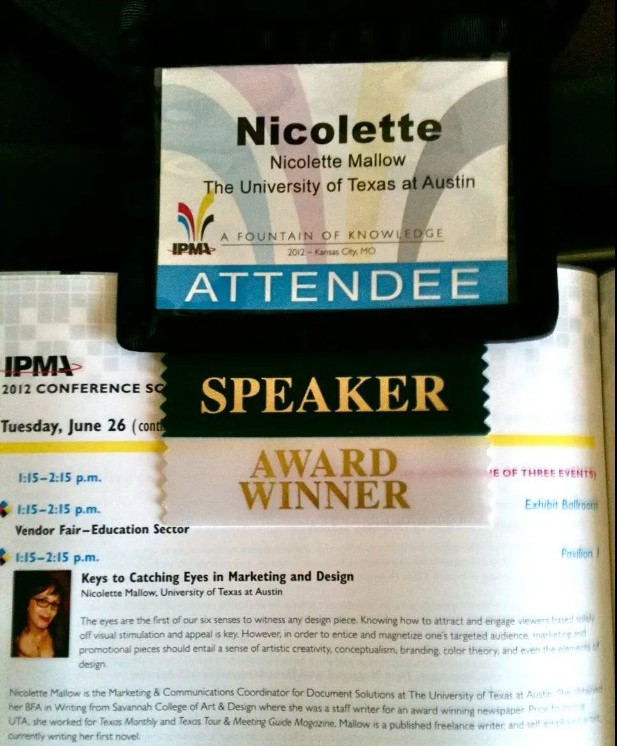
After Texas Monthly, I was hired as the Marketing and Communications Coordinator for the copy, mail, and print department at The University of Texas at Austin. I worked there successfully for a couple of years, and I obtained several awards on behalf of the company. I even landed a public speaking gig at a national conference because of a portfolio I created, winning the IPMA In-House Promotional Excellence Award for the second year in a row! Eventually, I realized that I terribly missed the arts. Copy, mail, and print weren’t my passions, even if I was excelling at them. Sadly, I felt something was missing. I will always be very grateful for my time and the opportunities at UT Austin, but I felt in my heart it was time to rekindle my relationship with the arts. As a result, I went back to grad school to get my Master’s degree. It was tough to decide where to enroll, because I was also accepted to Richmond University in London, England, but I accepted SCAD’s offer. Based on a thesis paper I submitted to SCAD Admissions about Ancient Greece, that paper awarded me academic scholarships to help with tuition. Since I realized that I could not juggle both UT Austin and SCAD— I took a voluntary demotion and resigned from my corporate, salary job with benefits at UT, and I started to work hourly with no benefits in the service industry in order to focus on my studies.

During graduate school, I was not only a student. In that time, I also completed two internships, on top of working at a waterfront country club, as well as freelance writing. In hindsight, I was juggling too much! Grad school was an intense time, even for me. However, when I finally graduated after two years of calamity and controlled chaos—I was relieved and proud of my accomplishment! Yet, I was also confused and astonished that after graduation, I had such difficulty getting back into the corporate world. Suddenly I felt stuck and invisible in the service industry. Although I loved many aspects of the service industry, and I think everyone should work in it at some point, that wasn’t my long-term goal. Or I wouldn’t have enrolled in graduate school.

Suddenly, I wondered if I should’ve played it safe instead of chasing my “silly” passions. I started to doubt my decisions. Growing up, I saw a lot of my elders sacrifice or abandon their dreams for duty, responsibility, and financial security. Since I wasn’t married, and I can’t have kids—I seized my moment and rationalized my decision to pursue my heart over my head. And I’m glad I did! Despite not knowing how difficult it was going to be to return to the corporate world after completing my Master’s degree: I now have zero regrets that I went back to the arts. I learned so much in that tough time, and I came out a stronger, more resilient, emotionally intelligent person from the challenges of starting over. Nevertheless, the truth is that pursuing my artistic desires came with a heavy price because I got stuck in the service industry much longer than I anticipated, and some people enjoyed watching me struggle. However, during this prolonged season of professional exploration, uncertainty, and angst, I never lost sight of my goals. Even if at times I temporarily lost hope or momentum in the future. At the end of the day, I kept looking up, I continued freelance writing, and I focused on my dreams—kind of like a slow-motion personal and professional glow-up.

Any advice for finding a mentor or networking in general?

I recommend gravitating towards people who are smarter, stronger (mentally, emotionally, physically, financially, etc.), and more experienced in skills than you are. Allow others to inspire you to grow, to flourish, and to become an optimal version of yourself. As we grow professionally, it’s important to emotionally mature, too. We need to train our mind and heart to be flexible, powerful, and resilient, the same way we train our body. I have learned so much from interviewing talent beyond my years and observing the masters of their craft! Reading is another powerful learning tool.

Keep your eyes open and trust your gut to find the right, healthy people who want to be a mentor or guiding light to you, and be willing to ask them questions. Mentors may come and go like seasons, but their valuable insight or impressions last a lifetime. Also, it’s lucrative to remain open-minded to listening and learning from people that think, act, and feel differently from us. Even if the lessons they teach us are what not to do. We still learned something valuable.

Be willing to put yourself out there and face rejection or criticism. Remember that mistakes are opportunities to improve. And be kind to yourself, especially when you fail.

https://voyageaustin.com/interview/conversations-with-nicolette-mallow

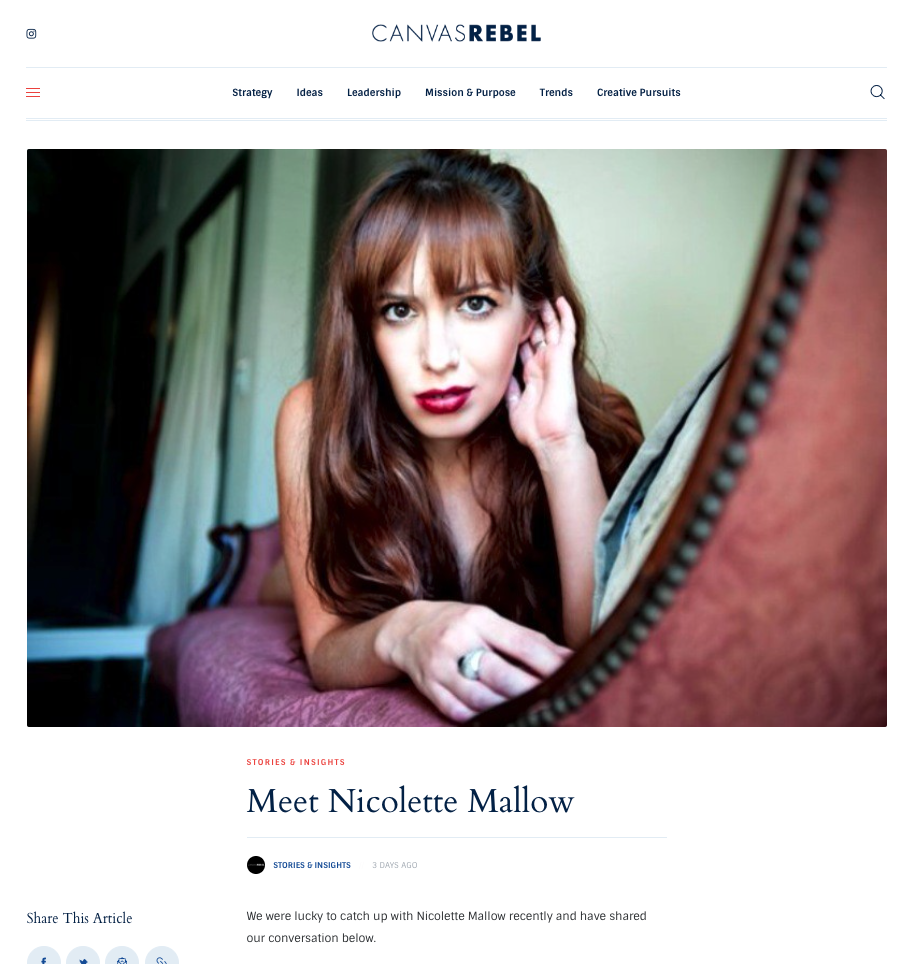
Canvas Rebel Interview

Before the end of summer, I received a letter from the editorial team at CanvasRebel to interview me a second time for their zine. “Their mission is to create a space for artists, creatives, and entrepreneurs to be able to learn from their peers through the magic and power of storytelling. The CanvasRebel series was designed to go beyond the personal story covered last time and to highlight more attention to the artists and creatives in the community.” In 2021, their team contacted me for an interview featured in VoyageAustin. So I was delighted to partake in another interview and hope you all enjoy the read!


Alright, Nicolette thanks for taking the time to share your stories and insights with us today. Are you happier as a creative? Do you sometimes think about what it would be like to just have a regular job? Can you talk to us about how you think through these emotions?

Yes, I’m happy to be an artist. Do I wish the path were (financially) easier for artists? Yes, of course. I’m an underground artist. Not a celebrity or an icon. Outside corporate, state, publishing, or PR gigs– I’ve worked many “regular” jobs for income: a hotel, a jewelry store, a country club, bars, restaurants, fine dining, cafes, and the list goes on and on. So yeah, I’ve wished that the road was shorter and more manageable for most artists to make a living based on their creative talents. I wish it were easier for artists to thrive in the corporate world and enjoy the same financial security as someone in tech or sales. Some people get lucky with connections or Fate–but most of us have to struggle along the way and work harder to achieve financial goals. Most artists have to invest a lot of time in a series of successes, setbacks and mistakes. And the struggle or the wait isn’t always fun; it can be scary and discouraging. But in the end, hard work always pays off through the ups and downs. So long as you keep going, even when you fail. And learn from each mistake. It’s O.K. to get jaded, but don’t give up. Focus on the positive and rekindle the spark, the light, the drive, and the passion to carry on.

Emotionally, I feel blessed and fulfilled with diverse artistic talents. Thankfully, I discovered my purpose in life early on. The arts help(ed) me express my voice and identity, which gave me self-confidence and self-empowerment. Art is transcendental and can heal us, give us a safe place to display emotions and create magic in what can be a melancholy world. I would be too repressed and lost without writing, singing, and dancing to my love of music. Without art, without the freedom of imagination or daydreaming, I would be a tormented spirit. Therefore, art is essential to me, like sleep, water, nutrients, fitness, money and oxygen.

Nicolette, love having you share your insights with us. Before we ask you more questions, maybe you can take a moment to introduce yourself to our readers who might have missed our earlier conversations?

My professional writing career began in 2005 at Savannah College of Art & Design (SCAD). I joined the District, an award-winning student newspaper, and started to get published in my undergraduate program. The Georgia College Press Association Conference awarded an article I wrote for District newspaper 2nd place for Best News Article – Objective Reporting. I was also the first SCAD student ever selected to serve as an Editorial Intern at Savannah Magazine. After graduation, I left Georgia to begin an internship with the Editorial department at Texas Monthly magazine in ATX. Then I was hired as a contract employee to work in their Custom Publishing department for the Texas Tour & Meeting Guide Magazine. I wrote three stories for the Texas Monthly website, which was exciting!

SCAD and Texas Monthly are the launchpads of my professional journey as a writer. First, however, I began my artistic journey in performing arts, tracing back to pre-k to college. Born and raised in Texas and NYC—I’m an artist: writer, dancer, vocalist, thespian & (amateur) photographer. I’ve done a little modeling, too, and was accepted by Barbizon Modeling in the 1990s but declined their offer. As a little girl, I was fortunate to be exposed to a colorful variety of music, artwork, and cultures. A third-generation American, I’m a Latina, Lebanese girl that has always adored theatre arts, dance and music. So, it began with theatre, music/voice classes, choir, and endless dance lessons, year after year. I tried the piano, too, but enjoyed singing and dancing far more than sitting still in one place. Although, I wish I had mastered at least one instrument. Initially, I was accepted to SCAD to study Performing Arts. Halfway through my sophomore year, I switched my major to Writing. I went from a mediocre GPA to qualifying for the Dean’s List five quarters in a row. It showed on paper how much I loved writing! Which was interesting since I am dyslexic.

Internationally published in the United States and Europe, I’ve obtained 110+ publications thus far. For 17 years, I’ve interviewed an extensive list of talent and collaborated with companies, directors, and PR teams from The Hollywood Reporter, National Geographic Channel, Prevention Magazine, HBO Films, SXSW, The David Lynch Foundation, Cine Las Americas, The University of Texas at Austin and more. Presently, my portfolio entails 12 national awards or scholarships, including both individual and group projects. Obtaining two degrees from the Savannah College of Art & Design (SCAD), I earned a Master of Arts degree in Arts Administration & a B.F.A. in Writing.

But yeah, I’ve loved performing arts and playing sports for as long as I can remember. As a kid, I was always torn between the arts and athletics.  I would bounce back and forth between my two greatest loves. I played many sports, but swimming, volleyball, and dance were my favorites! My first swim team in Kindergarten was the Shavano Sharks, then West Austin Athletics, until my Master’s swim team in college at St. Stephen’s. When I finally had to choose in college, I chose the arts. A decision I do not regret; alas, it was one of the most challenging choices of my young adult life. I am still an athlete—that energy in my heart will never die. But art heals me and gives me a purpose in a way sports cannot. However, dance is a sport, too, not just a form of art. As an adult, I took belly dancing classes with Stacey Lizette and still love to dance with my finger cymbals!

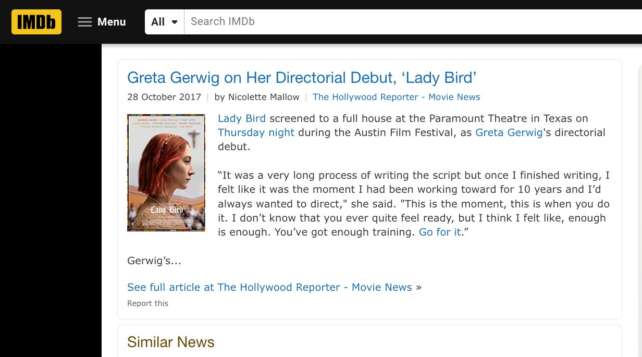
It’s been a wild adventure since I devoted my heart to the arts. One of the most incredible moments of my career was in 2010 when my editors at WideWorld Magazine in London, UK, commissioned me to interview a photographer for National Geographic and a sponsored athlete for The North Face, Jimmy Chin. They flew me to Washington, DC, where I interviewed Chin before attending a banquet at National Geographic headquarters in his honor. In 2019, he won an Oscar for his Documentary, “Free Solo.” It’s amazing! This interview made me internationally published in the US and Europe, a massive step in my career. Plus, I’ve adored Nat Geo since childhood, and this was a dream come true. Mr. Chin was also very kind to me, and I remember that kindness because I was so new to the game and trying not to look or sound like a rookie. Another great day was when I got to interview Greta Gerwig on the red carpet at the Austin Film Festival about her “Lady Bird” film debut. The story was published in The Hollywood Reporter and IMDb.com. I could keep going with happy memories from freelance writing!

In hindsight, my career is diverse and transcends many industries, but the end goal is the arts. Customer service and communications are another big focus in my career as I’ve worked for companies like Nordstrom, Hotel Van Zandt (Kimpton/IHG) and Kendra Scott. I love to transcend industries and learn new skills like event planning, sales, marketing, design, and promotional publicity. I’m a great assistant, too, as I’m very organized and efficient. Alas, some companies see my desire for knowledge and change as flighty, like a butterfly, but I choose to see it: I’m adaptable to environments. I’m intelligent and skilled. And I bring excellence, kindness, and intellect to anything I set my mind to.

Lastly, I enjoy all forms of writing, but my favorite writing genres to create entail arts & entertainment, literary journalism, travel, magical realism, and nonfiction. I’m eager to rekindle my spot on stage or behind the camera! Lately, I’ve been recording music. But I have a lot of goals to achieve in the next ten years, personally and professionally. I’ve been doodling costume ideas for my voice and dance routines. Due to the pandemic and personal reasons, I’ve been quiet for the last few years, and I’m ready for some noise and to meet some new creative talent. It took me a long time to realize that it’s OK to be an introverted writer and an extroverted performing artist.

What’s a lesson you had to unlearn and what’s the backstory?

A good writer can have dyslexia. Unfortunately, there is a stigma: all dyslexic writers are destined to fail due to bad grammar and the inability to read or spell. This is a false narrative I had to rebuke. It took time and still does, considering most of society holds misguided views about dyslexia. And dyslexia doesn’t go away. Thus, my dubious and faulty grammar will follow me all my life. I wrote a story about it called “Dare to Dream with Dyslexia.”

A dyslexic writer is an oxymoron for most. Dyslexia is often associated with incompetence. It took many years, tears, and accolades to believe that I’m a writer. When it came to my writing, my confidence was intermittent and inconsistent for years. One day I felt good and knowledgeable. Another day I felt lousy, often depending on the company I kept. People can enjoy talking over me and correcting my grammar, even when they understand me. Finally, after living with dyslexia my whole life, I sought an Educational Diagnostician for an official diagnosis. I fall into the category of 2E dyslexia, which stands for twice-exceptional. According to the International Dyslexia Association, “Twice-exceptional or 2e is a term used to describe students who are both intellectually gifted (as determined by an accepted standardized assessment) and learning disabled, including students with dyslexia.” Statistics estimate that about 2-5% of the population has this form of dyslexia, maybe higher.

It’s funny because I taught myself the alphabet and how to read when I was three. With the use of Hooked on Phonics and the guidance of my parents: I was fully literate before elementary school. By the time I turned four, I was reading chapter books on my own. I asked my parents to go to the library for fun. The catchy slogan, “Hooked on Phonics worked for me!” is true. So, how can society deem someone like me as lacking intelligence when I taught myself how to read at the age of three? And yet, they do question my abilities. C’est la vie!

Flash forward to adulthood, a story I addressed in detail within my previous VoyageAustin interview. After years of success, suddenly, no company would tell me why I wasn’t selected for writing or editorial work. Each time I came in silver or bronze, I kept asking about each rejection so that I could work on the issue. But I kept getting ghosted, or sent an insincere PR note without explanation. All that time, writing samples I’d submitted to prospective employers for free—writings that took hours, days, or weeks to complete—and the editors or hiring managers didn’t even reply as to why I wasn’t hired—only a generic rejection letter.

I asked myself: Does that seem right to you, Mallow? Do you want to work for a company that asks for free work without the respect of a critique or an honest rejection? The answer is a bonafide, no. Finally, last summer, a hiring manager from a book publishing company told the recruiter to inform me. I was not selected because I made too many grammar errors for hire. Sadly, I’ve heard these words since the seventh grade: your grammar is lacking. Ain’t nothing new. I’m aware that people love to hate on my grammar. I simply didn’t know how to fix it. No one knew I was dyslexic, even me, till my AP English teacher in 11th grade. Until then, I was able to fool the system and myself into believing that I knew grammar.

Last summer, when I read the email from the recruiter about my grammar or lack thereof. For the first time during the interview process, especially since I had nothing to lose, I confessed my secret: I am dyslexic. To much surprise, the recruiter told me that dyslexia is a superpower and nothing to be ashamed of. She advised me to check out Grammarly, which I now pay for and utilize. The recruiter also advised me to be forthright with employers about dyslexia. In private, I cried because I was heard, seen, and acknowledged. And I thanked her for the kindness and professionalism. They asked if I wanted special accommodations, but I declined.

Ultimately, I’m grateful because now I can use Grammarly and overcome these challenges. Finally, I found some peace of mind and ease with Grammarly. Yes, the truth hurts to read. I’ve heard it for far too long. It’s disheartening that my grammar can overshadow my accolades. And it makes me sad for younger generations, the children, because what kind of message does that send out? “Kids, you can be anything you want to be, so long as you don’t have a learning disability.”

Fact: A good writer can have dyslexia. Unlike grammar, a heart and a voice cannot be taught in schools.

How can we best help foster a strong, supportive environment for artists and creatives?

To better support artists, creatives, and a thriving creative ecosystem–we can accept others’ uniqueness and oddities rather than rebuke them. Artists are different. Society often wants everyone to be the same because differences can make us uncomfortable, afraid, or insecure. In the animal world, we have many species, and each is created in its own design. Why does society often expect humans to all be the same? Artists are their own kind of breed. Accept us for who we are. And as we become more accepting of others, we become more accepting of ourselves. Love begets love. This idea of acceptance applies to my fellow artists as well because we need reminders to be open-minded, too.

We can also better support artists and creatives by showing monetary support. Buy a ticket to a movie, go to a live music show or donate to NPR. Share the wealth. Sadly, many corporate environments (outside the arts industries) claim they like to hire artists/creatives but do not and will not. Just like a lot of companies say they don’t discriminate because of age, gender, disability, etc., yet they do. Please be open-minded to change and give us a chance and hire more artists; those who work hard will impress you with our creative thinking, work ethic and visionary ideas. We have far more skills than paintbrushes, music and drawings. Let us showcase your companies!