Gabriel Garcia Marquez is immortalized by The University of Texas at Austin

nicolette mallow
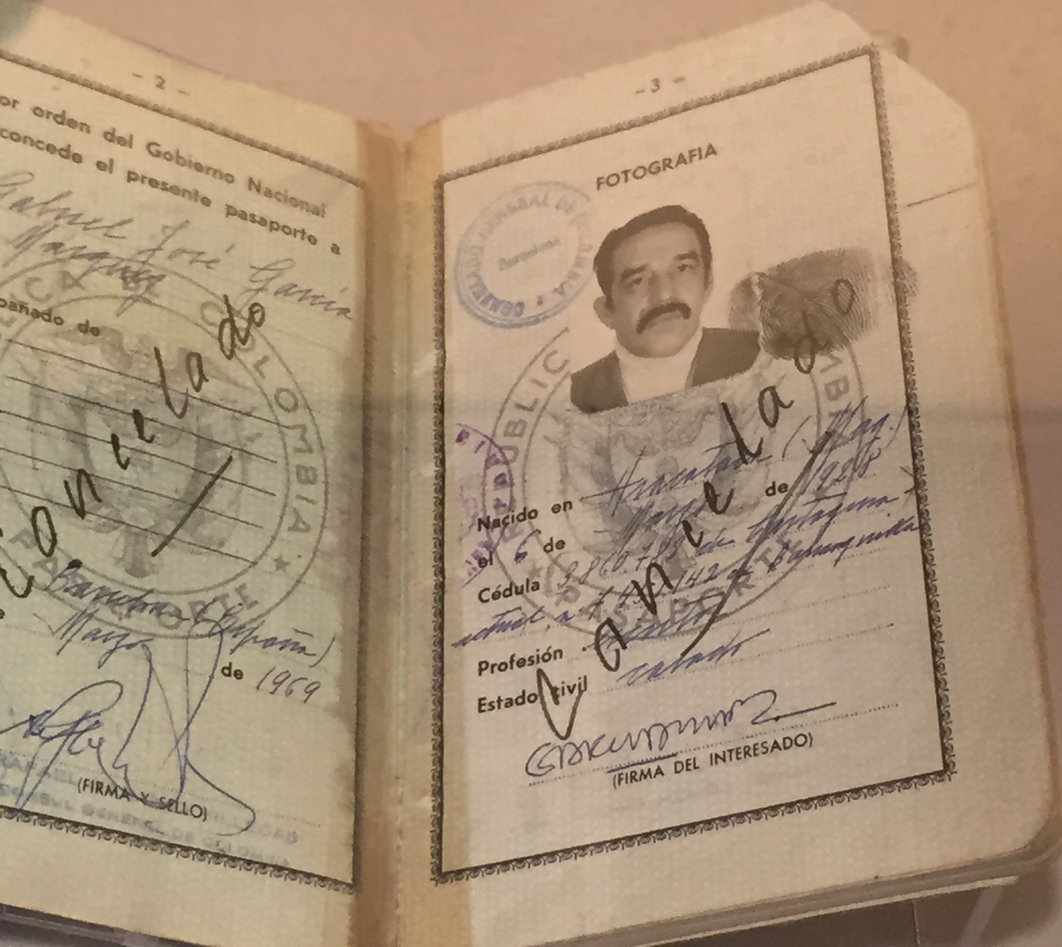
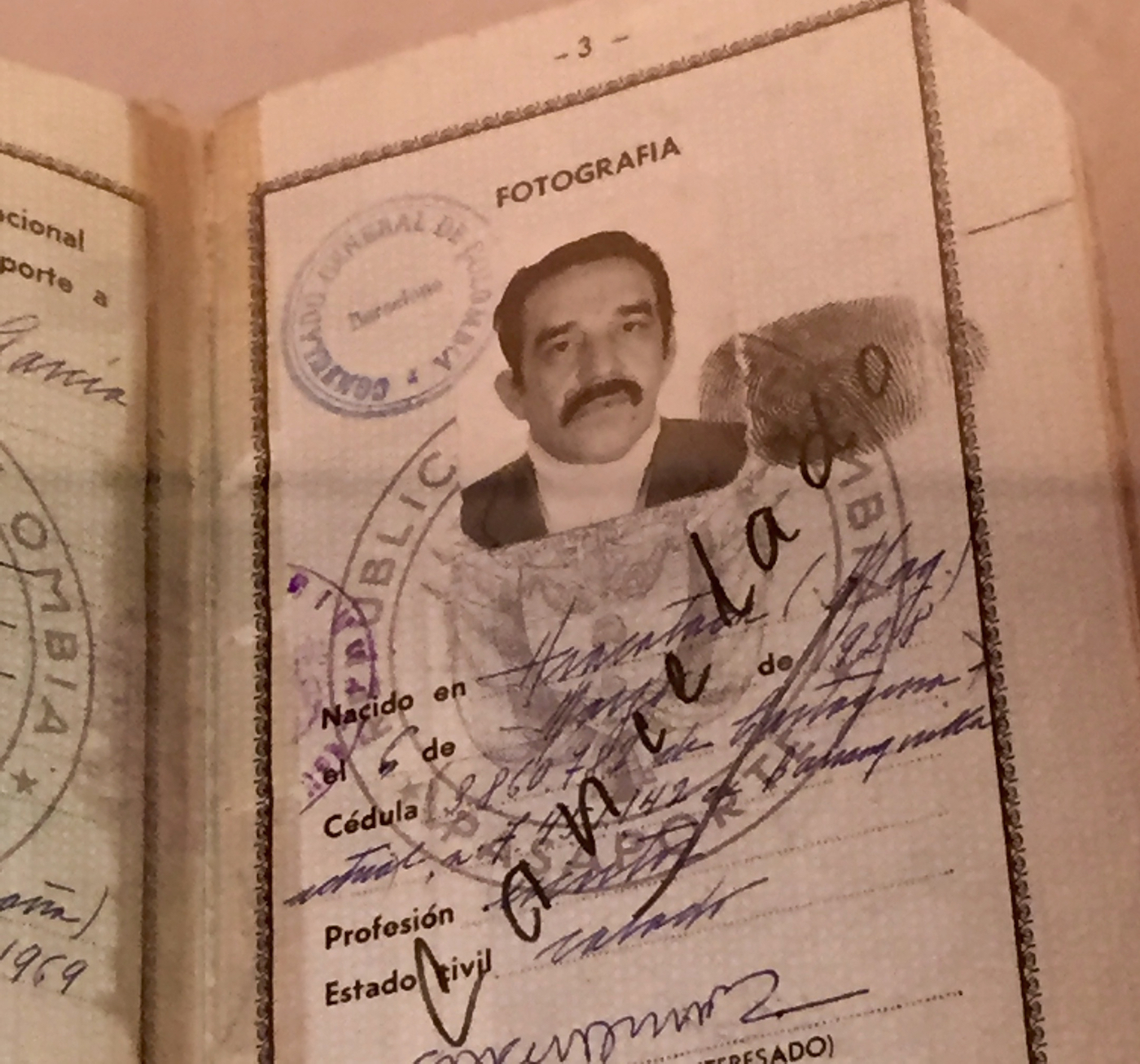
Pasaporte de Gabriel Garcia Marquez, 1969-1976. Photography by Nicolette Mallow.

The Harry Ransom Center at The University of Texas at Austin has become a safe haven of archives in honor of Gabriel Garcia Marquez. A magical realism writer that created words of mysticism, beauty, love and tragedy; Marquez, also known as Gabo, had an eternal voice that was so unique it created its own genre of writing. Marquez takes readers to another dimension within reality, like magic, and he is able to evoke heartfelt emotions that linger like the smell of fine perfume in the air, or tender kiss on the skin.
  • nicolette mallow
  • nicolette mallow
  • nicolette mallow
  • nicolette mallow

According to the Harry Ransom Center, “More than 75 boxes of documents constitute the archive of the Colombian-born author, journalist, screenwriter and key figure in Latin American history and politics. Researchers will have access to manuscript drafts of published and unpublished works, correspondence, 43 photograph albums, 22 scrapbooks, research material, notebooks, newspaper clippings, screenplays and ephemera.”

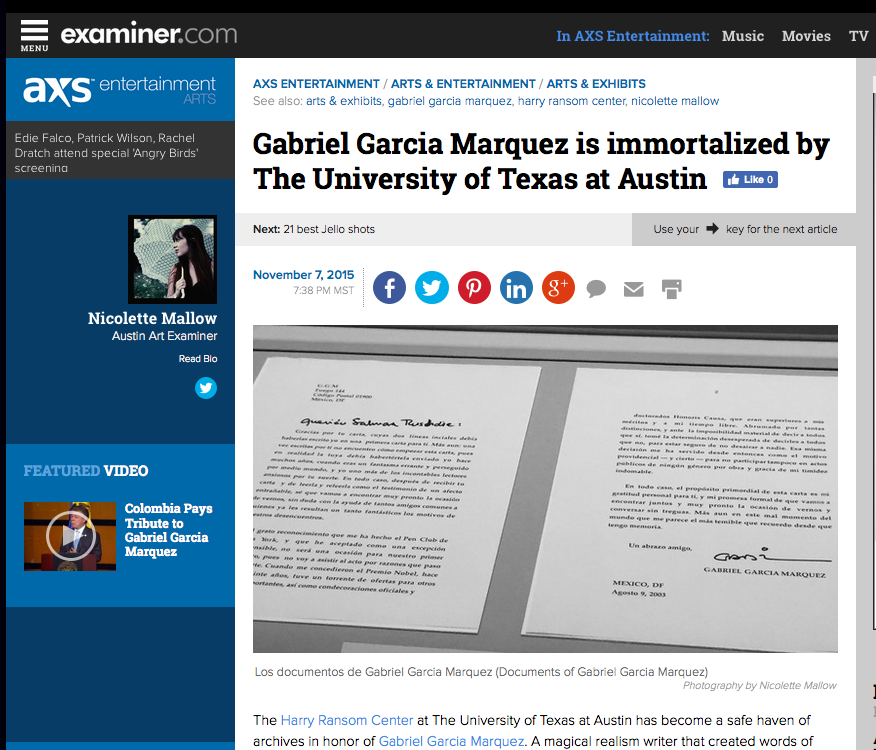
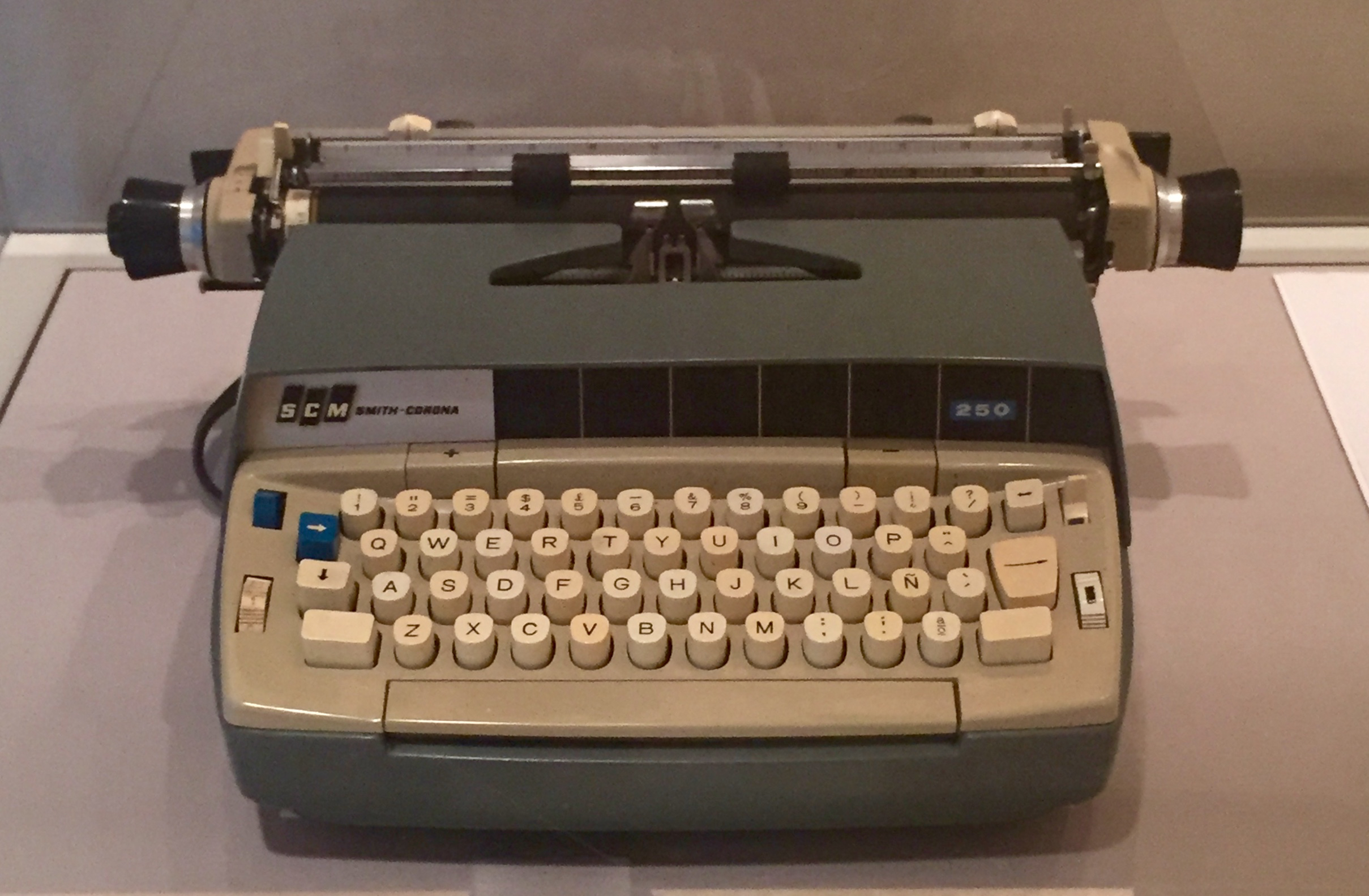
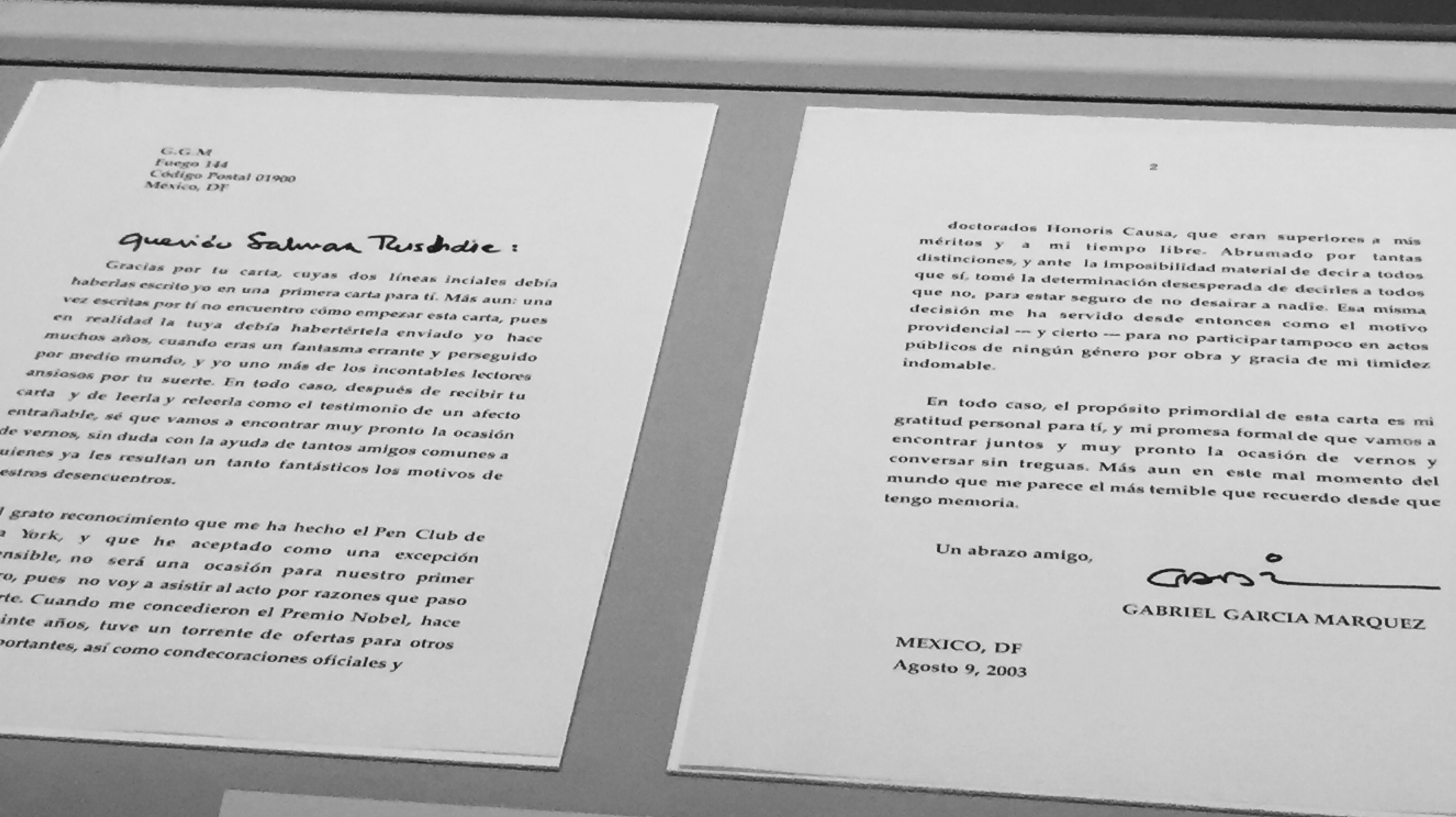
Also on display within the library and museum are a few glass encasings for viewers to admire entailing the following artifacts: Gabriel Garcia Marquez’s passport, edited transcripts, his Nobel Prize acceptance speech, a letter to US President Jimmy Carter, and edited chapters of his book. Within one of the display cases on the first floor, guests can regard the Smith-Corona 250 typewriter that Marquez used to write so many of his stories. To imagine his hands working on all those keys. Touching all those keys thousands upon thousands of times as he wrote stories that would fill the world with magic. It was a remarkable experience to see the typewriter that he used to write. And it was a delight to see his handwriting in Spanish amongst all the edited transcripts, letters and chapters of his books.

Born the year of 1927 in Colombia, last year in 2014 Gabriel Garcia Marquez died of pneumonia in Mexico City. A great artist was lost that day. The New York Times ran an article soon after the writer passed in 2014 that read, “Mr. García Márquez, who received the Nobel Prize for Literature in 1982, wrote fiction rooted in a mythical Latin American landscape of his own creation, but his appeal was universal. His books were translated into dozens of languages. He was among a select roster of canonical writers — Dickens, Tolstoy and Hemingway among them — who were embraced both by critics and by a mass audience. Mr. García Márquez was a master of the literary genre known as magical realism, in which the miraculous and the real converge. In his novels and stories, storms rage for years, flowers drift from the skies, tyrants survive for centuries, priests levitate and corpses fail to decompose. And, more plausibly, lovers rekindle their passion after a half-century apart.”

In order to view the archives in the reading room, guests make partake in an online orientation video before requesting an appointment to visit. The display cases will be open to the public until November 11, 2015. For more information about the archives, the display cases or The Harry Ransom Center: please visit their website at http://www.hrc.utexas.edu.

“Así termino pensando en él como nunca se hubiera imaginado que se podía pensar en alguien, presintiéndolo donde no estaba, deseándolo donde no podía estar, despertando de pronto con la sensación física de que él la contemplaba en la oscuridad mientras dormía, de modo que la tarde en que sintió sus pasos resueltos sobre el reguero de hojas amarillas en el parquecito, le costó trabajo creer que no fuera burla de su fantasía.” – Gabriel Garcia Marquez (El Amor En Los Tiempos Del Colera).

“And so she thought about him as she never could have imagined thinking about anyone, having premonitions that he would be where he was not, wanting him to be where he could not be, awakening with a start, with the physical sensation that he was looking at her in the darkness while she slept, so that on the afternoon when she heard his resolute steps on the yellow leaves in the little park it was difficult for her not to think this was yet another trick of her imagination.” – Gabriel Garcia Marquez (Love in the Time of Cholera).

Note: This article was originally published on Examiner.com in November 2015.
Viva la Vida: Mexic-Arte Museum honors Día de los Muertos festival for 32 years in Tejas

nicolette mallow

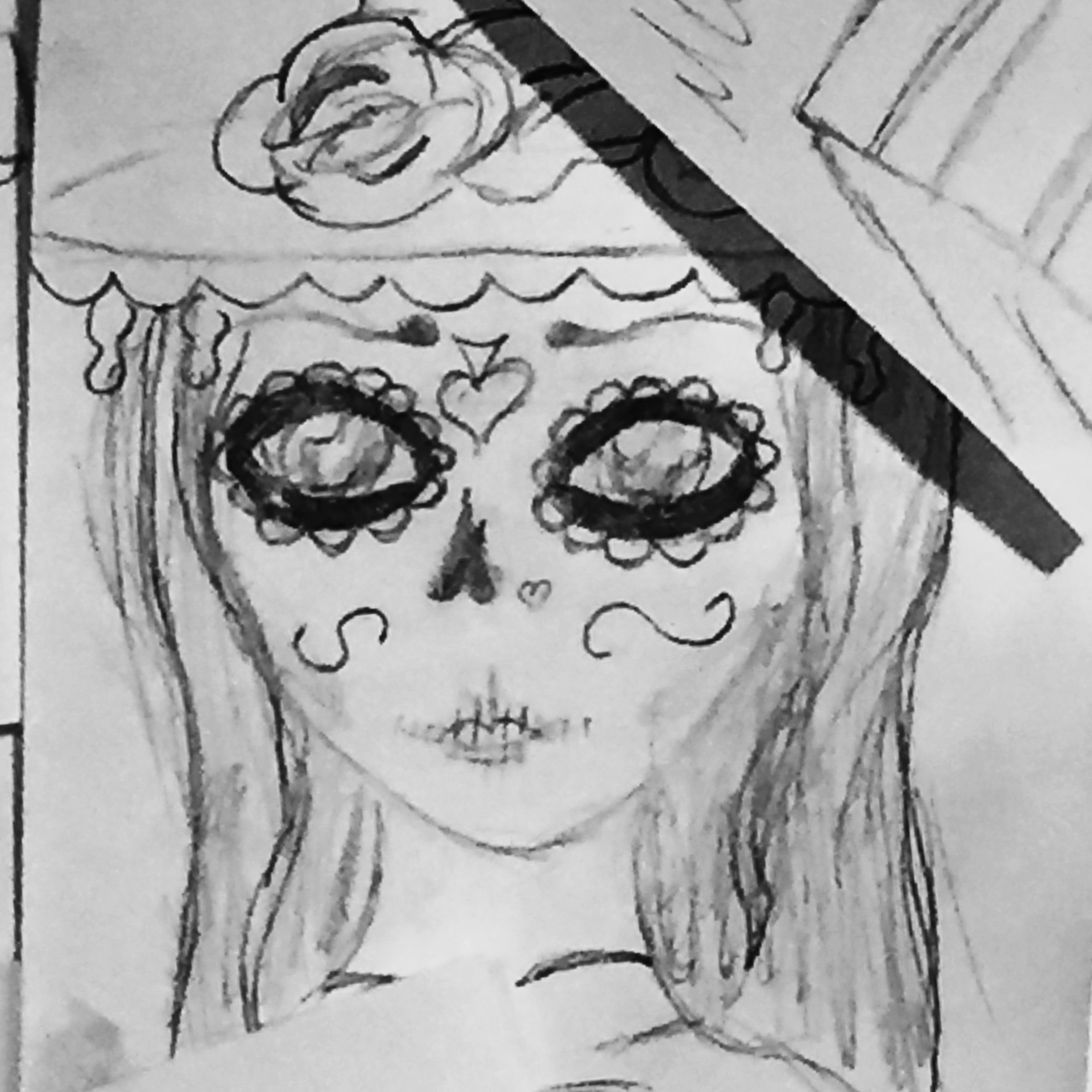
La Catrina drawn by unknown artist at The Mexic-Arte Museum. Photography by Nicolette Mallow.

Since the doors first opened in 1984, the Mexic-Arte Museum in Austin has celebrated thirty-two years of Día de los Muertos (Day of the Dead) festivities. This October the museum presents two seasonal exhibitions alongside its annual Viva la Vida festival featuring a grand procession, artist vendors, live music, and a grand sugar skull piñata float by local piñata artisans Monica and Sergio Lejarazu. The museum will also host a black-tie masquerade event known as the Catrina Ball that will debut at The Four Seasons Hotel.

The highlighted Día de los Muertos exhibition at the Mexic-Arte Museum, Community Altars: Ofrendas Inspired from the States of Mexico, is located within the main gallery and contains nearly a dozen altars to honor the lives of loved ones who are deceased. Adorning the altars are flowers, crosses, candles, angels, framed photographs, flags, hand-cut paper, skulls and catrinas. Echoes of a film directed by Jim Hill, Llamar a los Muertos a Casa (Calling Home The Dead), are heard as guests walk about the rooms. In the very back of the exhibition there is a bench to sit and watch the movie about the villagers of Lake Pátzcuaro. And viewers can learn why it’s believed this land is a doorway to heaven.

nicolette mallow

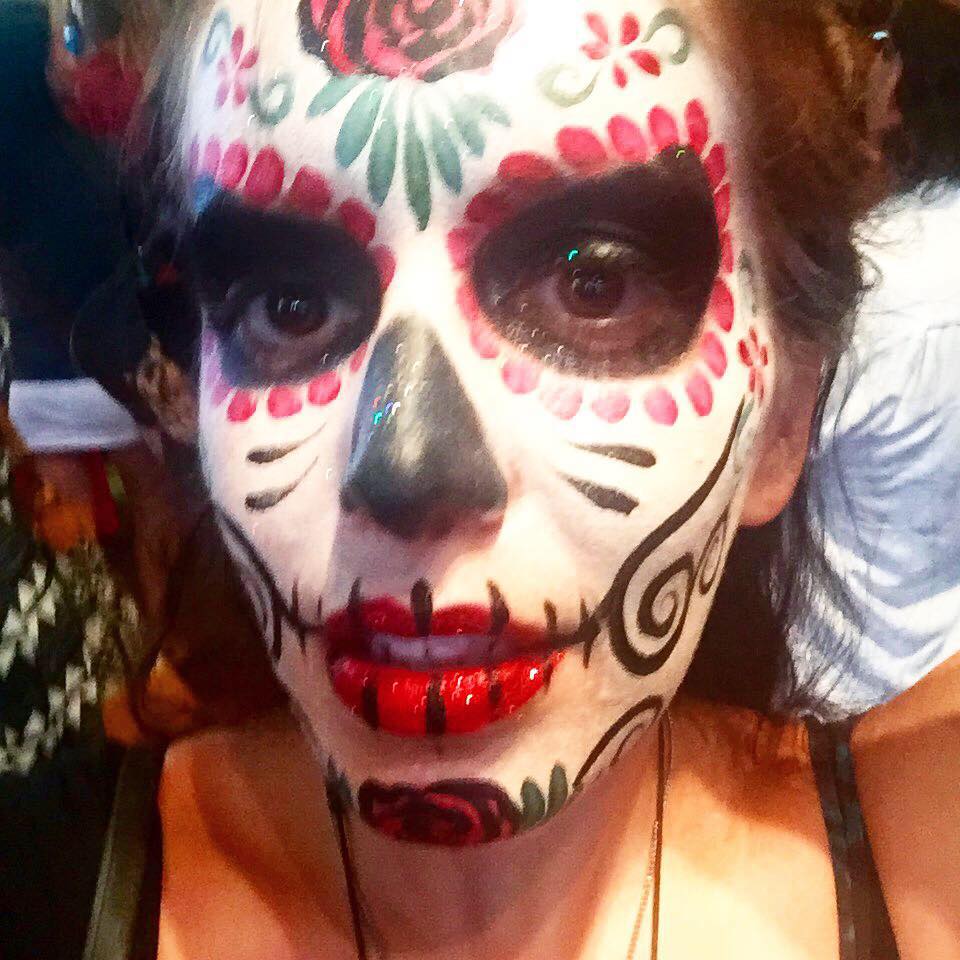
Nicolette Mallow in La Catrina face paint at the Viva la Vida festival in October 2015.

Each altar represents the regional and cultural differences within diverse areas of Mexico, including the following states: Guanajuato, Guerrero, Jalisco, Michoacán, Oaxaca, Puebla, San Luis Potosí, Veracruz, Mexico D.F. and Coahuila. Admiring the similarities and dissimilarities between the altars is part of the appeal. Not a single altar is identical to another, and yet the holiday spirit Día de los Muertos is strong within every altar, unifying the exhibition at the Mexic-Arte museum.

In 2003, the 78th Legislature of the State of Texas awarded the Mexic-Arte Museum as the Official Mexican and Mexican American Art Museum of Texas. Also according to their website, “Día de los Muertos is an ancient, Mexican and Mexican American religious holiday with a historically rich tradition that integrates both pre-Columbian and Catholic customs. It is often celebrated in connection with the Catholic Holy Days of All Saints’ Day and All Souls’ Day (dates and length of the celebration vary by state or region). In the celebrants’ minds, the holiday is a time to honor and greet their deceased relatives and friends, who make the journey back from Mictlan (the underworld in Aztec culture) to be with the living each year. These days are a time for families and friends to gather in celebration of life and death, embracing the circle of life rather than loss and sorrow.

Standing in a room of altars that pay homage and respect to the dead, it might not seem like a place of love and light to those unfamiliar with Día de los Muertos. However, there is an undeniable force of love and life flowing throughout the rooms. An intense and evocative kind of love that can be seen and felt like standing next to a bonfire on a frigid moonless night. Looking at the altars one-by-one, imagining the time it took to make it all by hand. Thinking about the fact that massive quantities of people from all over the country designate the time and energy each year to create memorials. Memorials that signify and represent their memories towards family members or loved ones no longer living is indicative of their selflessness, loyalty and respect. It’s indicative of their devout love. It’s very moving to the heart and mind as guests walk from altar-to-altar; absorbing a sense of each person, or persons, revered at every altar by those still living. Unlike a tombstone that only states a name and dates of life, these large altars are unique to each family member and give viewers are stronger sense of personality. Books, jewelry, baskets of black beans, blankets, pottery, Marlboro cigarettes, bottles of tequila, and guitars; various items are placed throughout the altars, humanizing and personalizing the interests and pleasures of each person’s life.

Additionally, bright lights and vivacious colors illuminate the altars. Color and light are key elements in this exhibition at the Mexic-Arte Museum. Blue, red, pink, yellow, green and violet are prominent colors seen throughout the altars in the main gallery. Marigold flowers are one particular item of deeper significance seen at every altar. “Marigolds guide the spirits to their altars using their vibrant colors and scent. It is believed that the spirits of the dead visit the living during the celebration. Marigolds, or flowers in general, also represent the fragility of life. The marigold most commonly used in Día de los Muertos celebrations is the Targetes erecta or African Marigold, otherwise known as cempasúchil or flower of the dead.”

To view the history of thirty-one prior Día de los Muertos celebrations at the Mexic-Arte Museum, please venture to the annex gallery. Exhibitions will be on display through most of the autumnal season until mid-November. Please note the Viva la Vida festival is a daylong, eight-hour event open to the public on October 31, 2015. Tickets to the Catrina Ball on October 17, 2015 can be purchased online. For more information regarding upcoming events, exhibitions, admission, memberships and hours of operation, please visit www.mexic-artemuseum.org or call 512-480-9373.

¡Viva Mexico & Tejas!

Note: This article was originally published on Examiner.com in October 2015. 

This slideshow requires JavaScript.

Examiner.com shut down its website

nicolette mallow, examiner.com

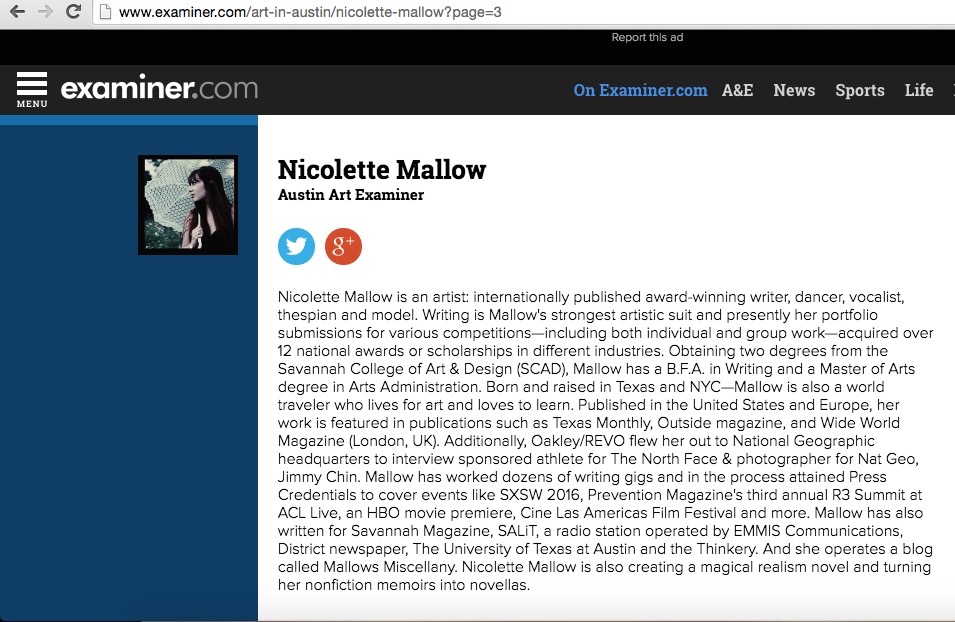
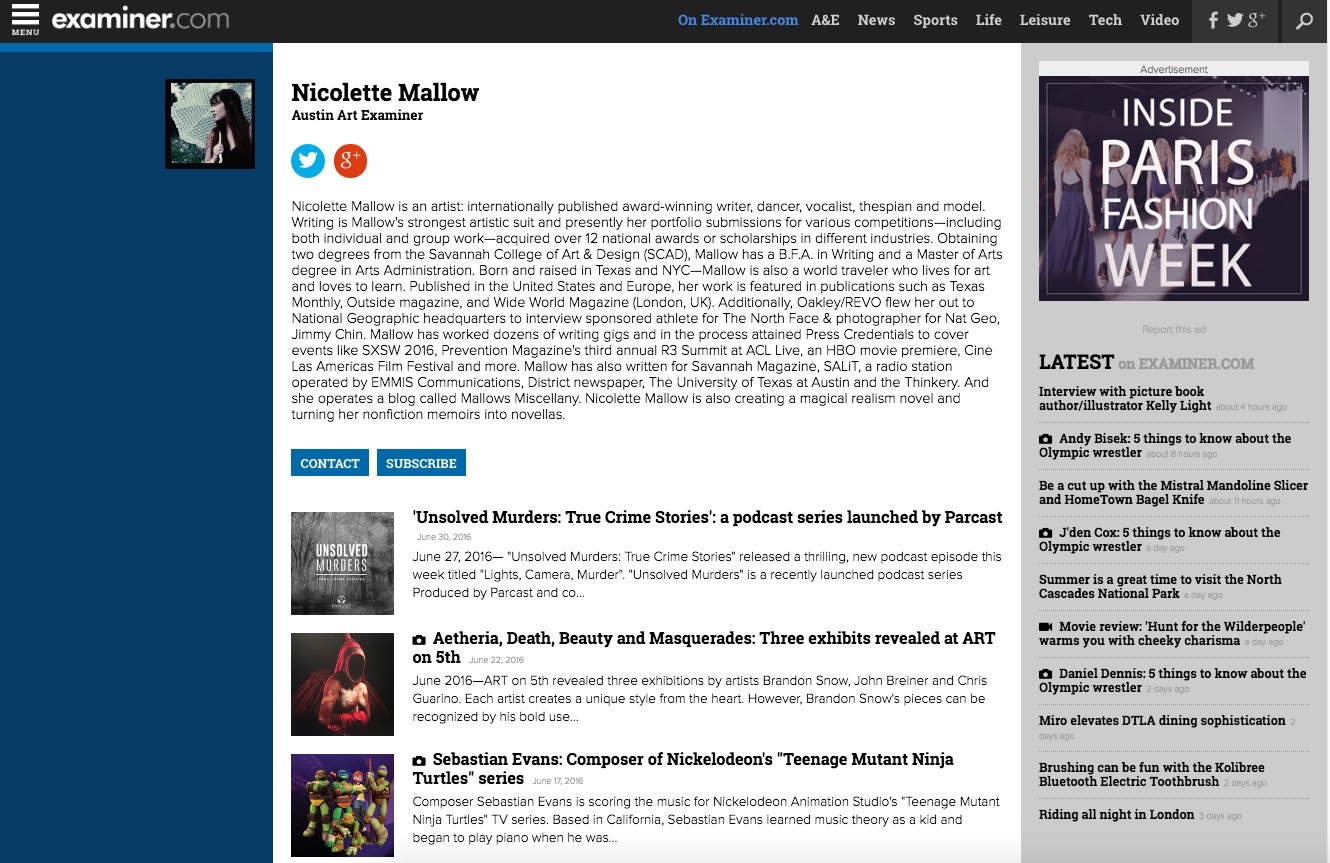
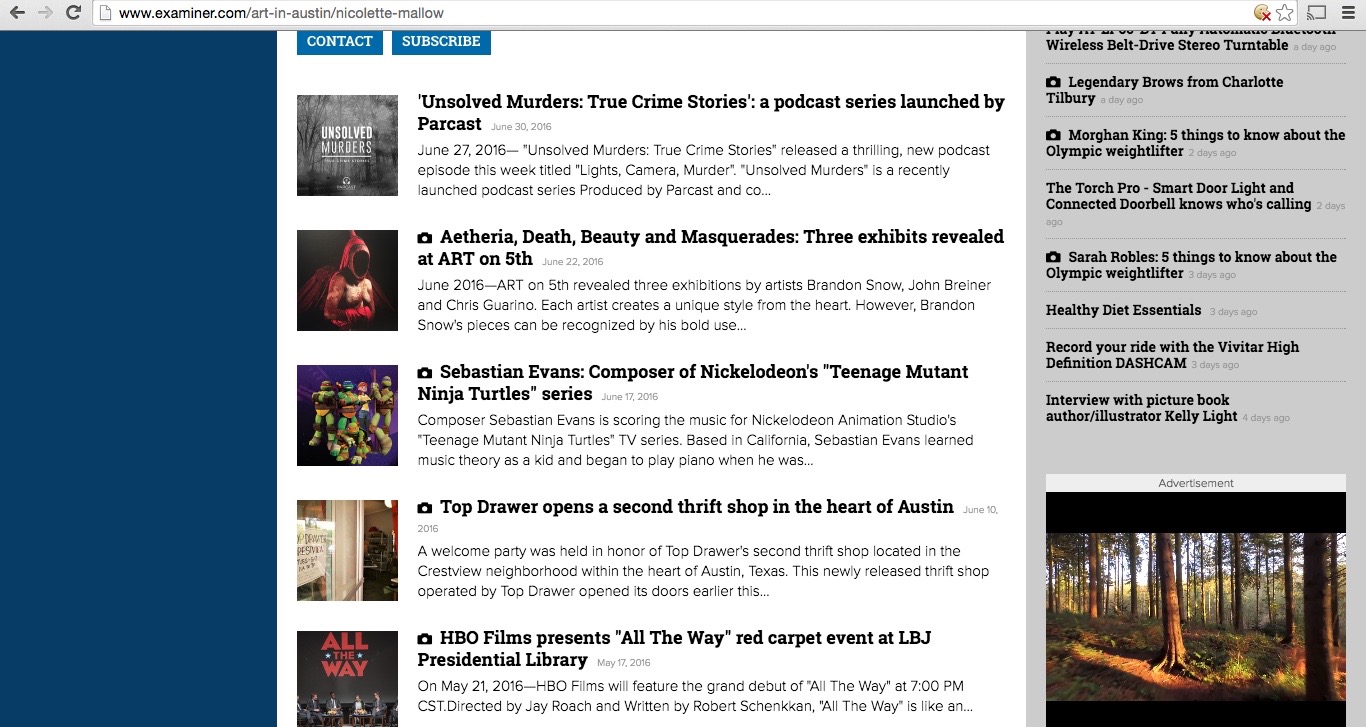
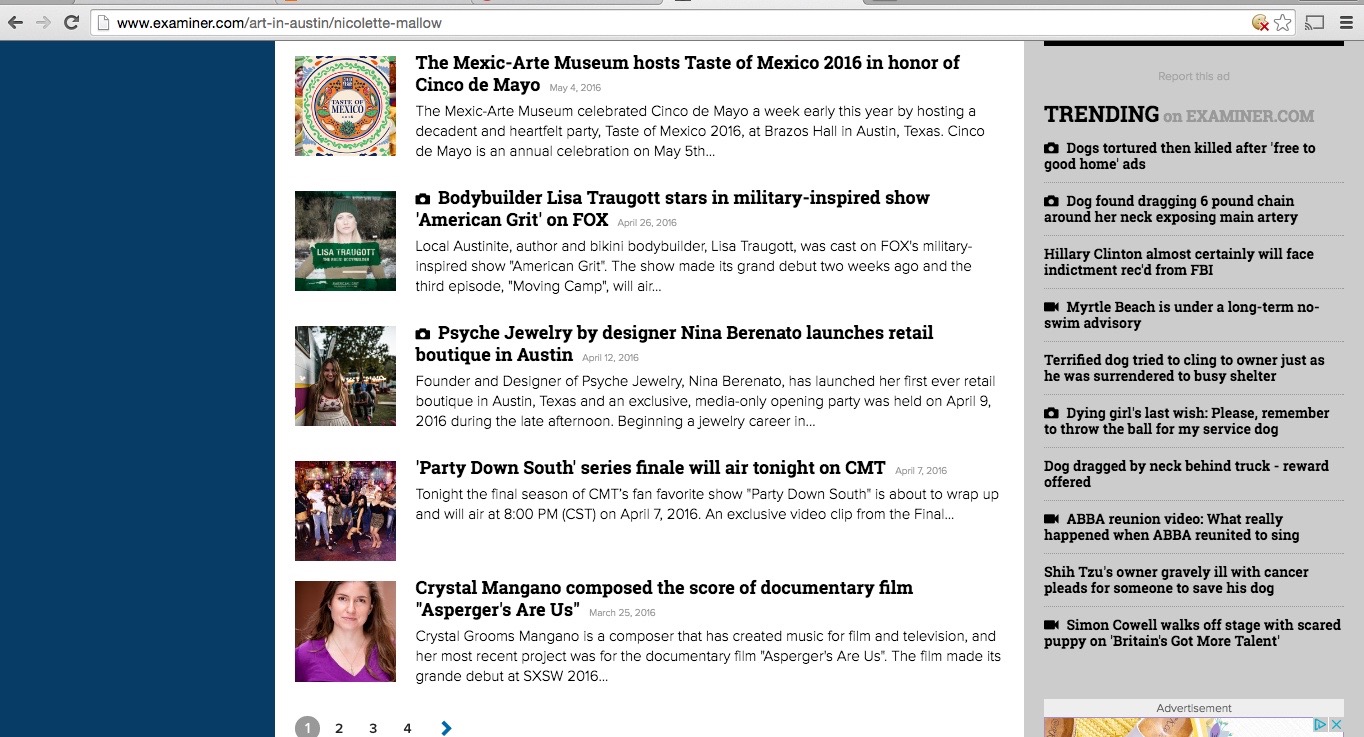
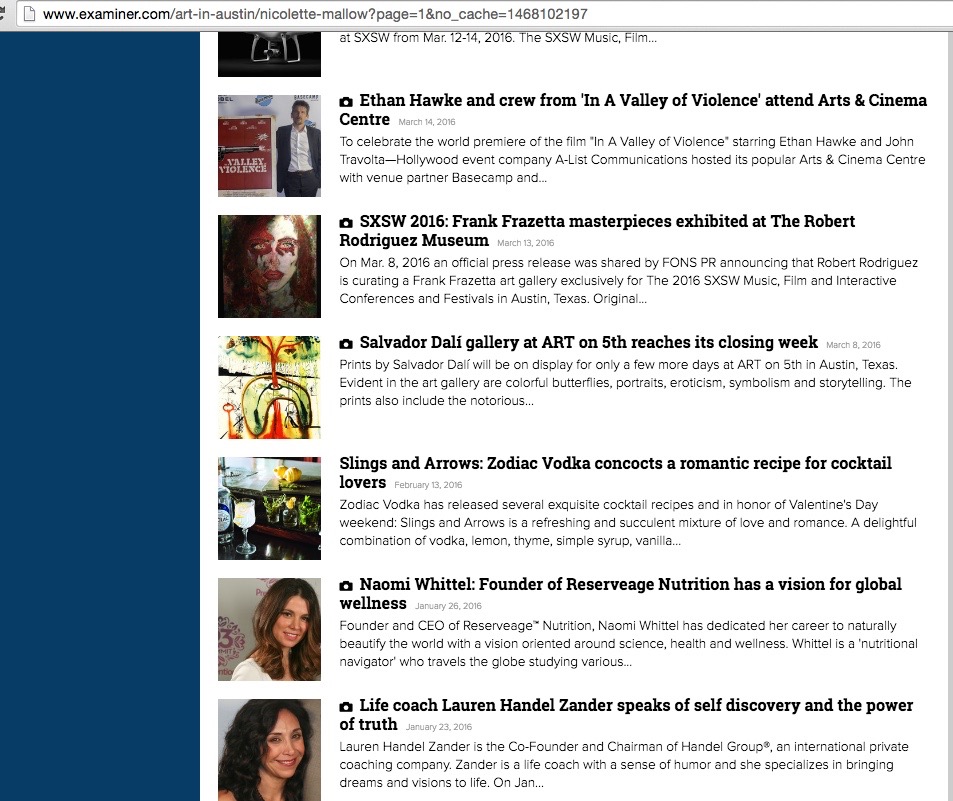
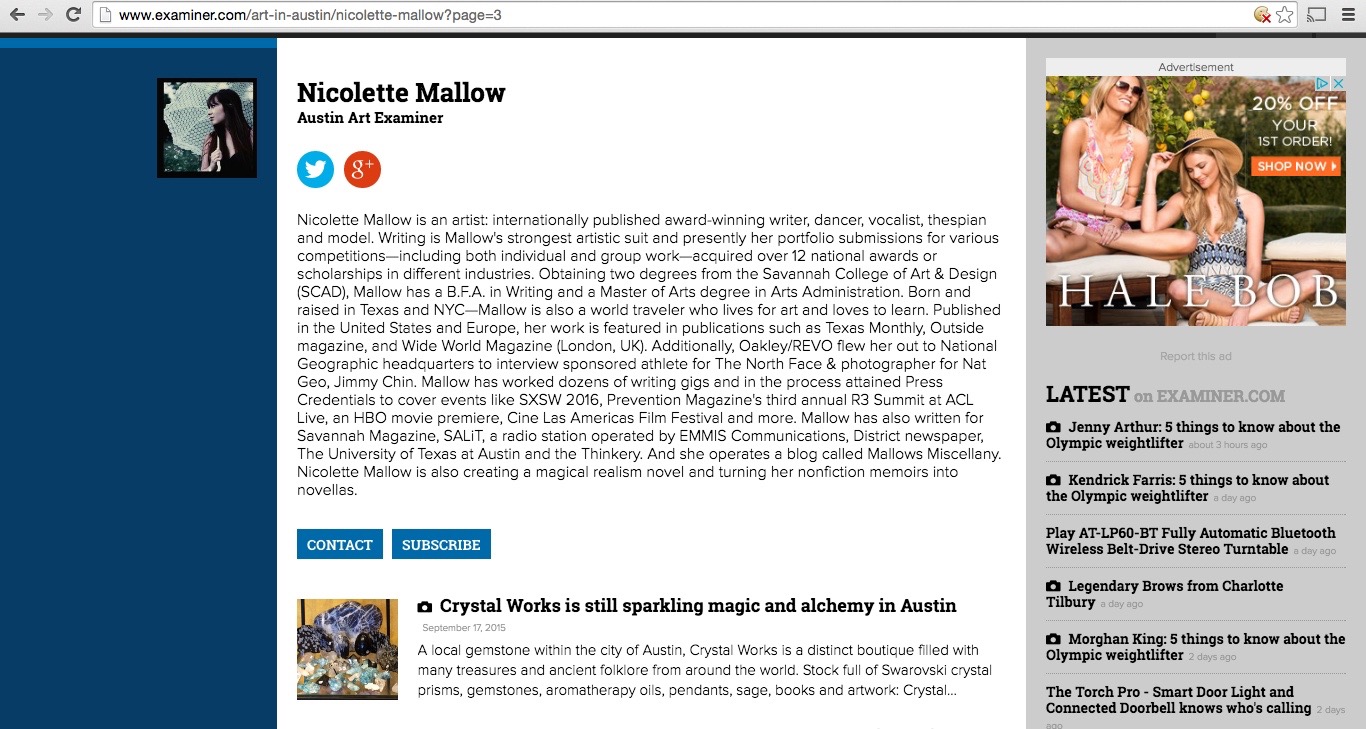
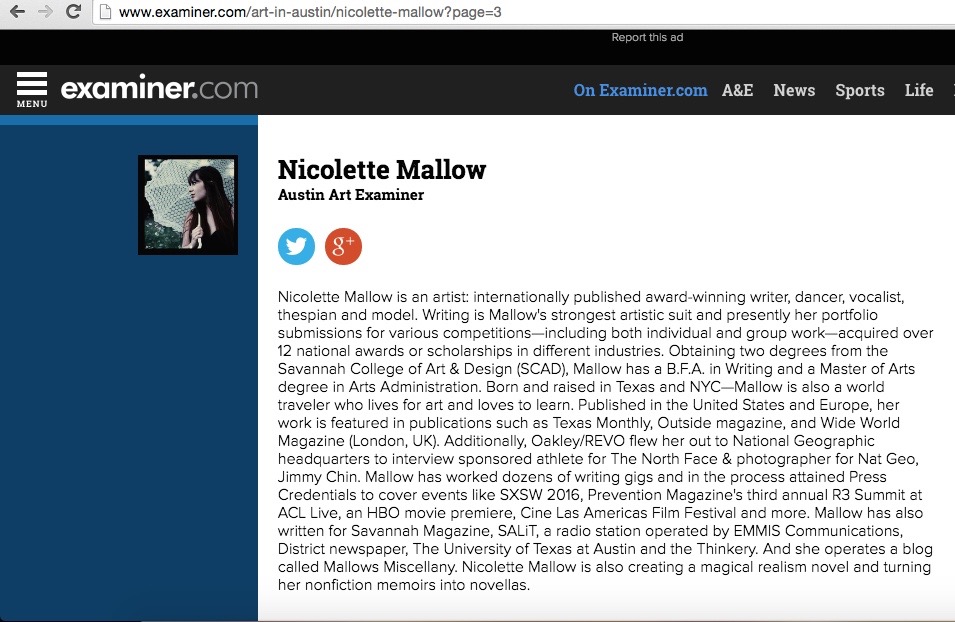
Nicolette Mallow’s Writer’s Bio from Examiner.com.

Examiner.com has closed their media platform after several years. From July 2015 to Jult 2016, I worked for Examiner as a contract writer. My area of assignment was to cover Arts & Entertainment. Since Examiner.com’s website no longer exists and has faded into the dark abyss of the internet, all of my stories are gone. That is the bad news. However, the good news is that since I own the rights to all my stories and interviews: I will be reposting each story here on my website, one-by-one. Hooray! To begin, I wanted to trail back to the beginning. And this first post is an accumulation of screen shots from the original website of my Writer’s Bio that contained a list of my publications. I will begin reposting the stories from last year to present day, the order in which they were written as posted on Examiner.com.

I will miss writing for Examiner.com and was very saddened that it came to an abrupt end, but I look forward to a new literary adventure and many more wonderful stories.