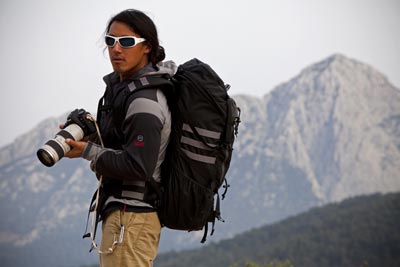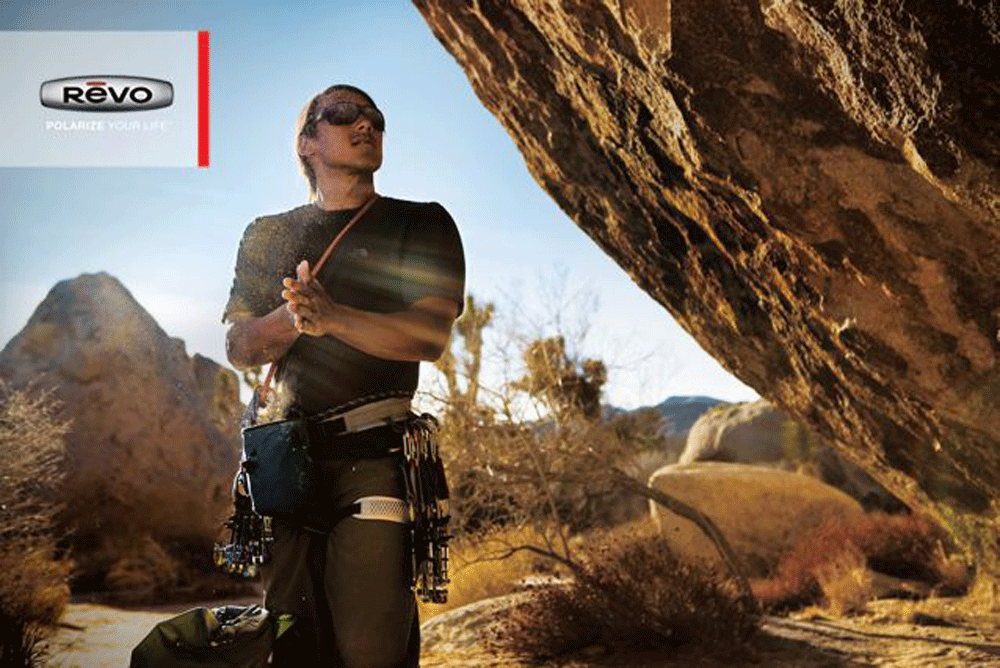
Interview with National Geographic photographer, Oscar winner & explorer Jimmy Chin

Jimmy-Chin-Revo

Photography provided by REVO. 

Jimmy Chin: A Photographer’s Eye View

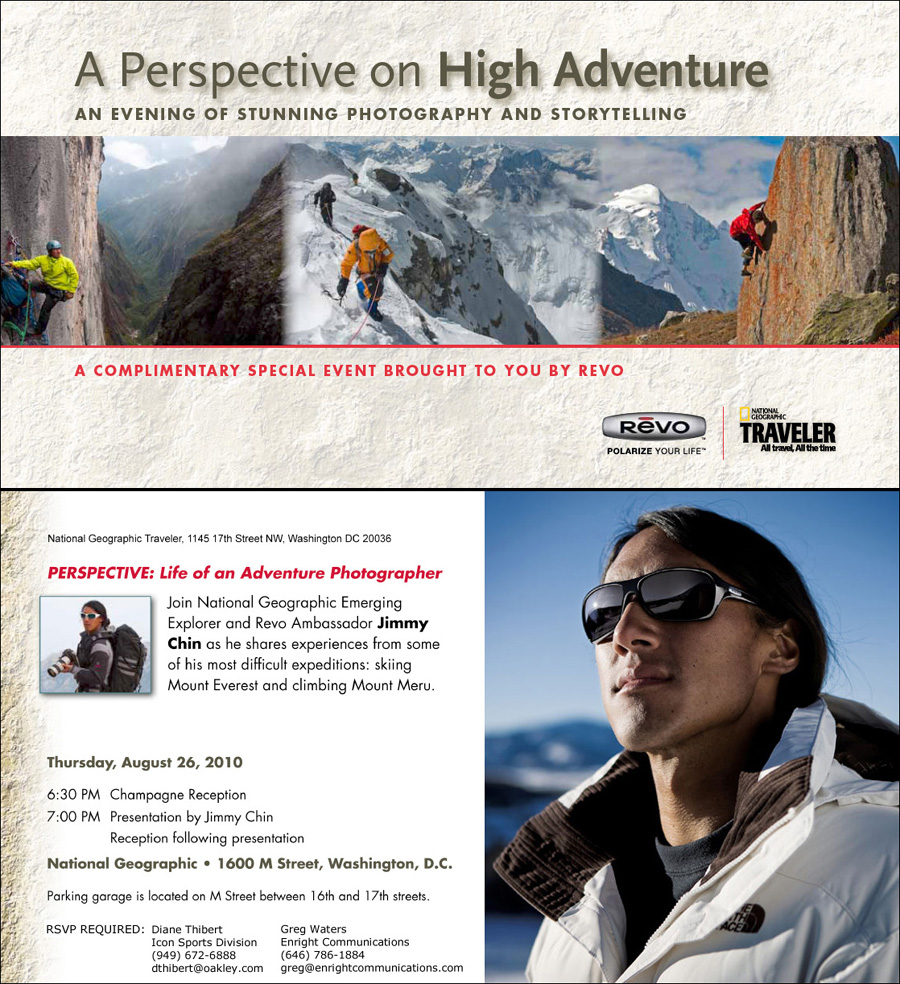
WideWorld sent US writer Nicolette Mallow to Washington D.C., to interview 37- year-old National Geographic photographer and explorer Jimmy Chin at The Madison Hotel. Chin is also a sponsored athlete for The North Face. Throughout his career, he has shot climbers thousands of feet up in the air, glued to ice-capped mountains, with storm clouds billowing in the distance, and, as WideWorld discovers. Jimmy Chin’s ability to capture shadows and light, sunrises and sunsets and nature at its most breathtaking is nothing short of incredible. The interview took place prior to a banquet held in his honor at Nat Geo headquarters to showcase Chin’s career, life stories and photography. 

Nicolette Mallow: What was it about your first trips to the mountains that inspired your career?

Jimmy Chin: Well I always loved being outside. We had a ravine behind our house and I was always tromping around in the woods. When I showed up in Glacier National Park it was just like my ravine on steroids! I just knew then that I wanted to live a life in the mountains. Although the trails were very beautiful I didn’t ever want to stay on the trail. I wanted to explore.

NM: How exactly did you turn all this from a hobby into a lifestyle and a career?

JC: You know, there is a lot of pressure when you’re in college from peers and the professors and your parents to get an internship or to have this goal of becoming a lawyer, a businessman, or a doctor; I think it’s hard for anybody to aspire to them when the title sounds great but you don’t really understand what the day-to-day life of an attorney is. And I had no real connection to any of it. It just seemed like all these abstract ideas and it just seemed really boring to me. For some reason I was struck by the idea that you only live once and that you shouldn’t waste your time being something for other people or being something that other people wanted you to be. It didn’t seem fair. I struggled with that a little bit for sure. Education was hugely important for my parents. They were both librarians at a university and they had come from China and they had made a life for themselves here.
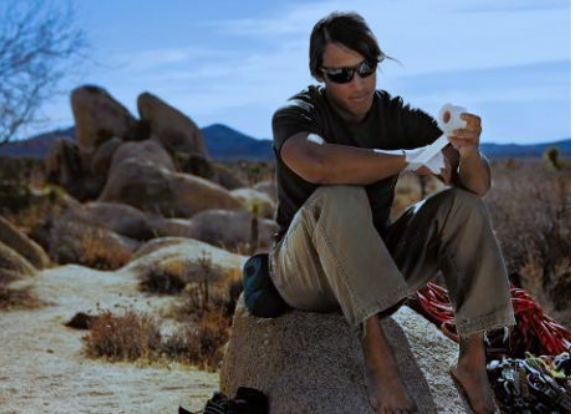

NM: What got you into photography?

JC: I always loved looking at photography, but I think that everyone does. I am a very visually stimulated person. But while I was visually oriented, I never thought of it as a career. I never took photo classes in school.

NM: So you’re self-taught?

JC: Oh yeah. Still teaching myself. Still learning. But, overall, photography felt really natural and probably one of the easiest things for me to learn or pick up. So in that sense I feel like, perhaps it was meant to happen.

NM: In one article you describe dangling above endangered antelope in Tibet, but what did it feel like when you guys found them?

JC: In some ways it was like we were chasing mythical creatures. It’s so funny because it was like being a kid, again, and trying to follow these animals across the Chang Tang plateau and hoping to find this supposed birthing ground. George Shallow, one of the greatest live mammal biologists and conservationists, couldn’t find these animals or their birthing grounds after two to three expeditions. My crew and I knew this was going to be extremely difficult. We’d been traveling for weeks and weeks and there was nothing. We lost them, once, and then we found them, again. When we finally found them and I saw the first baby chiru: it was a mind-bending experience.

NM: Is there any expedition in particular which you are most proud of in terms of your finished images?

JC: I think shooting Everest and skiing Everest. I was always trying to get this photo that no one has ever seen before and there were a couple photos in there that don’t necessarily have the best light or the best compositions ever but they’re just… Well, there is an image of Kit and Robert DesLauriers skiing down a slope over 28,000 feet. Two people on their skis, on the southeast ridge of Everest. And I just love that photo as there is also a storm cloud coming up in the distance.


NM: Throughout all the places you’ve seen, where is some of the most beautiful light to capture?

JC: Sunset when you’re up really, really high above base camp in the Himalayas holds perfect, mesmerizing light. Any mountain range up high where you can see the horizon line is amazing. After the sun has set and it gets that kind of blue mixed with pink –I love those colours; like pastels in the sky.

NM: In 2004 you had a close shave with death when you were on Everest and the avalanche came down and threw you guys back over 30 feet. Have you had any experiences as intense as that one since?

JC: Not as intense. I think as you get older you start to understand and become much more aware of all the different ways to die. I’m a lot more conservative these days, but there’s always the fluke accident. As a climber you have to take a certain stance in how you look at the world. When you do what I do, you must accept, “When you’re time comes, it comes.” I have to think like that otherwise I wouldn’t get out of bed!

To see a selection of Jimmy Chin’s images, see our gallery below. For more, visit: www.jimmychin.com

Note: This interview “Jimmy Chin: A Photographers Eye View” was initially published in Wide World Magazine in 2010. Wide World is an adventure travel magazine based in London, United Kingdom.
Van Dammes garage punk band release third EP ‘Vild Days’ and embark on European tour

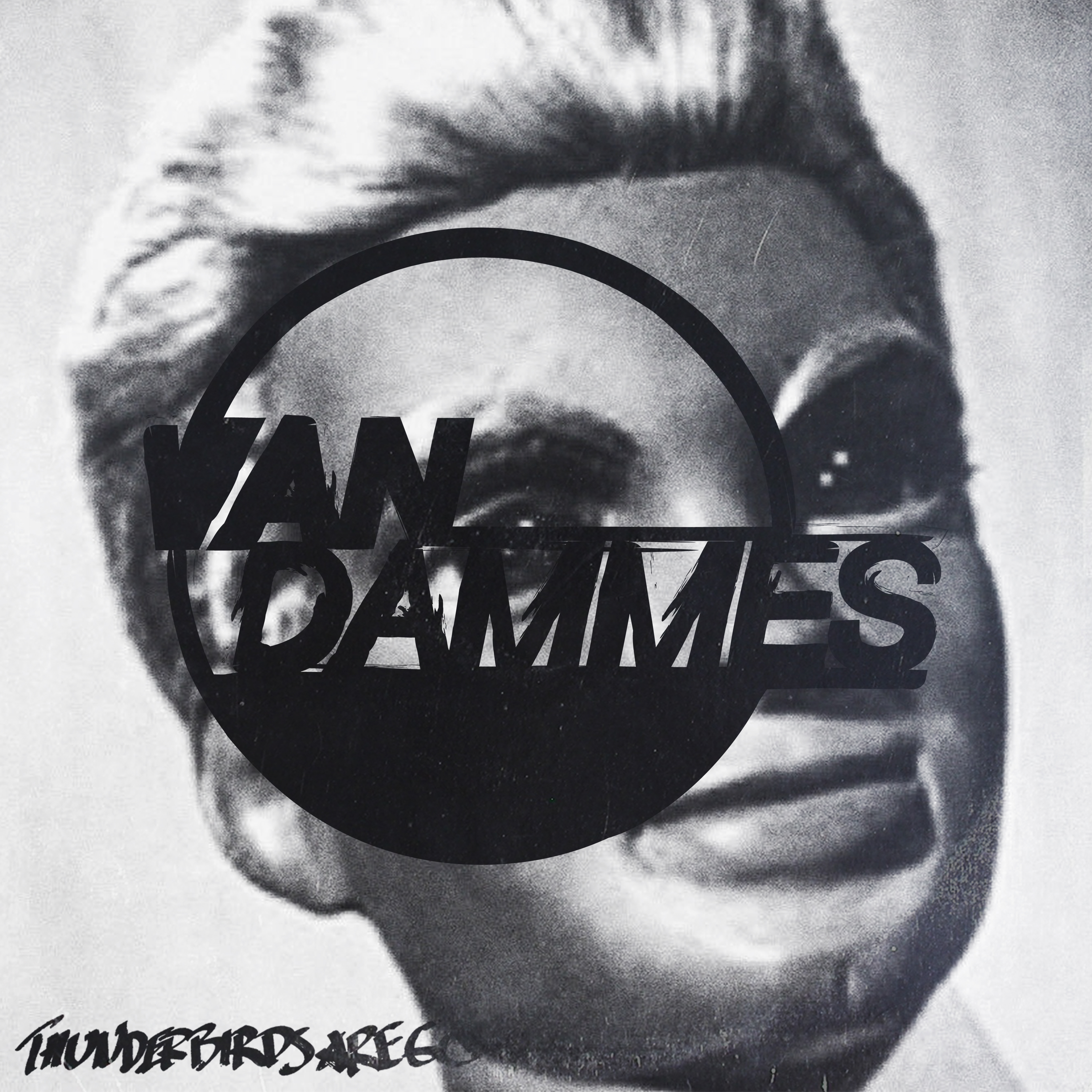
Van Dammes - Thunderbirds Are Go Cover Art by Eemeli Rimpiläinen

Van Dammes’ cover art designed by Eemeli Rimpiläinen.

Van Dammes, the garage punk heroes from Helsinki, Finland released their third EP in 2017 titled Vild Days. Formed in Brussels in 2013, Van Dammes recently completed a European tour to cities like Berlin, Vienna, Dresden and Warsaw. Vild Days is a lively, punk rock album with rhythmic, heavy drum beats and words of storytelling featuring tracks like “Punk Rock Drummer” and “Scandinavian Action Rock.” Van Dammes consists of four artists: Ilkka Hildén (bass), Markus Kujawa (vocals, synth), Jussi Roine (drums) and Juho Talja (vocals, guitar).

” Originally formed in Belgium, Van Dammes (VD) are a Finnish four-piece garage punk band from Helsinki. Their debut, the VD EP, debuted in April 2014, and its successor, Better Than Sex, in February 2015. Both releases have gained airplay on American and British punk radio stations and popular Finnish radio stations such as YleX and Radio Helsinki. They have also been critically acclaimed in American, Australian, British, Canadian, Danish, Dutch, German, Italian, Mexican and Polish reviews. Also, the band has released a bunch of other sh*t in various formats, like a tribute song to the ski jumping legend Noriaki Kasai. In October 2016, Van Dammes distributed the first single, “Thunderbirds Are Go,” from their third EP, Vild Days. The new single of Van Dammes tells the anecdote of Alan Tracy, the youngest member of the life-saving organisation Thunderbirds. Alan wants to go to the nightclub to see Cliff Richard play and kiss Lady Penelope but tonight it is his turn to remain on standby. Van Dammes present their view of the young man’s odyssey in their new song “Thunderbirds Are Go.” Van Dammes have also been touring Europe extensively since their foundation.”

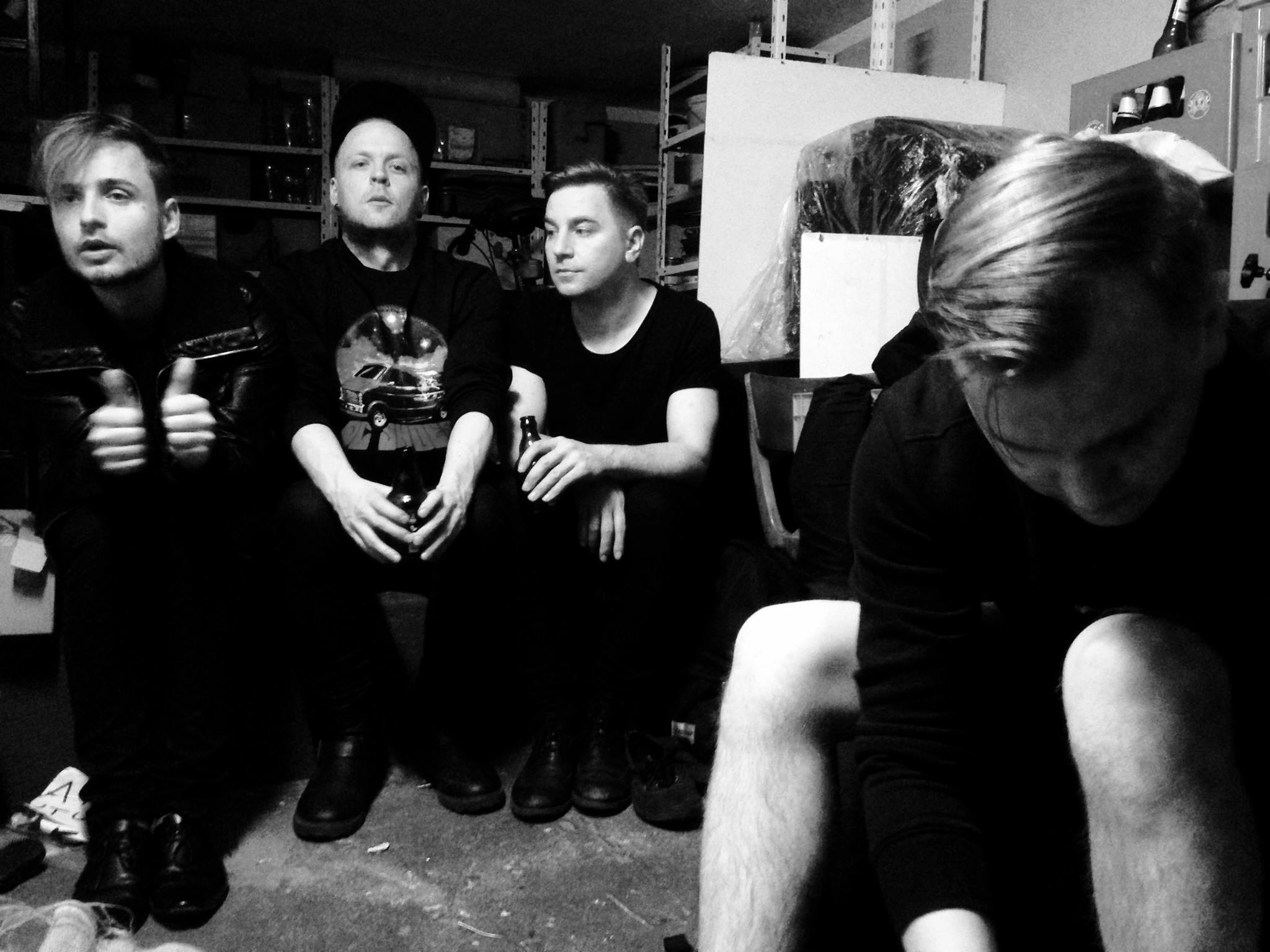
Van Dammes Promo 1

Imagery provided by Van Dammes.

Two years ago, Van Dammes sought me out in Texas from across the Atlantic Ocean following the publicity of their second EP, Flash In The Night. An interview I conducted was featured in Rank & Revue for the June 2015 issue. At that time, VD and I discussed topics like a Serbian flight attendant, Vesna Vulović, aviation, drive-ins and The Ramones. Recently, I received news from Van Dammes about the release of their third EP Vild Days. And I was happy to follow up with a second feature two years later in 2017. Two of the bandmates from Van DammesMarkus and Juho partook in a written interview with me to discuss music videos, songwriting, baleen whales, Scandinavia, Thunderbirds mini-series and their recent European tour.

Nicolette Mallow: Does the band have a process for writing the music and lyrics? I am curious since the songs cover such a wide range of topics and sounds.

Markus Kujawa : It’s basically me and Juho who are writing the songs, but for this latest EP, our drummer also did one… about drummers. The ideas come from everywhere and you are right that our songs cover quite a wide range of topics. We write the songs individually but arrange them together. So the final sound is defined by the whole band.

NM: I enjoy the drum beats on your tracks. “Punk Rock Drummer” is a pleasant video. Where was it filmed? It seemed to be an old movie with the band mates zooming in and out. Will Van Dammes (VD) be making more videos in the future?

Markus: We used some old archive material for this video and added ourselves playing on it. We have done that with some of our previous videos, too. I think it’s nice to recycle old footage like this. We will definitely continue making videos.

Juho Talja: This was actually the first time we tried the so called green screen technique with our video. We made “Punk Rock Drummer” video with a very talented local artist called cameraman Panu Salonen and I think you can see that from the final result.

NM: Tell me about “The Whale Road” and the interest in baleen whales? The song has a sweet sound of nostalgia, and I am not sure why but I really liked it.

Juho: I’m very, very interested in baleen whales and other cetaceans. I think humans don’t understand how intelligent and sensitive those amazing animals really are. I believe that cetaceans are even way more intelligent that the science generally thinks at the moment and I think we should pay more respect to them. So, I wrote the song because I wanted personally to respect cetaceans. Especially the migration of the baleen whales is a really epic phenomenon which humans don’t totally understand and that’s what the song is all about. I also hate the human attitude according to which the planet Earth is only ours to rule and use. No way, there are millions of other species with whom we should share this planet.

NM: “Scandinavian Action Rock” is a catchy title… what provoked you all to write about Scandinavia?

Markus: Actually this song title refers to a specific music genre. In the beginning of the 21th century, at least in the Northern European countries, the term was used to describe bands such as The Hives, The Hellacopters, Backyard Babies, Turbonegro and The Flaming Sideburns… and pretty much all the bands a Swedish label called Burning Hearts was releasing. Actually I’m not the biggest fan of the genre but it felt necessary to remind people about this. I don’t know why though.

NM: What did Van Dammes enjoy most about your recent European tour?

Markus: It was really cool to go to some places where we didn’t play before, like Croatia and Serbia. I also enjoyed the food and drinks everywhere. Have to say that punk concert organisers are very hospitable wherever you go.

Juho: It’s really hard to say what we enjoyed the most because every place we visited was super nice in their own way. We actually had quite different kinds of venues during our latest tour. There were small punk clubs and even some big rock venues. It’s always a pleasure to meet new people (other bands, organisers, audience) during a tour. One special memory of the tour is the cancellation of our Bratislava (Slovakia) show. We had to get a compensatory show somewhere in a very short notice. The night before, we played in Leipzig (Germany) with Dark Thoughts, a punk band from the US, and they told us that they’re going to play in Cracow (Poland) the next day. The nice guys of Dark Thoughts gave us a phone number of a very kind concert organiser gentleman called Wojtek who finally invited also us to play at his event. The show in Cracow turned out to be magnificent which was nice.

NM: Where will VD be touring next? 

Markus: We will tour in Europe again in autumn. We should also probably record something new soon cos we’d like to release our next EP or LP in spring 2018.

Van Dammes Promo 2
Imagery provided by Van Dammes.

To listen to Vild Days or read more information regarding Van Dammes, please visit their SoundCloud, Facebook or Spotify pages.

The magic of Euphoria Music Festival lingers

17884189_1651971388151821_5055614940772895226_n

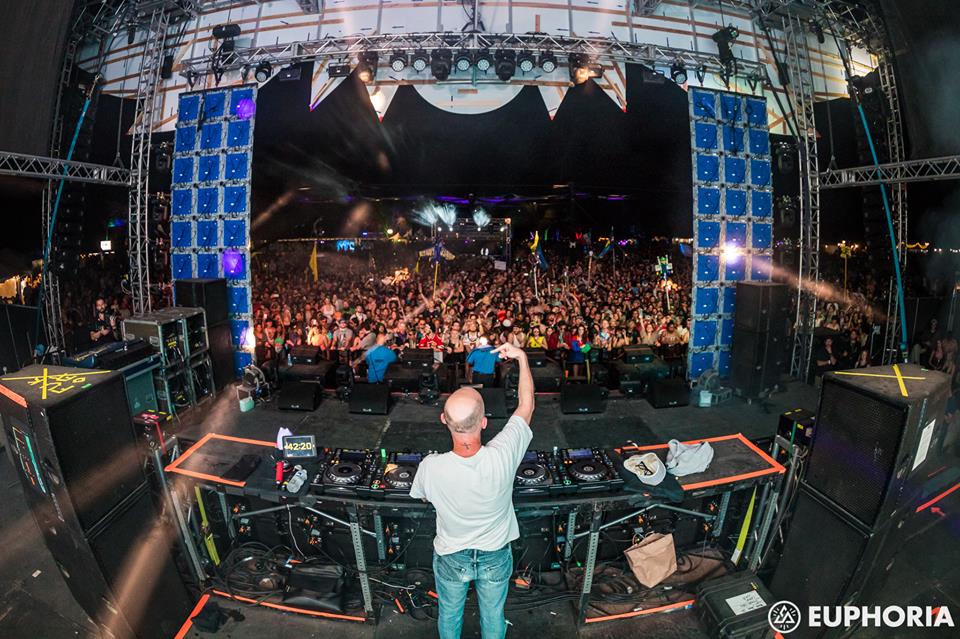
The 2017 Euphoria Music Festival came to an end and yet the magical feeling of experiencing music with over 50,000 people in Austin, Texas lingers vividly in memory. I can still hear the crowd chanting at Chromeo, and I can relive the hypnotizing light show alongside Moby’s DJ set in my mind. Perhaps this is one of Euphoria’s most lovable and endearing traits: the music festival exerts a natural high of happiness and contentment that stays with you in silence even after it’s all over. For a few hours, everyone that passed the gates entered an intimate and intense world of music, dance, art installations and light shows. There were three stages on the map: Euphoria, Elements and the Dragonfly. The first two stages are the larger set-ups, but the Dragonfly stage is a beauty, waterfront to the Colorado River. A map of the grounds can be found on the official Euphoria app that was released in April.

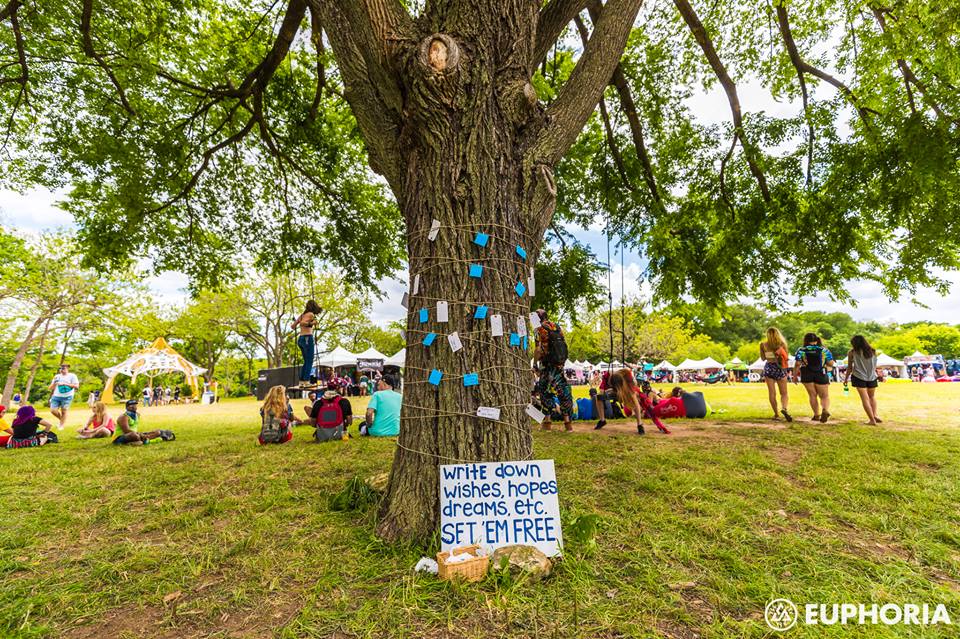
Upon entrance to Carson Creek Ranch, the grounds are filled with bold, bright colors, canopies, giant tents, kites, butterflies, swing sets, hammocks, bubbles and an artisan alley. The festival even has a volleyball court, a wedding chapel and a giant Tree of Life. There is a sign below the Tree of Life that reads: Write down wishes, hopes, dreams, etc. and set ’em Free. It was very moving to see the thousands of notes left on the tree.

Watching the festival from above with its digital eyes that changed moods and colors as the sky shifted from day to night — at the Elements stage, there was a steep, tall fox (or wolf) overlooking the crowd. Several times I got lost staring into its round eyes as the music played. Like one of those vintage kitty clocks.

Founded by Mitch Morales, the 2017 festival included headliners like Chromeo, Knife Party, Moby (DJ set), Oliver Heldens, Post Malone, The Disco Biscuits, Wiz Khalifa, Zeds Dead and many other artists; bringing the sum total of the line-up to 70. As the region’s largest independent music festival, Euphoria attracts over 50,000 fans each year, all while maintaining the qualities that land it on many annual Top 10 lists. Conveniently located just minutes from Downtown Austin, the multi-stage music and camping festival returned to Carson Creek Ranch on the banks of the Colorado River and offered world-class visuals, unique stage designs, artist workshops, interactive experiential installations, enhanced camping options and much more.”

Euphoria showcases the professionalism, style and acute qualities equal to a global event like Austin City Limits, Burning Man, or Lollapalooza. Festival-goers can see the time, love and energy invested into the decoration and preparation for the festival. However, unlike the ACL Music Festival that draws 450,000 people—Euphoria is much smaller in attendance and exposure. This independent festival deep in the heart of Texas provides a more intimate experience. Using the power of music to bring everyone together, Euphoria is a festival made for the community. The Euphoria Music Festival feels personalized and charming. The size of Euphoria provides a natural, easy-going way of drawing people together. Even if you are attending alone as a member of the Press, like me, that is one of the pleasant aspects of a festival is various walks of life coming together for the love of music.

Ultimately, the magic of Euphoria re-awakened my love for music festivals. It brought back the fun and joy of a festival that I used to feel when I was younger. As a local Austinite, I’ve been blessed to attend live shows and music festivals since before I could drive a car. I was one of the lucky people from Austin to experience the live music scene before it morphed into what it’s become today. (True, the music scene has improved with better venues, more esteemed artists and a boost in the economy, but it also came at a cost for the locals.) Years ago, I was so sentimental about live music. I saved all of my ticket stubs that are now in a box. Honestly, I don’t know how many times I wore a costume or got dolled up for a live show, like the night when I was the absinthe fairy covered in metallic glitter with green wings for Galactic’s Halloween show at Stubb’s. Countless days and nights, my friends and I would gather in masses to rock out, dance and let loose. Alas, after too many festivals and concerts for my stamina-—after one too many expensive tickets, late nights that lead to hangovers and dating too many musicians—the magic began to fade out. Secretly I started to become a little jaded: been there, done that and bought many, many t-shirts. The thrill of live music had begun to alter from love to stress. My heart no longer felt that spark like it once did when I was younger and I only attend concerts these days at specific venues and no more festivals. Fortunately, Euphoria brought that nostalgic, familiar adrenaline rush back into my heart and it reminded me why I used to love festivals so much. Euphoria made my heart feel lighter and made me feel younger. Frankly, I did not know what to expect at Euphoria. And to much delight, Euphoria Music Festival captured the intimacy of the art scene that used to be in ATX. I hope as the festival grows more and more each year that Euphoria will never lose its unique charm.

I highly encourage music enthusiasts to mark the Euphoria Music Festival on their bucket list. A strong indicator of whether or not a musical event was a success is greatly determined by if the audience transcended time. Meaning, while the band is playing, the DJ is spinning or the musicians are on stage, those in attendance lose track of time. We forget our worries, stresses and anxieties for a while. We are present in the moment and feeling alive in the rhythm of the music. Euphoria Music Festival can and will take you to an ethereal place.

To view the 2017 recap videos or purchase official merchandise of Euphoria Music Festival, please visit www.euphoriafest.com. #FindYourEuphoria

West Coast artist Raven Felix will perform at 2017 Euphoria Music Festival in Texas

image1

Raven Felix. Photography provided by 740 Project. 

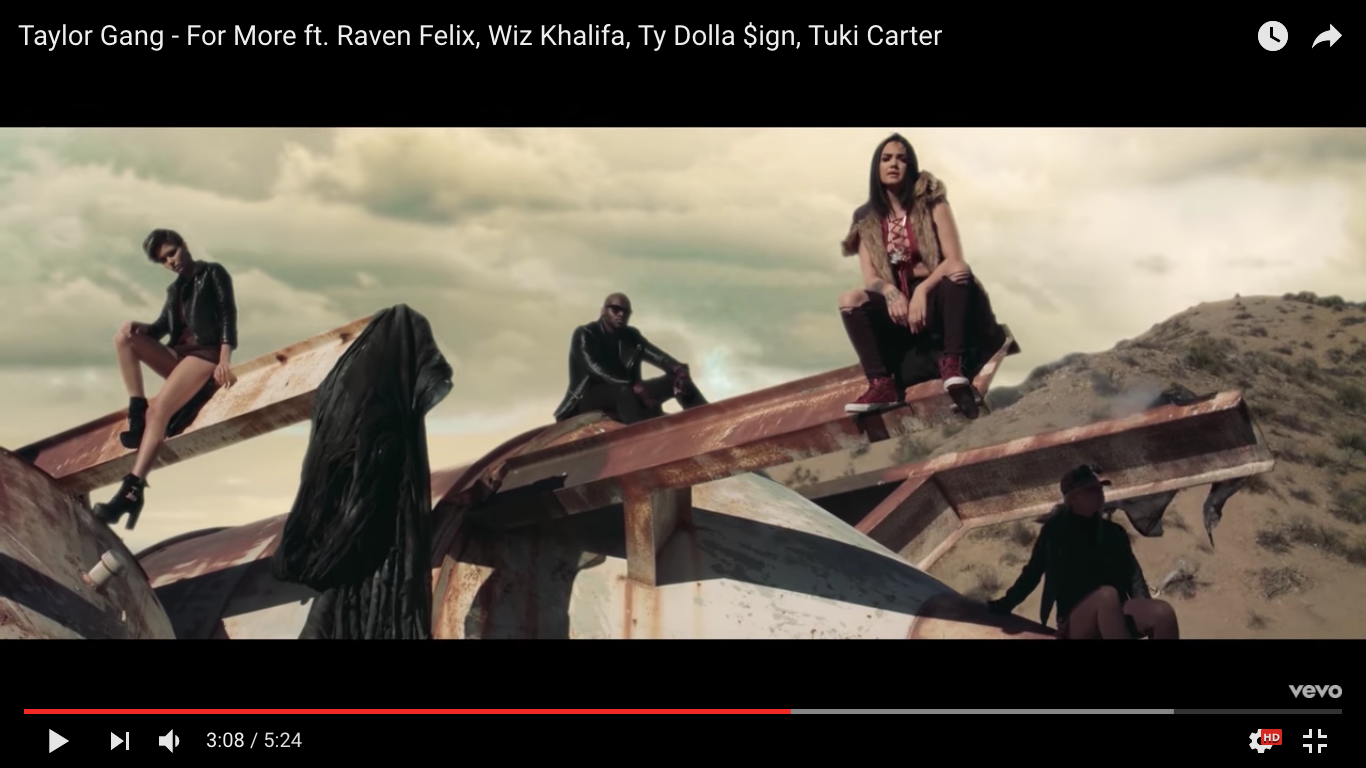
Born in The Valley of Los Angeles, Raven Felix is an artist best known for her music. This year she will be performing at the 2017 Euphoria Music Festival held at Carson Creek Ranch in Austin, Texas. A Latina from the West Coast, she began her exciting music career at a young age after being signed-on by Snoop Dogg at 18. Raven was discovered after posting music videos on World Star hip hop and that’s when Snoop Dogg took notice of her talent while he was in Amsterdam. Raven Felix is also a member of the entertainment company Taylor Gang, as is Wiz Khalifa, and the two artists will both be performing (separately) at Euphoria Music Festival in Texas. Even more exciting for us all, even though this isn’t Raven’s first rodeo in the spotlight or on stage—it will be her first time to showcase her music in Texas. Ravens’s performance at Euphoria on Friday, April 7, 2017, marks Raven’s first-ever show or festival in Austin, Texas.


Before my phone interview with Raven, I did not get to meet her in person. But through the photographs and music videos on social media: I noticed her strong voice, dark brown hair that resembles silk, luminous skin, big brown eyes and how she always seems to have a chic manicure. Raven Felix is facing a successful future and a vivacious career in music, and she’s off to a great start. She is not only talented at rap and hip hop, modeling and music videos—Raven is also a writer and you can find some of her poetry online. Writing is something she has been doing since she was a child and holds very dear to her heart.

Screen Shot 2017-03-23 at 7.27.27 PM

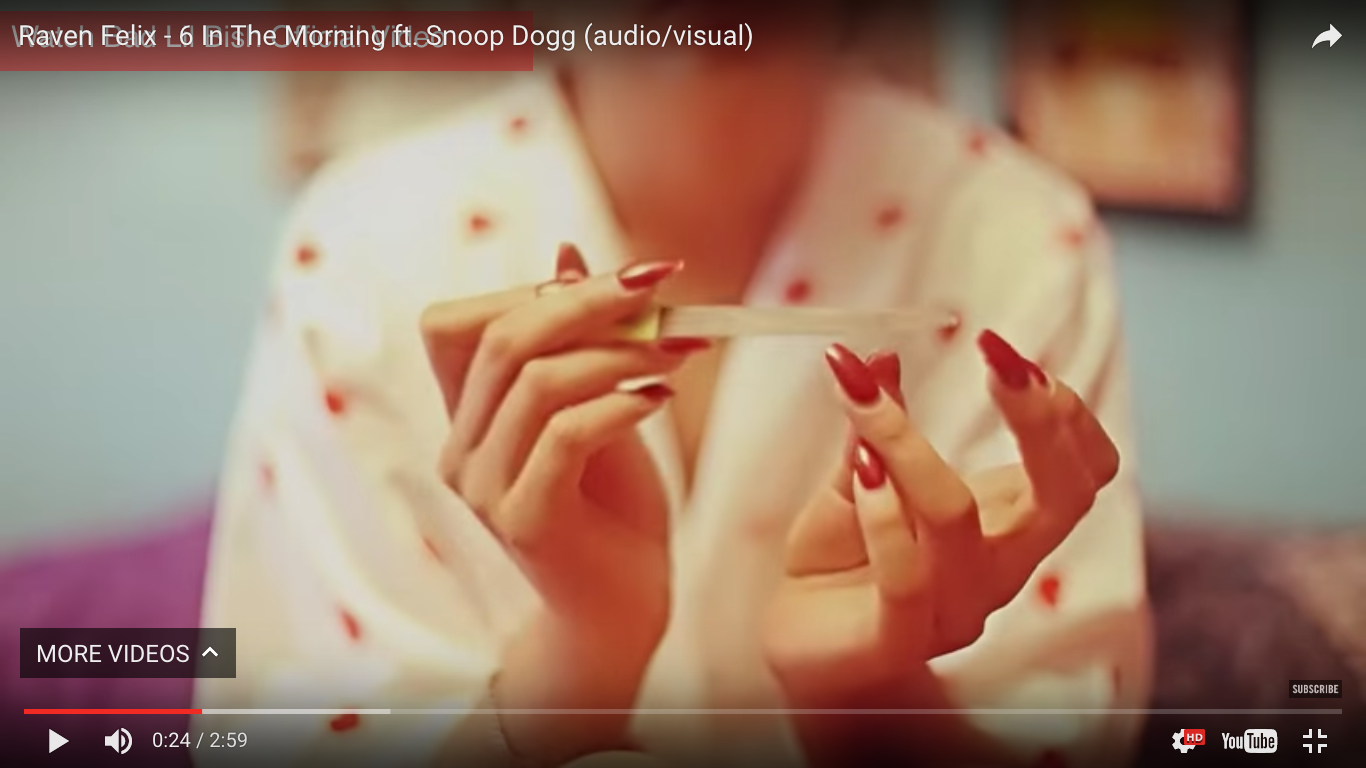
Photo of Raven Felix’s hands from her music video “6 in the Morning” feat. Snoog Dogg.

Nicolette Mallow: Here in Texas, we have an area called The Valley near the border and it’s much different than LA. I heard on a radio interview with Power 106 that part of what motivates and inspires you to excel in your career is to pave the way and make a lane for younger girls, especially the young Latinas back home in The Valley… Giving back to the community is essential, and I am also a Latina. So I am curious to hear about The Valley and I was wondering if you’d tell me more about life in the valley for young girls?

Raven Felix: Everyone in The Valley is super close and it’s a tight-knit community. It also encompasses a large portion of the Hispanic/Latino population in LA. There is a lot of backyard parties and a lot of shows. It’s a really interesting place to be and I certainly grew up partying, too. A huge part of the culture in The Valley is community, art and entertainment. 

Mallow: The music video for “Hit The Gas” with Snoop Dogg and Nef the Pharaoh looked like it was a lot of fun for the cast and crew to film… I also saw the video “6 In The Morning” … Will you tell me about how you came to sign and work directly with Snoop Dogg after he found you on World Star at the age of 18?

Raven: It all happened fairly quick. I think I started putting out videos on World Star when I was 17. And when I was 18, he was in Amsterdam and saw me online and thought my tracks were dope and wanted to be involved. So, he found me and my people, and I feel very lucky. After that, all of a sudden we are making music a month or two later.

Mallow: What was it like touring with Snoop Dogg and Wiz Khalifa during “The High Road” tour in 2016?

Raven: I think for me it’s just a blessing to even have these huge artists that are insanely talented as my friends and colleagues. They are monsters of artists with amazing careers and to be involved with me. It’s definitely cool. And we all bring different songs and styles to the mix. Tour was amazing in general. 

Mallow: I read one of your poems on Instagram. And I liked your line in the track “Me” when you say, “Tell ‘em kiss it like I was your Bible”… How long have you been writing?

Raven: Well I’ve been writing since I was a kid, really ever since I could write. I wrote. But I think middle school is when I really started being interested. I had notebooks in drawers and boxes of handwritten notes. I still really very much want to branch out into writing novels, poetry, screenplays and scripts. Poetry, for me, is something that is a completely different outlet than my music. I keep it separate and I think its something that relaxes me. If I am having a road block. I think poetry can be my outlet. Writing is important to me and I seek to become a multifaceted artist as I move forward in my career. I can do much more than rap and sing on stage, which is dope. Writing is just one of many things like modeling, acting and other art forms I would love to explore in the future. 

Mallow: I read the interview with VIBE that stated your top female artists are Eve, Missy Elliot and Nicki Minaj. I recall listening to “Love is Blind” a lot as a teenager, dancing to Missy Elliot in college and playing Nicki’s track “I Lied” a lot while I lived in Ireland… Will you share a little about how these artists inspired you and your musical craft?

Raven: Nicki Minaj is the biggest inspiration to me out of all three women. I am 21 and so when I was in high school. I think I was in 9th grade. I had a mixed tape of hers and it was so hard and so dope. I fell in love with her then because I had never really heard an artist like her during my era, growing up. I heard a lot of rock and alternative stuff as a child because of my mother. So when people turned me onto Nicki and opened up doors for me to discover others like Eve and Missy Elliot, it’s amazing to hear all these talented women.

Mallow: I read Southern Comfort was your first drink. What’s your poison (choice of alcoholic beverage) these days?

Raven: I usually switch back and forth between Bombay and Hennessy. Wiz and them from Taylor gang really like gin. At first I hated gin, but like now I really enjoy it. 

Mallow: So when you aren’t touring or traveling for work, which sounds like a lot of fun. What do you do for fun and leisure with such a lively schedule?

Raven: I love being able to travel and do all this stuff for work. But I was just in London for Christmas for leisure. Just for me. Just for fun. So yeah, I love to be on the road and being on tour, but when I get to be home. I spend a lot of time with my mom and it centers me and keeps me grounded. She is my best friend and spending time with her is important; being near my mother relaxes me. I also like to keep in touch and be around my west coast friends that I grew up with in The Valley. The ones that cared about me from the start. Because often we got lost and lose track of time out on the road. Coming home, back to your roots, my friends need to know that I’m still the same person they always knew and loved—and they’re just as important to me as always.

RF2

To purchase tickets to the 2017 Euphoria Music Festival to hear Raven Felix and 70 other artists in Austin, Texas please visit www.euphoriafest.com

ill-ēsha: Canadian musician, producer, songwriter and vocalist will perform at 2017 Euphoria Music Festival in ATX

Konnexionbw

Imagery provided by ill-ēsha

Recently I had the pleasure to interview ill-ēsha. Music producer, vocalist, songwriter, composer, DJ, musician and more; ill-ēsha radiates artistic talent and the more I read her artist’s bio. It was evident how vast her range of art forms within various industries could be applied to. On April 9, 2017—ill-ēsha will be performing at the 2017 Euphoria Music Festival at Carson Creek Ranch in Austin, Texas. Euphoria Music Festival is showcasing over 70 artists this year and even though ill-ēsha has visited ATX many times for festivals like SXSW and feels at home in the capital of Texas. This will be her first show at Euphoria and Austinites are delighted.

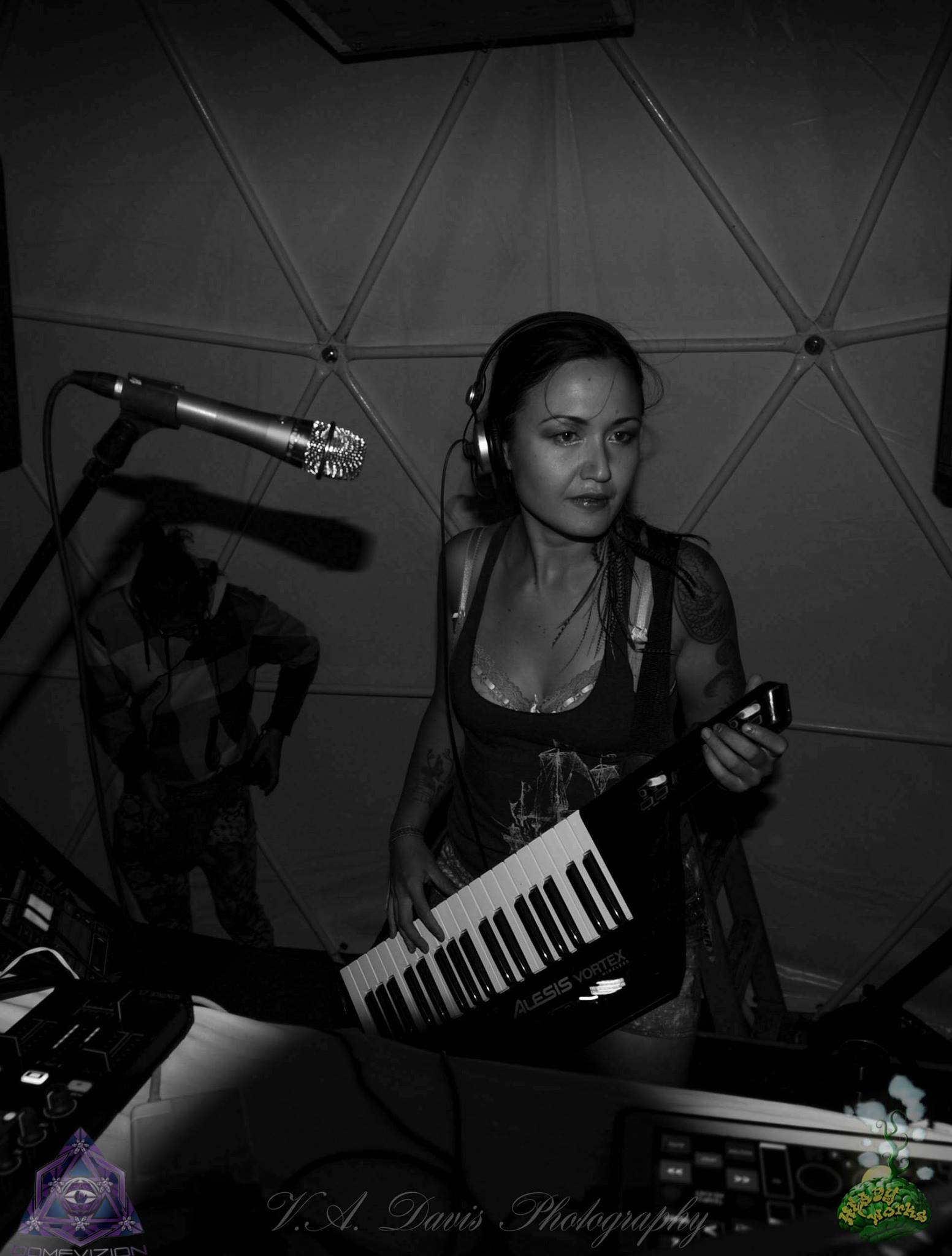
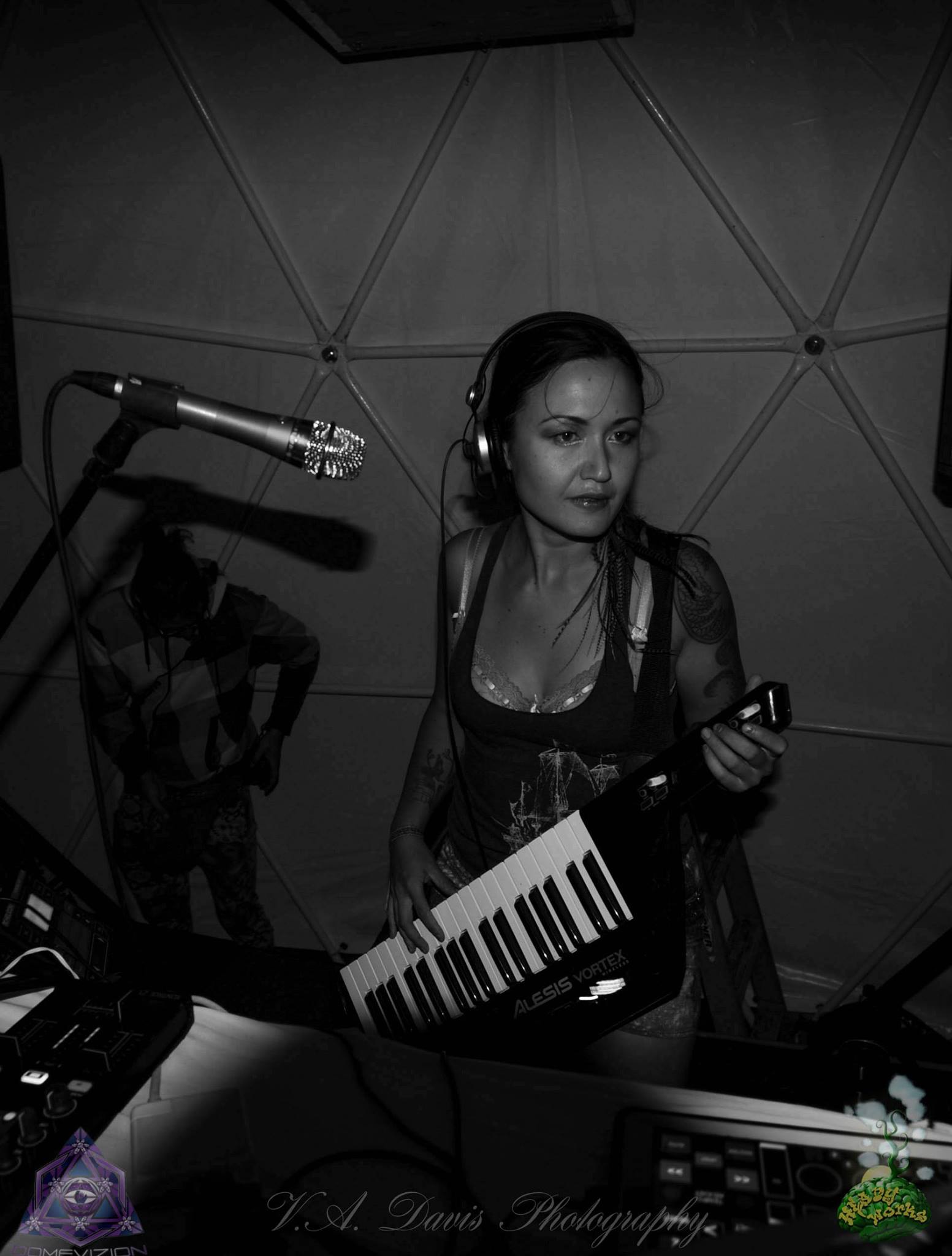
Formally known as Elysha Zaide and casually known as Elle, “Vancouver-born and Colorado-based music producer, artist and DJ ill-ēsha has crafted a long-standing soundscape of electronic bass music throughout her career, continuously evolving her musical stylings and bridging gaps between hip-hop, dubstep, R&B and future bass music. Ill-ēsha is recognized as an extremely rare and diverse, burgeoning artist in the EDM scene. Her live set showcases her incredible talent to sing, DJ, and simultaneously rock her keytar. She is one of few electronic artists to blossom throughout the progression of different musical trends while still focusing on her artistic vision and authenticity. Constantly evolving a dynamic stage show, ill-ēsha is a perfect example of electronic music’s transition towards live instrumentation and indie pop sensibility.”

P4180111

Nicolette Mallow: You have one of the most interesting music backgrounds out of all the composers I’ve interviewed. Your skills are so extensive, and you’re so musically gifted. A producer, DJ, vocalist, composer, songwriter and more. I loved reading your Bio… Did you always know you wanted to make music? Or did music and the arts choose you?

ill-ēsha: I was always very drawn to many different forms of art. As much as I loved music. I was also into theater arts and that was a potential path for me. Even in high school when I was already DJ’ing, I also partook in a theater company and visual art. Performing arts was my artistic expression for a long time. But yes, I’ve had a tendency towards the arts since I was a kid. I was born into a  family with lots of artists. 

NM: I read you love classical, world jazz and cinematic music—and that you completed Royal Conservatory piano training. That program sounds so fancy and challenging. Is this where you began to learn music?

ill-ēsha: (she laughed) Well, it sounds fancier than it is. It’s just another method to learn music, like the Suziki method. Royal Conservatory is simply one of many systems similar to a competitive sport or grade levels. The more you learn and excel at each level you pass on to the next. My mother was passionate about piano and she always wanted to play. I began taking lessons at 4 years old. I continued to take piano classes until I was 12.

NM: You have a spectacular voice. I loved the demos, especially the animation video… How did all this begin? Can you tell me a little about Speech Level Singing?

ill-ēsha: Seth Riggs created Speech Level Singing (SLS) in the late 70’s. It was a school of thought to help train vocal muscles. Artists like Michael Jackson and Aretha Franklin studied it. Since I am a self-taught vocalist after years and years of rigorous piano. In my 20’s I got into Speech Level Singing to learn how to control my breath better. SLS was sort of a style that purely worked out your vocal chords. It appealed to me because I am not jazz or an opera singer. I’m not an Ariana Grande or Celine Dion with a big, booming voice. I am a musician of all types, not just vocals. Once you have a voice: you go all directions developing it and SLS was a way of developing mine. 

NM: What did it feel like to place in the top 3 finalists for The John Lennon International Songwriting Contest?

ill-ēsha: That was a long time ago, but the coolest thing about that award is I was given a few hundred dollars and I used it to buy my first Serato. (A DJ program with turntables and a laptop.) Up until then everything was pure vinyl, so, thank you John Lennon Songwriting Contest for helping me buy my first Serato. But yeah, songwriting is something else that I do. My roots is songwriting. 

NM: What is the title of the lyrics you wrote and submitted for the contest?

ill-ēsha: “Broken Windows”. 

NM: Vancouver is your hometown and I hear it is beautiful. I hope to visit Canada next year. Now that you’re based in Colorado, do you feel like it reminds you of Canada in any way? I would imagine it’s easy to miss the seaport of Vancouver but the climate in CO perhaps reminds you of home?

ill-ēsha: It’s 50/50. I love the mountain life in Colorado. Before I moved here, I lived in San Francisco. Honestly I considered moving to Austin because I love it so much there, too, but I chose Colorado. 

NM: Speaking of Austin, how did you come to be involved with Euphoria Music Festival? And what can we expect to enjoy during your live set at the festival? 

ill-ēsha: ATX is one of those cities that’s been supporting me for a long time, all the way back to my tracks with Gravitas. Over time I’ve interacted with most of the promoters. I feel very lucky to have played at SXSW and so many other venues. Austin has become a home for me. Really I was torn between Denver and Austin. Ultimately, the weather in CO won me over. But I love Texas and I feel like its one of my strongest markets. It’s very cool to be involved with the music scene in Austin… Euphoria is one of the first festival types I’ve performed, and I will be sharing a lot of new content. Anyone who sees me, even old fans, will have something new to look forward to. Over the years I have evolved. Now that I make so much music in the last few years. What I’ve found is that I want to divide the sets I do and remain conscious of the environment. Live shows are compelling and people enjoy festivals. But for instance, nightclub people want the DJ energy. They want to dance and they want the drum and bass. The booth is tall and people can’t see me or my live set up, they just hear me and my music. However, festivals are more intimate with an open stage. There are more live elements, like my keytar. I’ve been taking a lot of time in the studio to write, collaborate and create new art to suit the time and place of each set. 

NM: Will you tell me about your transition from DJ to headlining performer and Producer? I liked your quote about wanting to participate in the music and not just the culture. 

ill-ēsha: I’m not much of a bystander. I enjoy art from being part of the process. I love film but I don’t actually sit around for long periods of time watching movies. I want to score and write for them. I wanted to be part of it. I started off with singing and DJ’ing. I wanted to control beats and make music. The deeper I got into it, the more deeply I realized I wanted to be part of production… About 10 years ago was sort of the turning point. All in all I’ve been in this industry for 20 years, since I was really young. The first ten years were very much passion projects and you could really tour and do live shows. I worked other jobs, too, and went to college. Touring and other jobs helped pay off student loans. Right around 2008 or 2009, I started feeling discontent. I was not feeling inspired. So I decided to go back to music as contractor and post-production for TV shows and editing. I regenerated and began making a new style of music. It was fun and different. It wasn’t simply drum and bass. At that point I just kind of discovered new people without the pressure. Re-inspired an online chat forum and people became receptive and started signing it. And that’s when I moved to SF and production became a full time priority… Ultimately my passion project and my true underlying goal is to give back and inspire young creative people. I was sort of an angsty teenager. Bummed out by life. Music saved me. Being a mentor, a guide and to give connections to the young artists and young creatives means a lot to me. 

NM: What was it like touring with Bassnectar? I adore his track “Butterfly” featuring Mimi Page and listen to it all the time. 

ill-ēsha: Touring with Bassnectar was pretty magical. I feel so lucky I got to experience that. It was only a few Southern tour dates and New Year’s Eve shows. I loved it though! Bassnectar is a big symbol of my music scene. Bassnectar created the west coast music sound within the DJ world. It was an honor to get to open for him. This is the guy who took it from A to Z.

NM: Last question, listening to your music on SoundCloud I heard a track called “Ghostwriter” with opening audio talking about computer hacking. Why did you choose to write about a computer hacker? 

ill-ēsha: In the 1990’s there was a children’s TV show called “Ghostwriter”. A lot of the samples in that track are from a single episode that I found to be cute. “Ghostwriter” was an educational kid’s show and that episode was about early internet. Teaching kids about hackers. At the time I was learning more about computers and I definitely enjoy digital nostalgia of different era’s because I’ve been through them all. As a child of cross generation analog and digital and I remember both… it’s always on my mind. 

For more information about ill-ēsha:  please visit her website at www.ill-esha.com. To listen to samples of her music please visit ill-ēsha’s SoundCloud page at https://soundcloud.com/ill-esha

Příliš hlučná samota: Production crew raises funds for film about Czech writer Bohumil Hrabal’s novel “Too Loud A Solitude”

screen-shot-2016-10-19-at-8-17-03-pm


“My education has been so unwitting I can’t quite tell which of my thoughts come from me and which from my books, but that’s how I’ve stayed attuned to myself and the world around me for the past thirty-five years. Because when I read, I don’t really read; I pop a beautiful sentence into my mouth and suck it like a fruit drop, or I sip it like a liqueur until the thought dissolves in me like alcohol, infusing brain and heart and coursing on through the veins to the root of each blood vessel.” – Bohumil Hrabal

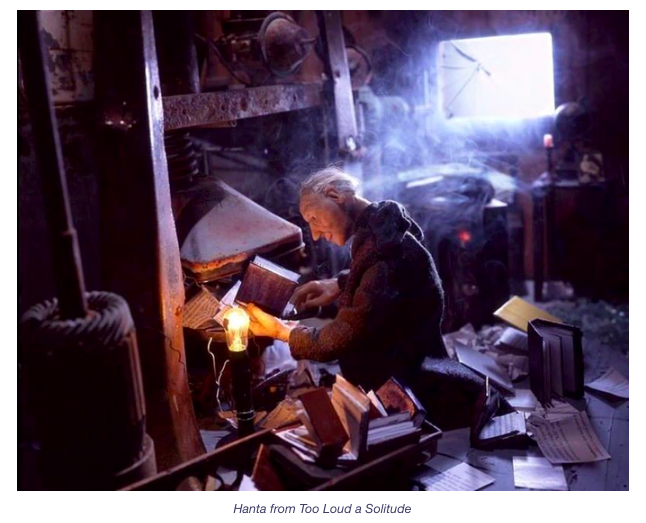
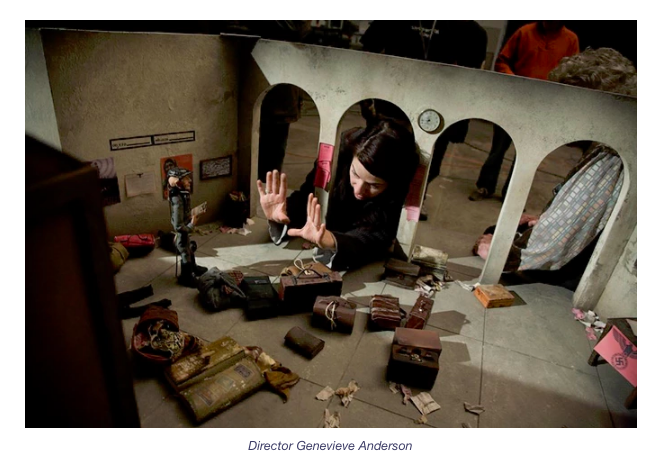
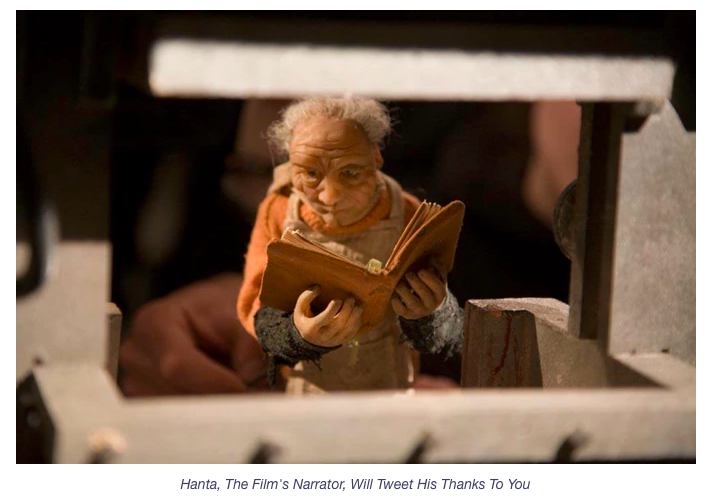
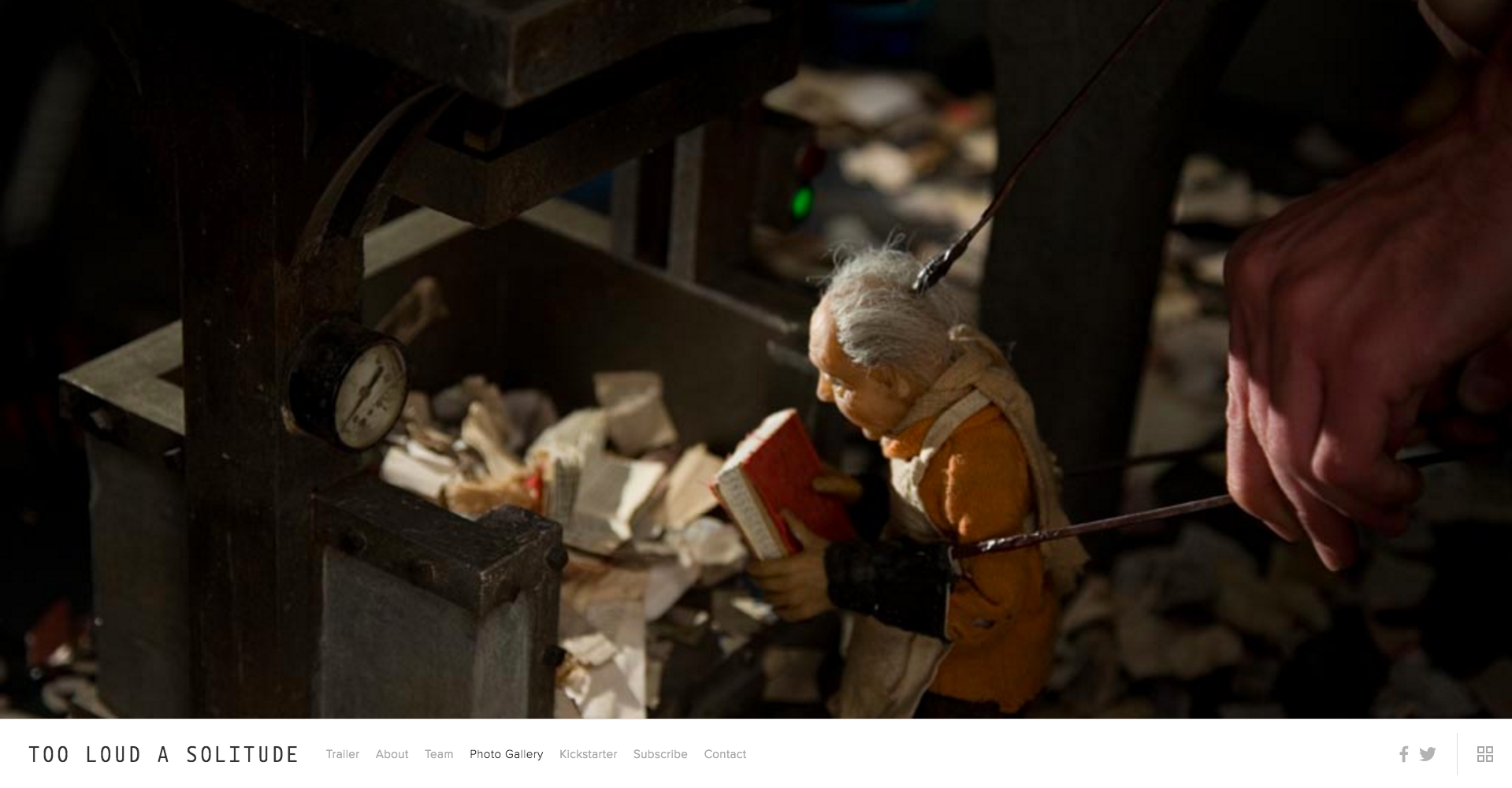
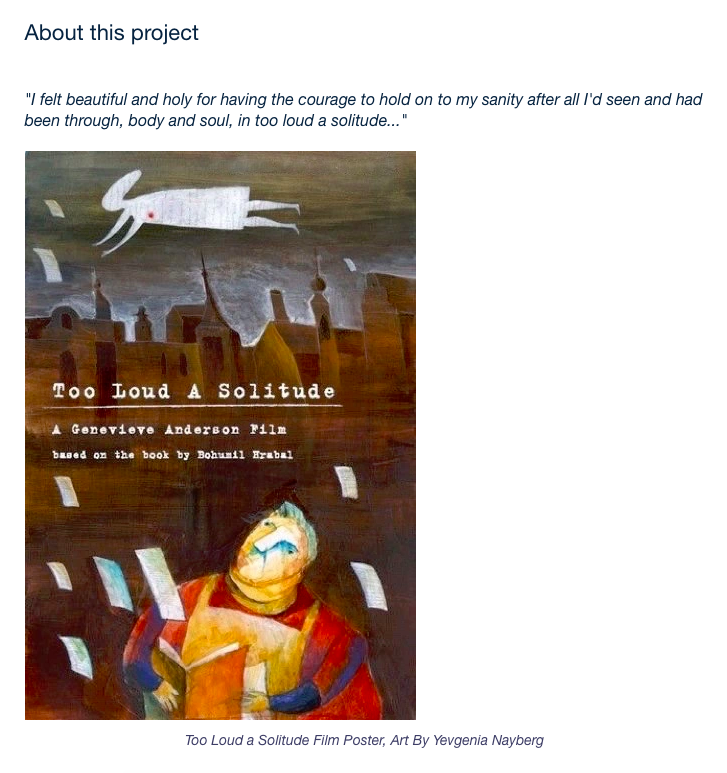
An imaginative production crew seeks to fundraise resources to launch a full-length feature film about Czech writer Bohumil Hrabal’s novel, Too Loud a Solitude.  Directed by Genevieve Anderson and starring Paul Giamatti as the voice of Hanta, Too Loud A Solitude (Příliš hlučná samota) is a feature adaptation of Bohumil Hrabal’s beloved book made with live action puppets, animated sequences and visual effects.

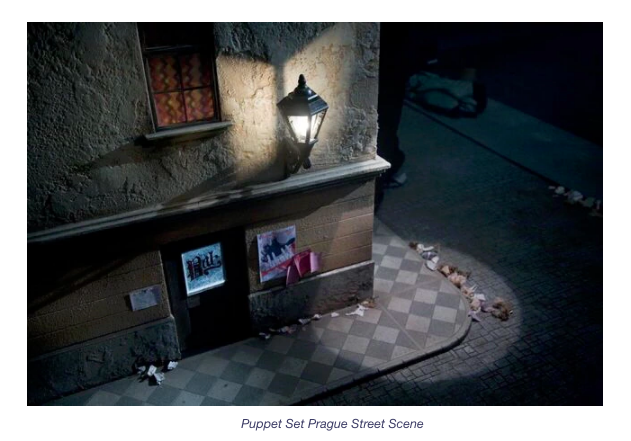
This globally famous novel is about a book crusher, Hanta. Watching the trailer of Too Loud A Solitude is like entering a magic portal to another dimension where Bohumil Hrabal’s book takes place in a world of puppetry.  An intimate, sneak peek to Hanta’s daily life and his private love affair with the books and their stories. A mirror reflection of Hrabal’s writing voice and how each book he created almost seems to be a personal letter written to each individual reader as opposed to the masses. As the camera soars in over the skyline of the town and we see gears grinding, scraps of papers tossed about and a city that seems to be very cold and quiet. Characters bundled up in many layers, speaking to each other without speaking as they go about daily life. The music is hypnotic and dreamy with its romantic yet haunting tune of a melancholy violin. 

Too Loud a Solitude is the story of a waste compactor, Hanta, who was charged with destroying his country’s great literature in his humble press, and who fell so in love with the beautiful ideas contained within the books that he began secretly rescuing them – hiding them whole inside the bales, taking them home in his briefcase, and lining the walls of his basement with them. It became one of the defining books in Czechoslovakia’s history for its unsentimental, humorous, painfully relevant portrayal of humankind’s resilience. The story of Hanta’s quest to save the world of books and literature from destruction is often cited as the most beloved of Hrabal’s books. Too Loud a Solitude has a global fan base and an active community of support has emerged for our feature film project. The book has been translated into 37 languages and sold over 70,000 copies of Michael Henry Heim’s English translation alone. Bohumil Hrabal wrote the novella as an unsentimental account of what happened to him during the Russian occupation of Czechoslovakia during the 40’s and 50’s. Many of Hrabal’s books were banned by the Russian regime and other great books by many authors were physically destroyed, an act Hrabal characterizes in Too Loud a Solitude as ‘crimes against humanity’… Our team has been committed to bringing Czech writer Bohumil Hrabal’s beloved novella Too Loud a Solitude to the screen since 2004. With the assistance of The Rockefeller Media Arts Foundation (now the Tribeca Film Institute), Heather Henson and Handmade Puppet Dreams, and The Jim Henson Foundation, we completed a 17 minute sample of the film in 2007. The film has been playing nationally and internationally in the Handmade Puppet Dreams program, and in 2009 was awarded an UNIMA-USA citation of excellence. We are currently working on financing the feature project, first through a Kickstarter start-up funds campaign and then through partnership with other financing and production entities. Our intention is to enlist the support of the book’s global fan base and expand its already impressive audience. We’re down to two weeks left in our Kickstarter fundraising campaign and are continuing to do outreach work to drum up more support for our project. We seek to raise $35,000 to cover the costs of puppet design, armature creation, motion exploration, character development, costume design, and visual effects.”

For more information about the film, please visit www.tooloudasolitude.com.screen-shot-2016-10-19-at-8-16-58-pm “For thirty-five years now I’ve been in wastepaper, and it’s my love story…I am a jug filled with water both magic and plain; I have only to lean over and a stream of beautiful thoughts flows out of me.”screen-shot-2016-10-19-at-8-16-25-pm

screen-shot-2016-10-19-at-8-16-51-pm

“I felt beautiful and holy for having the courage to hold on to my sanity after all I’d seen and had been through, body and soul, in too loud a solitude.”

Darren Fung is one of Canada’s most accomplished music composers

darren fung

Darren Fung. Photography provided by CW3PR Inc.

Based in Los Angeles, Darren Fung is a talented, award-winning music composer. Born in Canada with strong Chinese roots, Mr. Fung’s music is a medley of the East and the West. His love of music began at the age of three and led him to become an accomplished composer. After a lifetime of living in Canada, Darren Fung moved to the United States to create music for film and TV in a new location.

Fung has a colorful, diverse, and nostalgic music style with a powerful yet gentle effect on the viewer’s senses. “With over 100 composition credits to his name, Darren Fung is seminally gifted and a highly influential composer who is well-respected in the TV and Film scoring worlds. Fung is one of Canada’s most accomplished composers, thrice nominated for a Canadian Screen Award. Most recently, he scored The Great Human Odyssey, a mini-series that explores the roots of humankind. The project opened to widespread critical acclaim in Canada, winning the 2016 Canadian Screen Award for Best Music and receiving a nomination from the International Film Music Critics Association. (The Great Human Odyssey premieres in the U.S. this fall on PBS.) Darren utilizes an epic, large-scale orchestra and choir to bring this special’s score to life, replete with memorable melodies and unique musical colors. His diverse credits also include a recreation of Canada’s second national anthem (the beloved Hockey Theme) for CTV and TSN and the theme music for CTV’s flagship morning news show Canada AM. Additionally, Darren scored Bell Canada’s Orchestra advertisement spot (for the 2010 Vancouver Olympics), which was voted as Canada’s top commercial by readers of The Globe and Mail. Darren’s feature and short film scores have been heard at prestigious film festivals around the world, including Toronto, Cannes, and Sundance. After Fung studied at McGill University and worked full-time as a composer in Montreal, he moved to Los Angeles and is represented by Maria Machado of Gorfaine/Schwartz Agency and CW3PR.”

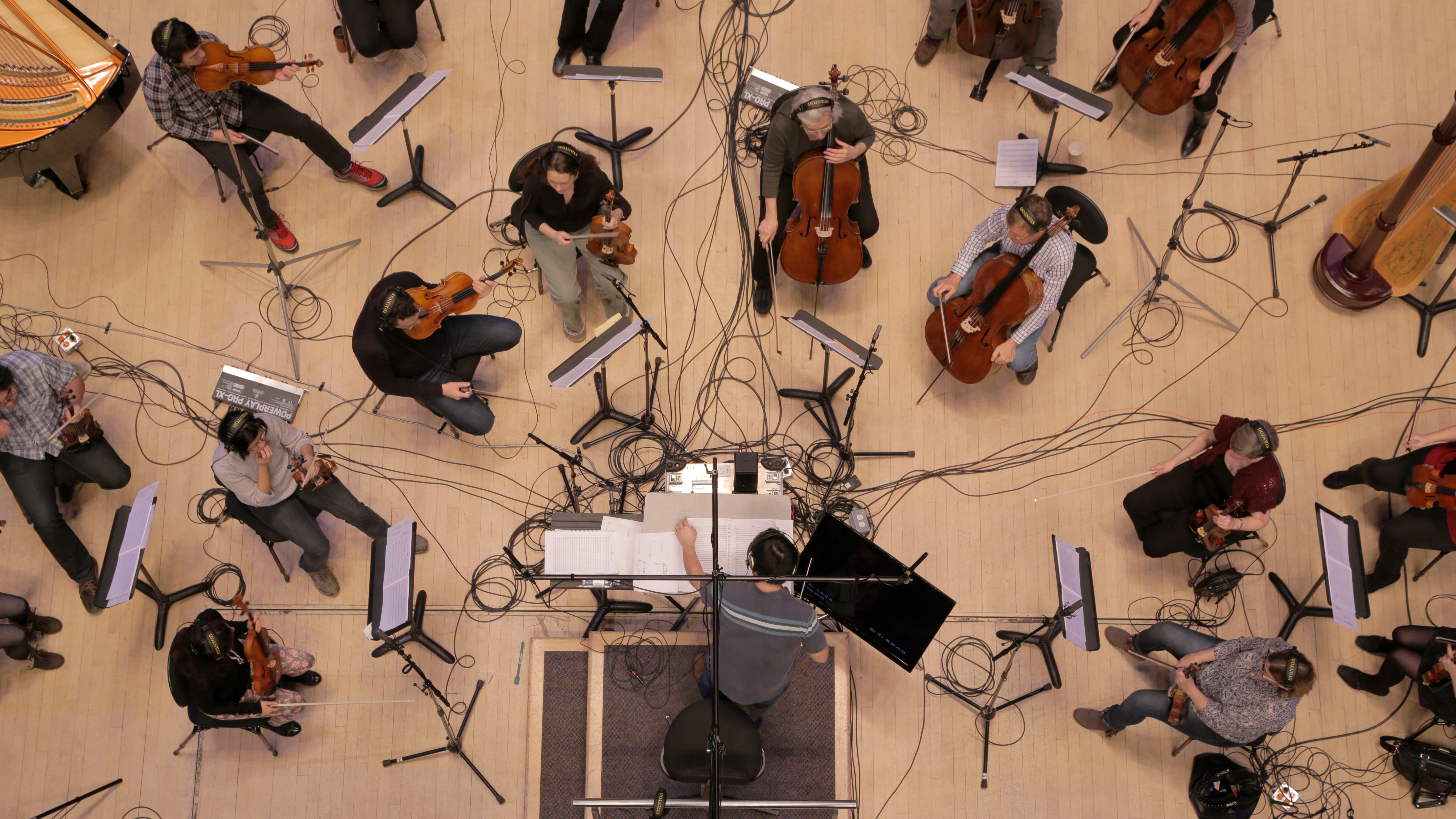
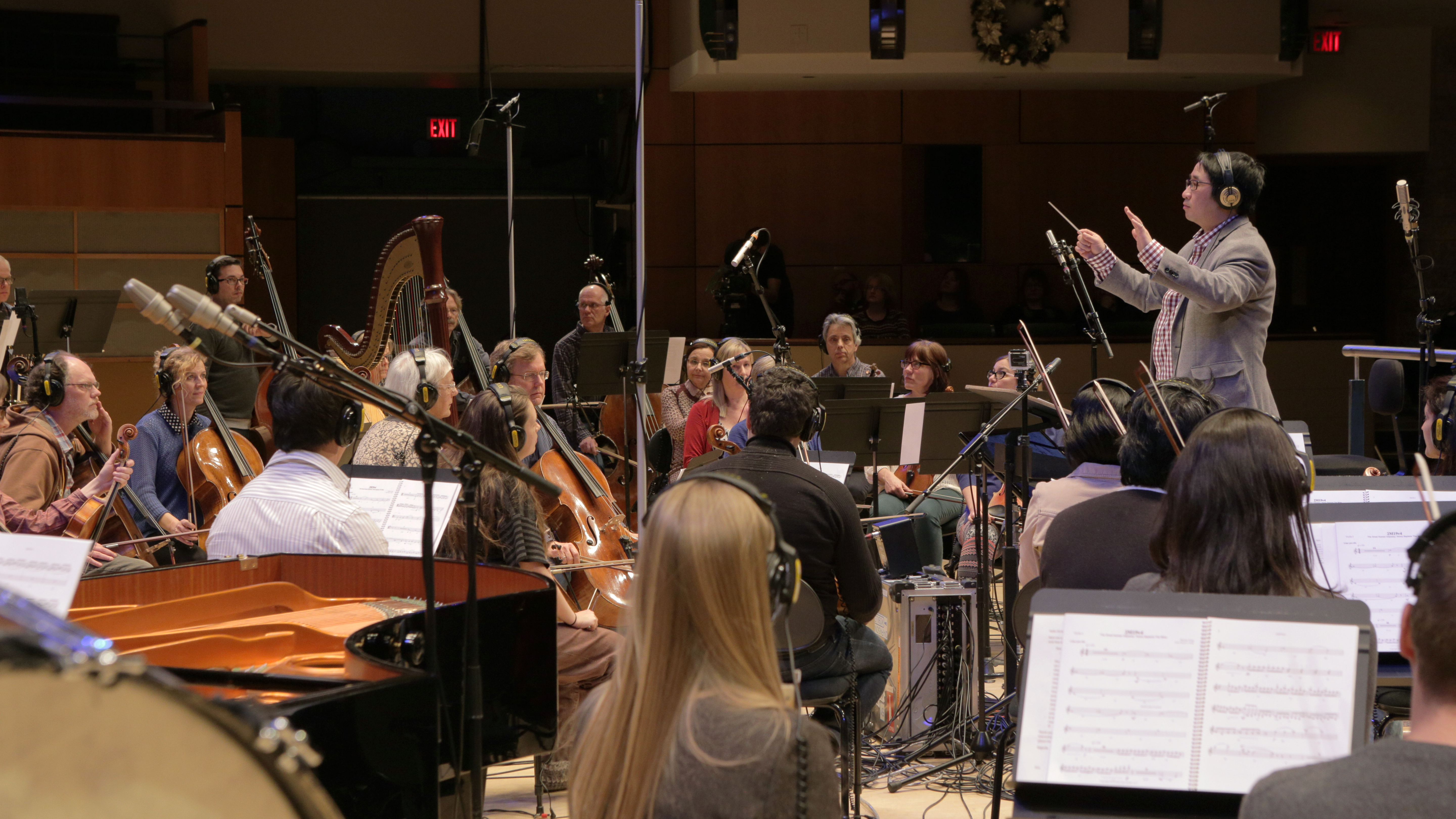
In 2016, Mr. Fung spoke with local Texas writer, Nicolette Mallow, to discuss the bird’s-eye view of his life lived in music and how he came to be in California with his wife and daughter after many years in Canada.

2b5a1392

Darren Fung and orchestra. Photography provided by CW3PR Inc.

Nicolette Mallow: Will you please tell me a little about when your love for music began and when you learned to play an instrument?

Darren Fung: I started playing piano when I was 3. Music has always been part of my life. After piano, I dabbled a little in violin and then the saxophone. I loved trying new instruments and playing the music in my head.

NM: Yes, I read in other interviews that you tend to create music with a large-scale orchestra. That makes sense, given you learned to play so many instruments… What number of instruments (musicians) entails a large scale orchestra?

DF: A large scale orchestra can be 40, 50, 60 people. Even 90-100. For me, that means anything over 40. Over 40 is a pretty big orchestra…Now, do I prefer to work with a recording group? I also like the challenge of not having a large scale orchestra and doing other things that are not orchestral.

NM: Your online biography states that you “caught the composing bug at age 15” when you wrote a piece for Edmonton Symphony Orchestra’s Young Composer Project … Did you always know that music was your life calling?

DF: Yes, and no. I always loved music, but at the age of 15, I knew I wanted to be a composer. But it was hard for my family at first to accept that I am good at this, good enough to make a career of it. My mother is a Chinese tiger mom, and she wanted the best for me growing up. She had a preset idea of what my future looked like. She wanted me to pursue something more secure than music. Music or a creative career was too risky. So, when I first began music school instead of pursuing a life as a lawyer… it was hard for her. Culturally there were some conflicts and it would’ve been easier and more accepted had I chosen to be a doctor, lawyer, or engineer. My mother is very supportive now and she is very happy for me that I chose music.

NM: I understand the family and cultural aspects of what you just said. My Latina mother was most displeased, if not furious when I said I was going to Savannah College of Art & Design 12 years ago instead of Barnard or Stanford to be a psychologist or doctor. But she, too, is now very happy for me that I chased my artistic dreams.

DF: Yes it can be hard at first to choose your own path.

NM: In regards to music composition, what are some of the most distinct differences between Canada and the US?

DF: The most significant diff between the two is that Canada is more comparable to the Indie film scenes—the budgets are not that big. The AFM calls them low-budget films because we are lucky to get around a $3 million budget. We are supposed to do more with less. However, since we are so close to the states, we have a lot of similar musical influences.

NM: Reading about your career, I saw the phrase “musical colors” mentioned in writing. Can you tell me a little about what musical colors means to you?

DF: Instruments or sounds are our palette. Composers (and musicians) can kind of make whatever we want out of it. Musical colors are why I think I love orchestra so much because there is so much available—so many colors and moods to portray. Not to say other genres of music don’t have that. But I am a classically trained musician, and to be able to take that stuff and play away. It’s endless and I never know what will happen and I love it.

2b5a1184

Darren Fung and orchestra. Photography provided by CW3PR Inc.

NM: Were you nervous or excited to recreate the 2nd national anthem for Canada?

DF: Both. When I recreated the 2nd national anthem for hockey night in Canada, we wanted to pay homage to the original, but with a whole bunch of orchestrations and differentiators. For the longest time, it was a really iconic song in Canada. Everyone knows the song and it’s equivalent to Major League Baseball’s classic tune “Take Me Out to the Ballgame”…At the time I was working with CPC and they wanted to make it their own. I was 26 at the time and I didn’t want the country hating me as the guy who guy who f*cked up the hockey thing… However, I was thrilled to be part of the project. And at 26 I got to work with the Toronto Symphony Orchestra and specific members who the company hired to play. So to be given that budget and content for a major broadcast was amazing.

NM: The Great Human Odyssey sounds amazing. What was it like writing for this TV show?

DF: It was 85 minutes of music in 7.5 weeks. There was material to score but we didn’t start writing till 7.5 weeks before we recorded… Niobe Thompson (Producer and Director of The Great Human Odyssey) sort of talked about bringing me on board as he was shooting. Almost two years before he started editing, I saw some raw footage. And I have to admit that when I first met up with Naobi, there was not a lot of money and I was not really sure the resources were available to create what he wanted with an orchestra and choir. But then he showed me the first warrior of this man jumping across ice flows. Drone shots across ice flows, and the backdrop was spectacular. The costumes, everything was visually stunning. And I realized we needed to get the music to match the greatness of the film… Fast forward in time and he then needed trailers. Then suddenly later on I am going to Prague so I can record a couple of cues to cut… Fast forward to the final count down where we are talking frame by frame, intentions, character and motivations; figuring out the music for each character and each scene.  

NM: Do you have any hobbies that you enjoy to keep you balanced outside work?

DF: Hockey and rowing are my two hobbies. Often I get up at stupid-o-clock in the morning around 5 A.M. to go rowing before work. What I love about hockey and rowing is that it’s two completely unrelated things to music. I meet people who aren’t in the business and it’s not a sedentary job. I get to move around and I get to blow off a lot of steam. I keep biz cards on me, just in case, but I like that it’s totally separate from work. Honestly I worry about the day where I might have to give one or both of them up… I find so much sanity and comic relief in hockey and rowing. Im horrible at both… but trying to get physical activity is necessary. And it’s fun to go have a beer with the guys sometimes. 

NM: Are there any genres in film or television that you would like to write for that you’ve yet to work on? 

DF: I’ve been lucky so far and enjoyed all my projects. But I would like to write for sci fi or opera. I haven’t yet had the chance to do either. Also, Animation is something else I am interested in. I like changing things up and I just finished up on an installation work for a gondola ride in Banff. So long as it’s a great project with great music: count me in! I am always looking for new projects and I came to LA to establish myself here.

For more information about Darren Fung please read his online bio. And to hear many songs or tracks from Fung’s music portfolio, please check out his SoundCloud page.

Mark Thomas Studio transforms and beautifies with their royal treatment and southern hospitality

mark thomas studio

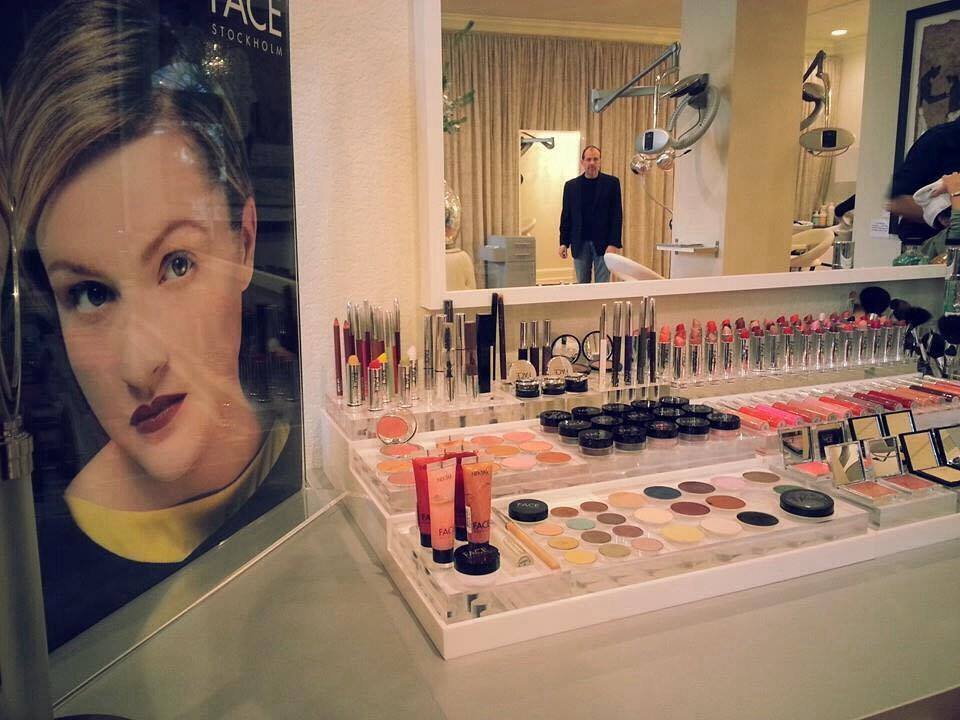
Photography of beauty parlor provided by Mark Thomas Studio.

Mark Thomas Studio will transform and beautify your hair, scalp and skin with their royal treatment. All guests will leave feeling refreshed, rejuvenated and more polished than ever before with the salon’s all-encompassing and luxurious products. Mark Thomas Studio provides exquisite services inside a fun, playful and relaxing atmosphere located in the heart of downtown Austin off West 38th Street.

This high-end salon is the only location in Texas that offers Philip Kingsley products and FACE Stockholm makeup together in one boutique. Mark Thomas Studio bestows exceptional service reminiscent of a lavish boutique infused with Southern hospitality, permeating luxury and gentility into one location. You will not find another boutique like it within all of Texas or the Midwest.

“For those unaware of Philip Kingsley, he coined the phrase ‘bad hair day’ and is the world’s most respected authority on hair and scalp health. With over 55 years of Trichological experience, Philip Kingsley’s past and present clientele include politicians, royalty and celebrities. Called the ‘Hair Doctor’ by The Sunday Times and the ‘Hair Guru’ by The New York Times, Philip has written many publications on both sides of the Atlantic. Philip has recognized the need to bridge the gap between science and hairdressing as well as providing solutions for the most extreme hair and scalp problems, and those who just want the best from their hair.”

Whether you are in need of a new cut and color – or whether you seek a bikini wax and a deep pore facial – or whether you simply want to have a makeover. Mark Thomas Studio will cater to your every need without the stress. This intimate salon is perfect for men and women of all ages. And they offer the best products and services– striving for every client to leave satisfied.

For more information please visit their website at www.markthomasstudios.com or call Mark Thomas Studio at 512-459-6900. 

14365496_10210424444752613_955533485_n

Photography of beauty parlor provided by Mark Thomas Studio.

Composer Pieter Schlosser enriches television, film and video games with his musical vocabulary

Pieter Schlosser
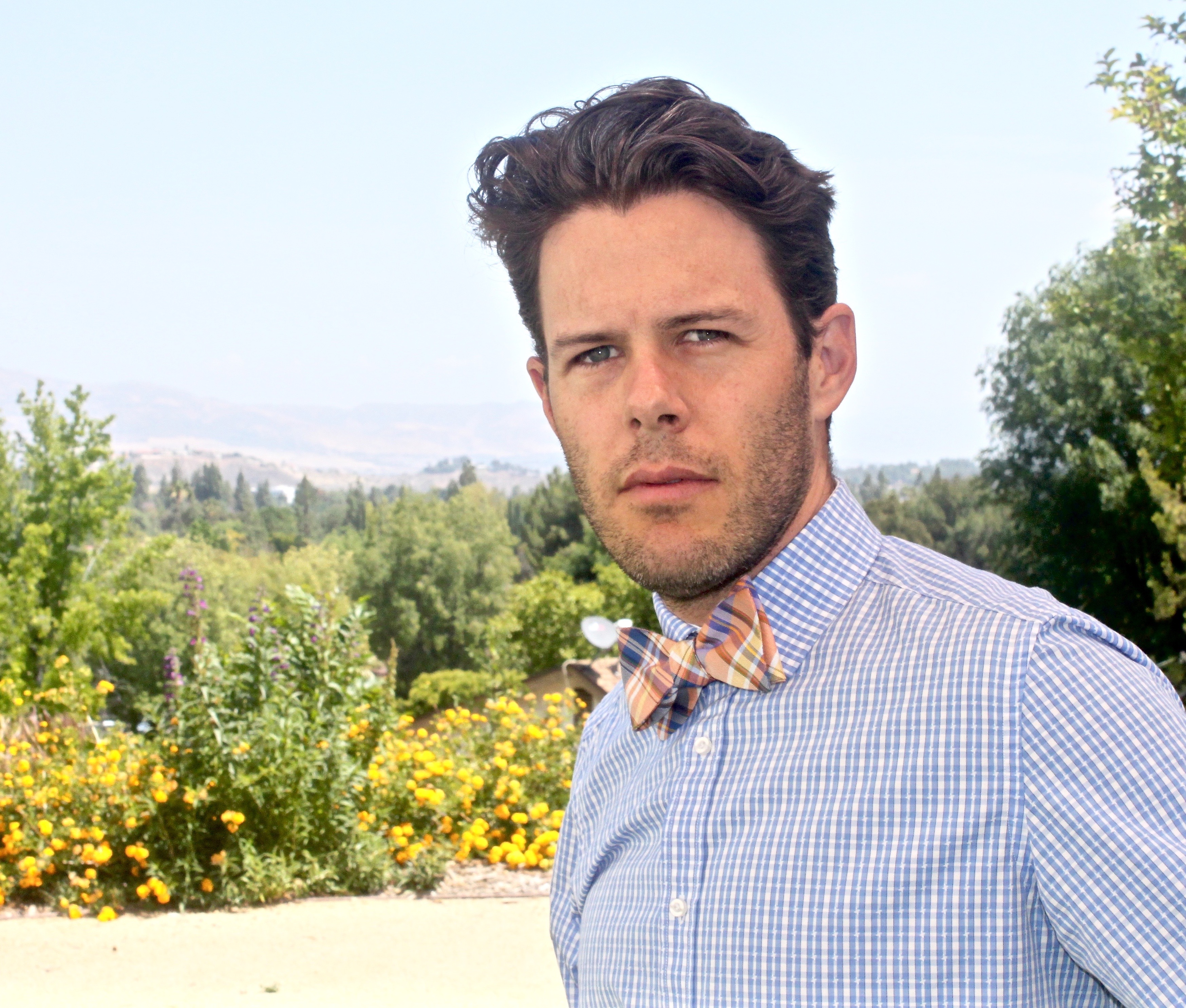
Pieter Schlosser. Photography provided by CW3PR.

Pieter Schlosser is an award-winning television, film and video game composer known most recently for scoring NBC’s hit show You, Me and the Apocalypse. Based in Los Angeles, Schlosser grew up traveling the world with his family, enriching his musical vocabulary with each new culture and each new country.

This summer Pieter Schlosser was interviewed by a writer in Texas, Nicolette Mallow, to discuss topics like how world-traveling influenced his music, the differences between scoring for the UK versus the US, what lead him to study at Berklee College of Music in Boston and other miscellany.

Pieter spent a great deal of his childhood traveling, living in Guatemala, Austria, Panama and Costa Rica. He attended Berklee College of Music in Boston before moving to Los Angeles to pursue a career in television, film and video game composing. A multi-instrumentalist and polyglot, Pieter has had his work featured in the music of Grammy-nominated world music group Editus. Last year, he worked with the Costa Rica National Symphony Orchestra, arranging a full orchestral performance of his original music. In 2014, he won the ASCAP award for Top Television Series for his work on Freeform’s The Lying Game. Pieter Schlosser also composed the music for Lifetime’s The Client List and provided additional music for ABC’s Resurrection and The Astronaut Wives Club. Pieter worked on Desperate Housewives and is credited with bringing the signature Latin musical styling to the show. Currently, he is composing the music for the highly anticipated IMAX film, In Saturn’s Rings. He is also scoring the major motion picture, What About Love, starring Sharon Stone and Andy Garcia, set for release in 2017. Pieter worked in Hans Zimmer’s Remote Control Productions studio for 5 years alongside many high profile composers on various projects, such as Friday The 13th and the Transformers film and video game franchise. In addition to Transformers: The Game, Pieter demonstrated his versatility by providing additional music for some of the most popular video games of this generation with Gears of War 2 & 3 and The Sims 3.”

Nicolette Mallow: Will you tell me about your childhood background in music and how growing up in so many countries influenced your career?

Pieter Schlosser: Music was always around when I was growing up and it was always playing in the house. My mom played the piano; it was an old upright piano that ended up in our home. My dad was always a big fan of music, too. Dad loved to play jazz. My mom favored classical. The love of music was inherited from my parents. When I was in Guatemala, I didn’t play an instrument. I just listened to music and sometimes I even stole my mom’s tapes and records. When we moved to Austria, I was eight and that’s when I began to start playing the piano. There is a mecca of music in Austria. Everyone plays music. I wanted to join the choir and that’s where it all really began. After spending three years in Austria, my family and I moved to Panama. I kept singing in the choir. It was a Swedish choir in Panama and we sang around Christmas time. There was one person who played saxophone and I thought it looked cool and so I began lessons. Then we moved to Costa Rica and I made a friend with someone on the island and I joined band and played jazz. As I became obsessed with music, my grades began dipping… I loved moving around the world, even if my brother didn’t like it so much. My dad worked for BHL and that’s why we moved around the globe so much.

NM: Did you have a favorite place out of all the countries you and your family resided? Was there one musical style or culture that inspired you the most, or did they all equally fulfill your musical talents?

PS: It’s hard to say because, as a kid, it was pretty normal having all these different cultures and musical styles around me. I can’t say or pinpoint one thing that influenced me most. Growing up in Guatemala, Austria, Panama, and Costa Rica is like having a little book of musical notes and rhythms that I can use—and the combination of all these things is a nice balance that enriches my craft.

NM: What lead you to Berklee College of Music in Boston?

PS: While I was in Costa Rica, the Costa Rican-North American Cultural Center had a series of Universities do a Master class followed by a concert. Berklee College of Music in Boston was always there, including many other amazing programs from Miami and Texas. At one point I called or wrote a letter “Hey can u send me a Berklee sticker with the logo?” And I put it on my saxophone case. Suddenly I decided that’s where I wanted to go. It was the only college I applied to and I sort of felt a calling to enroll. Austria was a back-up to study jazz, but I was set on Berklee. So I applied and sent in an audition tape to Admissions and eventually I was offered a partial scholarship to attend. I accepted.

NM: How did your professional career in film and television begin?

PS: After college, I moved to LA. “The Record Plant” (a recording studio) in Hollywood was my first gig and I was a runner: food orders, trash, coffee and other office errands. During that time I met a scoring mixer who works with a ton of composers including Hans Zimmer. At the time he was working on the remake of “Italian Job”. Eventually we reconnected, and he hired me for little things in the studio. I got to attend a scoring session which was amazing. Ultimately, through him and my contacts with Berklee: I became an intern at Hans Zimmer. There’s no other place like working at Remote Control Productions. Anyway, that’s when I met Steve Jablonsky and later on Jablonsky hired me for “Transformers”. And then I started working on other film & TV projects.

NM: What is one of the most significant variations between scoring for television in the US versus music composition the UK?

PS: When we scored the UK version of “You Me and the Apocalypse” there are no commercial breaks. In the US version of the show, it’s 45 mins divided into 5 acts. Most shows in the US have commercials breaks, excluding HBO or Netflix.

NM: Have you always liked video games?

PS: Yes, I like video games. When I was younger, I enjoyed watching my brother play video games much more than I wanted to play myself. I am not entirely sure why I didn’t enjoy participating, but I preferred to watch.

NM: In regards to The Costa Rica National Symphony Orchestra, what original music of yours did they play? Is there a link or audio to hear this performance?

PS: The music community in Costa Rica is relatively small, so everyone knows each other. I became friends with members of a band called ‘Editus.’ In 1998, they were putting an album together titled ‘Calle Del Viento’ and released in 1999. I was just starting to write music then and I dared to pitch them the first piece of music I ever wrote. They loved it and included it in their album! Fast forward 16 years to 2015 and I got an e-mail saying they would be putting on a concert over three nights of that very album but this time, playing with the Costa Rica National Symphony. They asked if I’d make an orchestral arrangement of the piece. You can find the original recording of this piece called ‘El Sendero Menos Caminado’ (or ‘The Road Less Travelled,’ which is a line in a Robert Frost poem called ’The Road Not Taken’). The orchestral piece recorded in 2015, I believe, is currently being mastered and prepared for release. The song can be found on iTunes and Spotify.

NM: Now that you’ve obtained success and first-hand experience within the industry, do you have any advice or helpful insights for other aspiring composers?

PS: The best bet when it comes to writing music to picture, whether its film or television, the best route is to find some sort of mentorship with another composer so you can hopefully be getting paid while learning on the job. I wish there were a more solid answer. But I think it’s different for everyone and you have to figure it out as you move forward. It’s important to remember that there is not one way or one path to success in this field. Just remain passionate and even stubborn to your craft, but keep a smile. It’s tough but hang in there and you’ll persevere.

For more information about Pieter Schlosser, please visit his website at www.pieterschlosser.com. Schlosser also has a SoundCloud page that features various tracks of his music.